
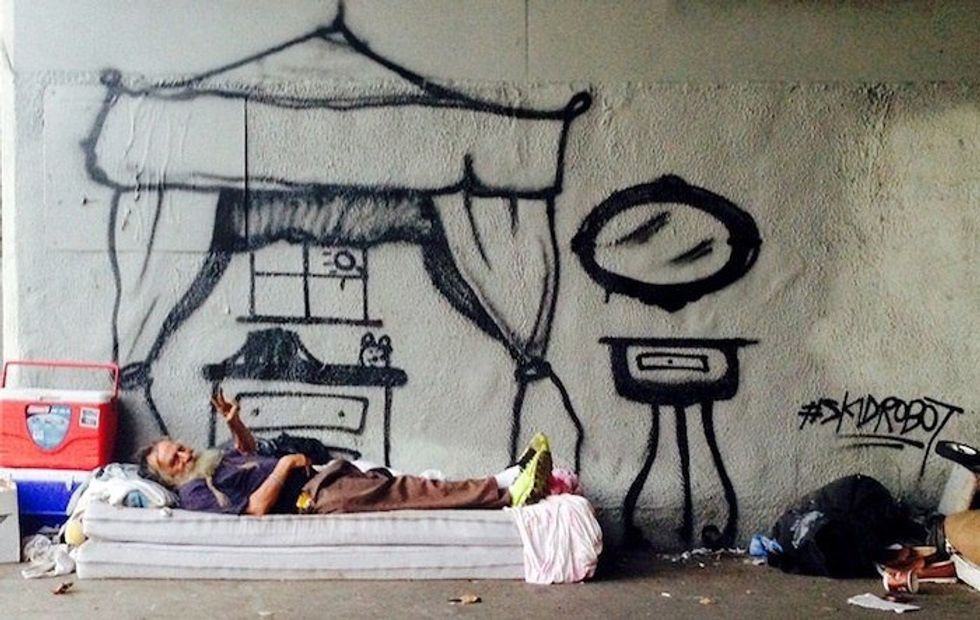
Imagine a place where thousands of people sleep on the ground with no home and no family. The fortunate ones have merely a tent to call their own. Picture masses of individuals who don’t know where their next meal is coming from, who haven’t had the luxury of a shower in months, who are forced to use the restroom without privacy or toiletries. Imagine a life without community, without privacy, without normal household necessities, without money, without hygiene and without transportation. Picture a place where mental illness runs rampant but medication, treatment and psychological care are nonexistent. This is a place without hope.
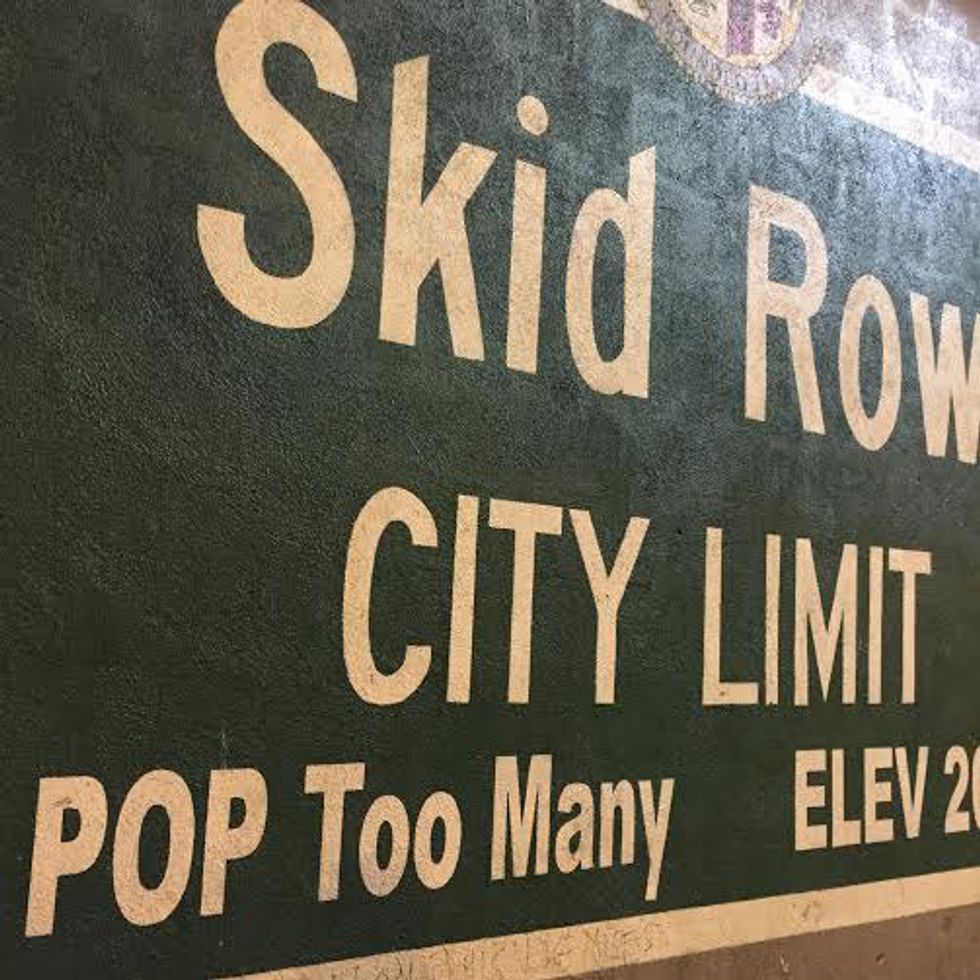
Welcome to Skid Row, a 54-block radius in sunny Los Angeles, California, where 5,000 people are experiencing homelessness. The closest thing to a third-world country that the United States has within its borders, and the mayor has recently declared a State of Emergency due to the massive number of people residing on the streets of the city. Skid Row is just a glimpse of the problem, though, as there are 45,000 people—men, women, children, veterans—experiencing homelessness just in Los Angeles alone. That is the population of Southeastern Louisiana University multiplied by three, all without a place to live.
Over Mardi Gras break, I traveled to California to work with the Los Angeles Dream Center, an organization that feeds 2,000 people every single day and that houses 700 individuals and families who are experiencing homelessness, any type of crippling addiction, coming out of the slavery of the sex industry or are at risk of losing their children due to extreme poverty. As I walked the streets with ditches filled with urine and human feces, as I saw the blank faces of the people with no hope left, as I shook hands with those whose stories are too harsh to even recount, I felt the weight of the hopelessness and the sting of compassion for those whose souls have no shelter.
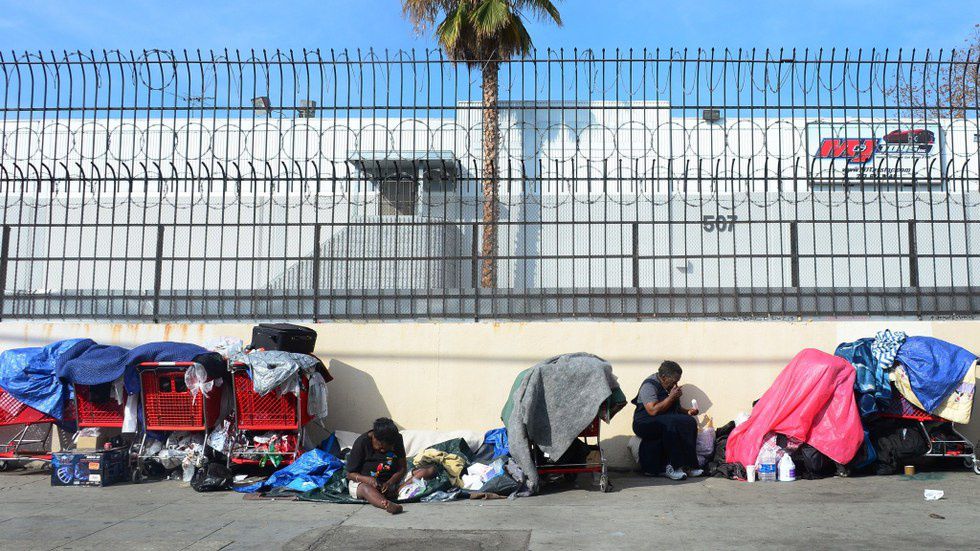
Spending time with those experiencing homelessness is not new to me. Hearing their stories of pain and struggling is no shock. It is not the utter desolation of their exterior that causes my heart to ache for them. It is not the addiction, the mental state, the body odor or the poverty that gives me the desire to talk with them, comfort them and help them in any sort of small way that I can. It is the emptiness of their faces, the beauty of their hearts and the wisdom of their words that come from a depth of suffering most of us cannot even imagine.
It is the man that reads Anne Rice novels by the glow of the streetlights, loves Western literature and tells me that the direction of my thoughts is the direction in which my life will head. It is the woman whose smile could light up a room, is quick to give hugs and is grateful for everything even though she has almost nothing. It is the girl sitting outside of the convenience store, desperate for conversation, eyes kind and open, who suddenly becomes tense and quickly sends me on my way as a man looms over her. It is the man who yells at the world because of the extreme abuse of his past, and it is the other man in the wheelchair, whose life is just as painful, who tells him to stop yelling because God is good.
The truth is their hearts are no different from ours, although their lives are taboo, ugly, harsh and vastly different from our personal experiences. As we sit on our couches and watch television, curl up under our blankets, scroll through social media, drive our cars and complain about traffic, order our meals and scoff at its quality, we are often tempted to feel pity for those experiencing homelessness; to feel as if we are, in a way, so much better than them. Pity, because they don't have the luxuries we do or a roof over their heads.
They do not need our pity, they need hope. They need hope just the same as the CEO who contemplates suicide because his company is rapidly deteriorating. They need hope just the same as the girl whose scars on her arms aren't nearly as painful as the scars in her heart. Hope, like the mom who feels like her life is meaningless as she changes diapers and works tirelessly with no recognition needs. Hope that the business person stuck in the same cubicle day-in and day-out who feels like they are wasting their life lacks. The same hope that is nonexistent in the life of the college student who has no direction and struggles to get out of bed every day is the same hope that the homeless man needs.
Some are addicted to heroin on Skid Row. In our everyday lives, we are addicted to social media, to success, to acceptance, to pornography and to work. Some of those experiencing homelessness are chained by alcohol or marijuana. Here, we are chained by appearance, status, depression, opinions, television, apathy or the next big party. Addiction is just as rampant in the lives of those around us as it is in Skid Row. Our addictions are prettier, maybe, but just as defeating, just as terrible and just as hopeless. Some of the addictions are the same, separated only by wealth or status. Those in their uptown loft who snort cocaine off of the ritzy, porcelain sink, Chanel on their necks and money in their Coach wallet, are just as lost as the homeless man who holds his crack pipe in between his fingers and tells me he could leave Skid Row but doesn't even want to anymore. The only difference between the two is one looks appropriate to society and one wears their brokenness on their sleeve.
The souls of the those experiencing homelessness desire for acceptance, love, safety, relationships, happiness and peace just like those of us living our white-picket fence lives. The hell on earth that is Skid Row is merely a physical representation of the brokenness of their souls, no different from the brokenness of any of our souls. The subhuman conditions that those on Skid Row or who are homeless live in does not make them subhuman. Their hopelessness is no different from our hopelessness. Their desires no less than our desires; their lives no less important than our lives. They have stories, dreams, hurts, pains, grief, laughter, advice, wisdom and brokenness, just like we do. As Jesus said when he looked around at the crowds of the outcasts and ordinary people, "These are my brothers and sisters and mothers." We must carry equality in our hearts, and we must recognize hopelessness around us, mirrored in the faces of those who are "successful" and those who are without a home. Some of those people on Skid Row carry more joy in their hearts than business executives who worry for nothing. Life is not about the external, and there is something we all need beyond Maslow's physiological needs.
Without the Source of Love, without divine peace, without the One who is Enough, we can be as hopeless in our souls as those experiencing homelessness. The lives of those around us may be as dark as the tents of Skid Row. So let us love one another because we don't know who around us is as desperate as the ones we pity living on the streets. Let us show compassion to everyone, for we are all as human as the addicts on Skid Row. Let us humbly admit that hopelessness knows no boundaries; it pervades all social classes and climbs all ladders. Let us keep judgement far from our hearts, because we do not know the abuse, pain or suffering that led people to the place they are in their lives, and let us carry equality in our hearts for, at the end of the day, there is no difference between the homeless and the hopeless.