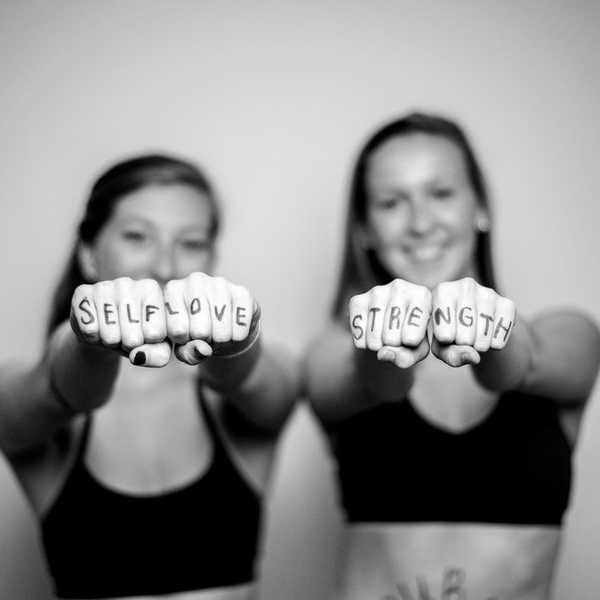
Get on board with the fast-paced, highly effective and intense HIIT workout.
As a fitness instructor on campus, the start of the semester is full of excitement as we await our group exercise class assignments. With the addition of classes like Extreme Fit, Hydro Fit, and Circuit City, the possibilities are endless for classes and what participants will get out of them.
This semester, I was assigned HIIT/Circuit City and have been telling my entire chapter to come out and take it (Tuesday Nights, Strom, see ya there), but they all look at me with quizzical faces, wondering what this entails, so I am here to inform you about high intensity interval training (HIIT).
There are a lot of great benefits of
a HIIT class. It challenges you to push your
body to the max since it consists of short bursts of exercise -- usually about 30
seconds -- followed by a shorter period of rest, around 10 seconds.
I don’t
know about you, but I find it much harder to run for a consistent 30 minutes
than to sprint for 30 seconds, rest for 10, and then repeat 15 more times.
Studies show that most participants are less likely to rest or quit when they
know that the end is 30 seconds away. By
pushing your body this hard, you also accelerate its repair system. This is when
fat-burning really happens, as your body works to repair the muscles exerted in
a workout.
Studies have proven that this repair process is so intensified by
HIIT that your body will continue burning calories for over 24 hours after you’ve
left the gym, so you can burn fat while sitting around watching Grey’s
Anatomy.
Another great benefit of HIIT is how much it increases your endurance.
By pushing your heart rate so high, letting it slightly fall, and then
skyrocketing it again into the anaerobic zone, your heart and body builds up
the endurance to make it through a long period of steady cardio at a lower
intensity. After doing HIIT for two months, I have found that my runs have increased
from three miles up to 10 miles, without much other training.
Lastly, HIIT increases fat-burn without muscle
loss, unlike most cardio choices. It is said that you don’t start burning
calories until 15 minutes into your cardio, since first your body breaks down
muscles, then enters the calorie-torching phase. This is not the case with HIIT, since you get right into the high intensity and increased heart rate. You can lose weight without losing muscle, and tone without bulking up muscle mass.
Now that you know why HIIT is so
great, let's talk about what it really is, starting with the “high intensity”
part. As mentioned above, HIIT pushes your body into its highest heart rate
zone, called the anaerobic zone. You know that feeling when you are completely
out of breath, can’t talk, and feel like your heart is going to beat out of
your chest? Yup, that’s the anaerobic zone!
As I’m sure you can imagine, no one
wants to stay in that zone for long, but in HIIT you don’t. Despite what it
sounds like, a HIIT workout only keeps you there for about 20 seconds of a 30
second burst of exercise, and then you rest enough to bring your heart back
into the less-intense aerobic zone, before going back into the 20 seconds of
anaerobic rates.
The actual structure of HIIT -- interval training -- is described as working for shorter bursts of time and
resting before working again. It can be structured into long workout sets -- 20 minutes running, 5 minutes weight training -- or into quick-paced workouts like HIIT with short intervals.
You
will be out of breath, exhausted, and hardly able to walk up the thousand steps
of Strom, but you’ll certainly feel the benefits. Plus, HIIT workouts
have as many different combinations as a sorority girl can make out of her
closet, which is obviously way too many to count.
When you get the urge to
try out HIIT, just roll over to your campus gym or simply Pinterest it and
millions of workouts will pop up for all levels.
The only thing you’ll regret
is not starting HIIT sooner.