


Every fifty minute session begins the same way. What brings you here? When did you first feel this way? How does that make you feel? Those open parenthetical phrases never heal the root of the disease multiplying inside. There is a better answer to a mental health professional’s question: What makes the problem better? Confessional poetry. Past or present, it was a way to heal while comforting others who experience the same hardships. When the movement first exploded, many poets who were confronted with traumatic encounters utilized poetry as an outlet. In modern times, the healing powers of confessional poetry still thrive. Poets, like myself, turned to confessional poetry during a time of insufferable heartache. The legacy of confessional poets has transcended into modern mediums that continuously touched those burdened with personal struggles.
It is Eisenhower’s 1950’s America. Society itself viewed the Post World War II era as Eden on earth. Families are moving from American cities to American suburbs. The nuclear family sat together around a flooded table enticed with conversations of success. There was absolutely no reason for unhappiness. Those who were in suffering could not openly display their struggles without judgment. Left untreated, the suffering manifests into excruciating pain churned and enhanced as time went on. In the Beat community of urban America, an answer had arrived within the arts. Poetry. Music. Writing. Confessional poetry arose from this suppressed aggression and depression. Small urban cafes, empty storefronts, outdoor parks became the venues that harbored the Beat Generation. They expressed themselves openly and showcase their artistic talents. Poetry and Lyrical writing, while enjoyable as an art form itself a deeper inspection, released tensions of many individuals in this Utopian social era. The manner in which poems were presented varied from poet to poet; however, the each poem connected similar themes. Socially tabooed issues were openly showcased in this new poetic light. Topics such as depression, mental illness, and heartbreak ran through the veins in these poems. No matter how horrifying the experience, poets acutely illustrated the moment of their pure vulnerability. Every so often, this would include vulgar content. Yet, explicit content defined this niche of contemporary poetry. As a result of the poems, poets received therapeutic relief. They discussed the demons that haunted their minds. Poets freed themselves of their torment. By expressing traumatic experiences through confessional poetry, the poets of this time period had an outlet to their constant agony.
These were the great confessional poets of our time. Many constructed utterly different poems that somehow have similar ties in overall themes. The generation of confessional poets included Sylvia Plath, and the father, W.D. Snodgrass. W.D. Snodgrass wrote to reach out to those who experienced agony in a different way. However, he was more of an inspirational writer than one who expresses pain. For example, in his untitled poem, Snodgrass says, “my experience taught me that all the ordinary surroundings of social life are futile and vain." He suggests that readers emerge from a cocoon in which social norms have placed you and bloom into your own person. He advises readers to seize the day with his final lines “What evil, what unspeakable crime have you made your life worth?” Snodgrass views the unspeakable crimes as assimilating to society and he makes the reader acknowledge that it more powerful as an individual. Through similar touching works, Snodgrass ignited poets Anne Sexton and Sylvia Plath. He pulled opened their mouths so they weren’t afraid to be different. Plath pours out her feelings of her father through words, “They always knew it was you. Daddy, daddy, you bastard, I’m through." In her final words, she absolves her troubles, which embodies her confession. She liberates the rage and pain left behind by her father. Several poets had different views on how to approach confessional poetry and different methods on how to reach their audience, yet they constitute the essence of the genre.
The writers of this revolution sparked a new wave of poetic lyrics in modern music. The prohibited topics openly discussed are not as ghastly in the 21st century. Majority of people now openly discuss depression and violent, traumatic deaths. Does that mean confessional poetry merely disappeared? Today, Alternative bands target listeners who struggle with problems coinciding with confessional poets. Groups such as All Time Low and Fall Out Boy draw inspiration from personal hardships.
All Time Low discusses themes of self-deprecation and inner strength. The song “Therapy” expresses how the speaker can feel isolated and humiliated by everyone but he or she can pull him or herself away from a bad situation with self-love with the line, “Boy, love yourself so no one has to, they are better off without you." However, in the song, “Missing You,” Alex Gaskarth directly speaks through the song about how the listener can pick themselves up with the line, “You’ve come this far. You’re all cleaned up; you’ve made a mess again. There’s no more trying time to sort yourself out.”
Fall Out Boy confronts depression directly in their music. In the song “What a Catch, Donnie,” the band explicitly mentions depression with the line “I’ve got troubled thoughts and the self esteem to match." Later on in the song, the speaker declares, “I will never end up like him,” reassuring him or herself that there is still something to keep striving for. All of these bands replicate similar mantras of depression and personal struggles paralleling poets’ works decades before. Today, confessional poetry subjects are significantly less taboo yet; they continuously thrive in modern music.
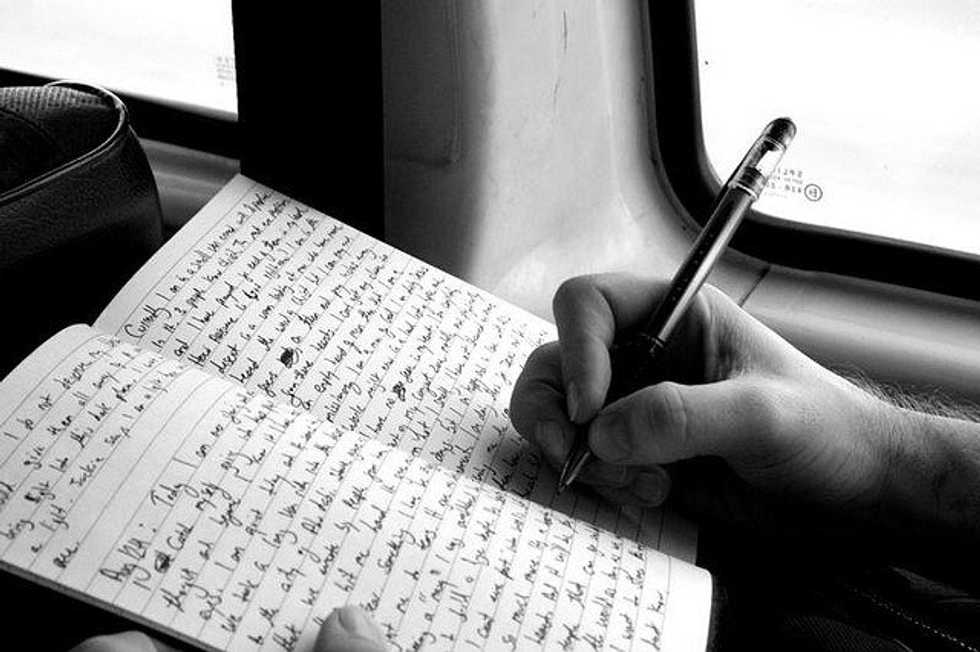
Confessional poetry has a personal connection to my poetic beginnings. I have also released my emotions of heartbreak at a very young age. The first love is never forgotten. As a budding teenager, I too had my first real love. I loved him. He broke my heart. For months I had no real way of expressing myself. Confining myself to my room and sobbing had no effect on the situation. One day I sat alone in my room staring at the overcast sky looking for answers. My eyes drift away to my nightstand. On top, I notice my small notebook from Saint Mark’s Square. I flip through the empty lined pages. I started to write words and phrases. Searching for the right words. Later in that year I traveled to Verona, Italy. I stood in front of her balcony gazing upon all the heartbroken girls leaving behind their questions in searching for answers.
Confessional poets have not only improved the well-being of poets themselves and other thinking artists but have also influenced modern society as a whole by unburdening ourselves from our daily personal struggles. When we listen purposeful to our music, and hear the melody while reading the poetic lyrics sometimes we can also hear and find answers to our inner problems simply by another telling of his, and that alone is the gift poets bestow to humanity.

















