
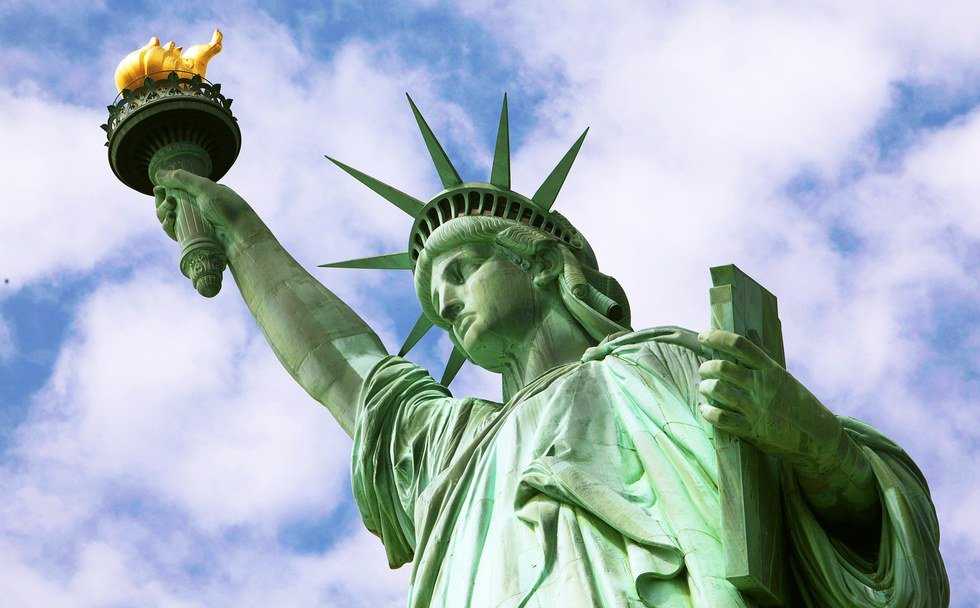
“Here at our sea-washed, sunset gates shall stand a mighty woman with a torch… her name Mother of Exiles. From her hand glows world-wide welcome… Give me your tired, your poor, your huddled masses yearning to breathe free, the wretched refuse of your teeming shore. Send these, the homeless, tempest-tost to me, I lift my lamp beside the golden door.”
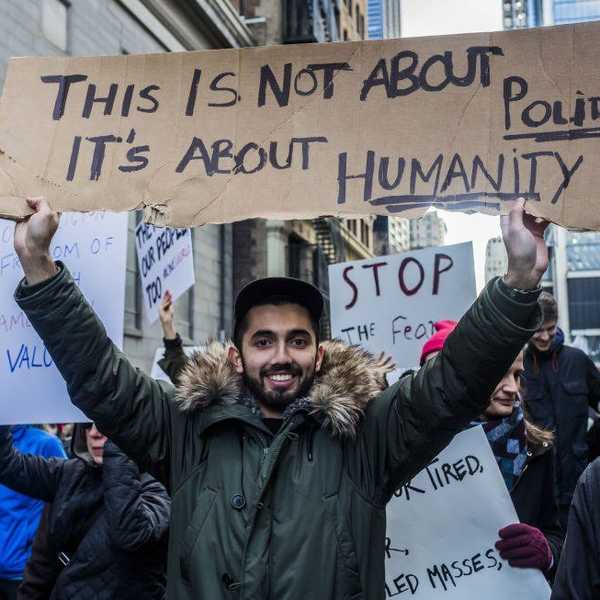
Do these words of Emma Lazarus, engraved upon the majestic Statue of Liberty since 1903, not apply to our society today?
As far as I can tell, there isn’t an expiration date on this quote, nor has there ever been a team of workers sent to chisel away those powerful, optimistic words. So why do some in the United States act as if there is some kind of “end” to this idealism? Have politics and economics soiled the basic right of opportunity to find a better life?
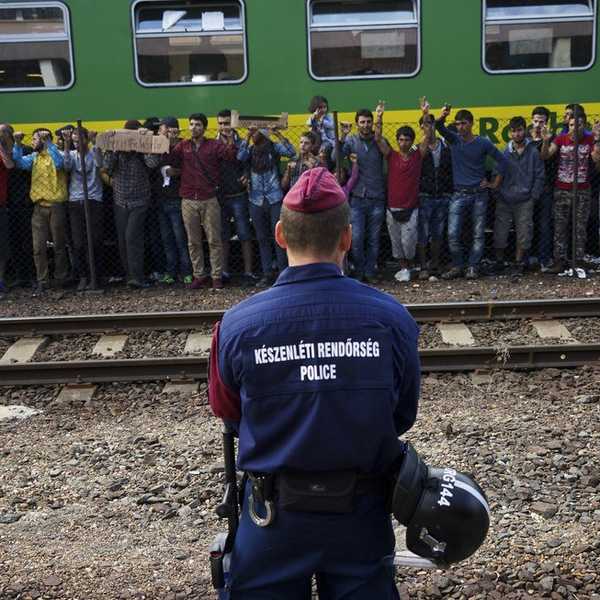
The recent U.S. Border Crisis has awakened us to significant issues regarding the world’s approach to human migration. According to the International Organization for Migration, humans have the right to freedom of movement within a country’s territory, freedom to leave any country and freedom to return to their own country. However, the organization has no legal protection mandated and cannot legally enforce rights of humanity. Nonetheless, the actions of the International Organization for Migration greatly aid in the protection of migrating people.
In order to solve the issues of migration, we could choose to completely ban immigration and continue the lengthy and laborious deportation process. We could also choose to accept all immigrants. Or we could choose to ignore the issues and keep discussions at a standstill. Although there is no “perfect” or “absolute” solution to the issues and problems raised through migration, but by understanding how human migration through the centuries has impacted modern society, we can begin to perceive the fundamental root from which human migration has grown and by what means we can deal with the huddled masses at our golden door.
Before political and geographic borders were established, human migration was traditional, normal, necessary and generally without problem. People moved according to weather events, wars, food supply, population changes or curiosity. They settled agricultural communities helped establish a sense of territory. As societies became more socially organized, a sense of “this is mine, and that is yours” inevitably arose. Eventually the idea would arise that “I have been here awhile. This is my home.” Everyone is a migrant. Archaeology proves that even the Native Americans migrated from Asia to the North American continent. Even today, tribes like the Arctic Inuit must migrate to survive. The Inuit Circumpolar Council was created between Canada, Russia and Finland to protect the indigenous rights of the Arctic Inuit tribes. My question is, how long does a group have to be somewhere to call an area theirs?
Migration maintains its necessity and reality irrespective of our personal worldview. If we see existence through a purely mechanistic, scientific and evolutionary lens, migration is how we got here, from Africa or a Neanderthal cave in central Europe. A human DNA analysis project from the Smithsonian supports the scientific “Out-of-Africa” theory that humans migrated from Africa to the rest of the world. In the DNA analysis project, geneticists traced human lineages all the way back to one woman. Eventually, the next better human model, Homo erectus, moved into the area of an older human model, and replaced him, or killed him, or just survived more easily. If evolution is the way of development, migration was the transportation method.
If we see existence as religious in its origin, migration is still the tool. Haven’t we migrated from a heaven above, only to return at some time to our ancestral home? Our government’s fundamental laws are based on the Bible. Which parts of this book can we choose to let guide us? Which parts do we ignore? After all, Adam and Eve migrated from Eden to the East. Cain was exiled to Nod after murdering Able. Noah floated in an ark and landed far from his home. Moses was sent down the Nile River in a basket to be saved from death by the Egyptians. The Hebrews migrated from Egypt to the “Promised Land.” The Christian Bible is one giant story of migration, physical and spiritual. The human story is migration. Without it, we have no story, no mission, no goal -- and what purpose?
While the migration of much of Europe, Asia and Africa through history has happened long enough ago that many do not see those events as germane to today’s world, here in North and South America, we have clearly recorded and witnessed the largest known migration of humanity of all time -- the settling of the “New World” over the past 500 years. It lives in our cultural memory, our movies, our books, our tourism. Have we learned so much, are we so smart, that in this tiny sliver of human history we can now call the shots on human movement that has existed since our religious, scientific, or mythological beginnings?
Perhaps the most daunting and challenging aspect of human migration is the future. A December 2012 study by the Center for Immigration Studies projects that the population of the United States will increase by 127 million people by 2050 if the Census Bureau’s predicted immigration continues. In fact the Census Bureau claims that the assumed legal and illegal net immigration by 2050 in the United States will be 68 million people, plus their descendants. In other words, 75 percent of the United States’ population growth in the next 35 years will be largely due to immigration. The future is a vast and unknown world that we cannot even begin to comprehend. Where we are now is due to migration. If we prevent it, what might we, as humans, be losing? Maybe we should prevent migration. Perhaps it will solve the world’s economic difficulties, end hunger and bring peace to all nations. But how will we know? Migration has been the tool and the method to solve the difficulties of hunger, war and want for millennia. To stop migration will only continue the institutionalization of war, want and hunger in much of the world. It will shut it out of the sight of the wealthy and well-fed. Is that why we are here -- religious or Darwinist, scientist or missionary?
We are not proposing a solution to migration issues here, domestic or international, present or future. In fact as we have covered a few aspects of migration’s past, present, and future, each has ended with a question. Humanity has only grasped the significance of migration partially. But we are still somehow at the steering wheel of migration’s future. It is already clear that many parts of the world do not play by or acknowledge the “rules of the game” as we do, or try to do. No one just enters or leaves North Korea or Saudi Arabia or many other parts of the world. There is certainly no 305-foot Roman goddess holding a torch of freedom, with broken chains at her feet, Mother of Exiles, welcoming all to her shores in any other country. Nor do those other countries have at their most important port of entry, a chiseled poem of such power and commitment to human dignity, freedom, and the clearly stated right of migration as our own Statue of Liberty. Most solutions spring from the simplest of thoughts, inspirations or desires. Should the future discussions for our own American migration dilemma start, in the words of Emma Lazarus, “beside the golden door?”

















