Every year, I anxiously anticipate the holiday season, centered around gratitude and family. As Thanksgiving and Christmas each draw nearer, I eagerly look forward to my family’s annual traditions, which involve hopping around from New Jersey for Thanksgiving to New York for Christmas to Los Angeles for the New Year. I excitedly await the moment when my family is reunited at each of these locales, when I see my cousins, aunts, and uncles after having spent many months apart. Each year, I am left with memories of unique experiences and delicious meals shared with my cousins. The holidays are a time when my family gathers and reflects on its manifold blessings.
Over the years, however, the holidays have become increasingly focused on the buying and receiving of gifts. The holiday season has turned into the discount season, a one-and-a-half month push to rack up as many sales as possible. We yearn for “stuff” — clothing, gadgets, toys — that provides only temporary satisfaction, forgetting the joy that comes from just having enough. Such perceived needs take precedence over the season’s celebration of gratitude and — in some cases — family.
I recently came across this Huffington Post article from 2013 titled “If You Shop on Thanksgiving, You Are Part of the Problem.” Author Matt Walsh begins by addressing the irony of pairing Thanksgiving with Black Friday.
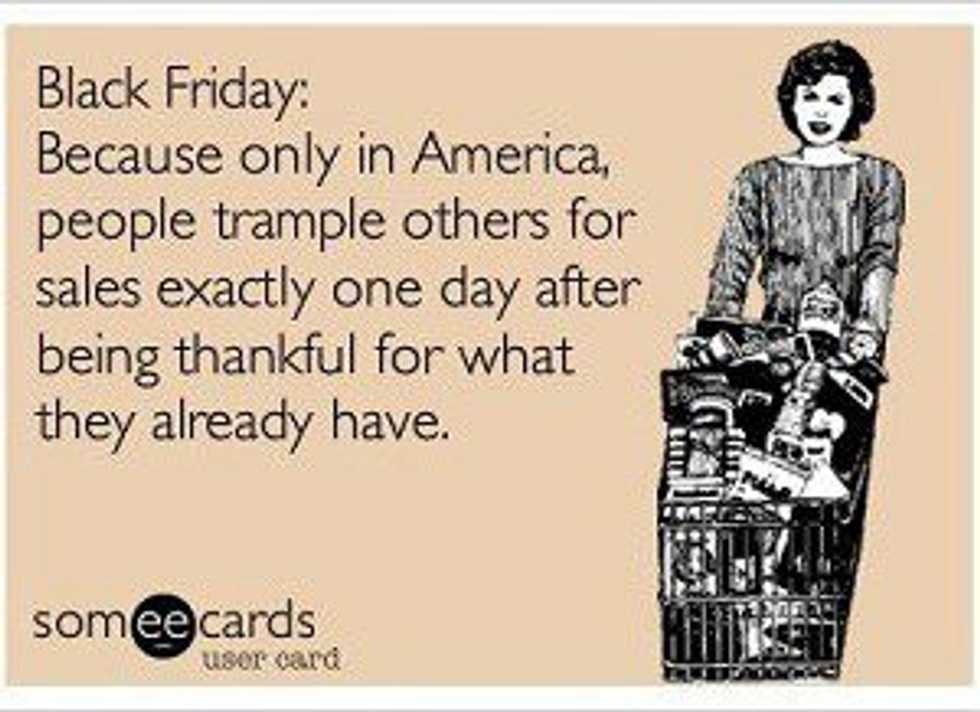
“How appropriate, then, that a holiday created by our ancestors as an occasion to give thanks for what they had, now morphs into a frenzied consumerist ritual where we descend upon shopping malls to accumulate more things we don't need.”
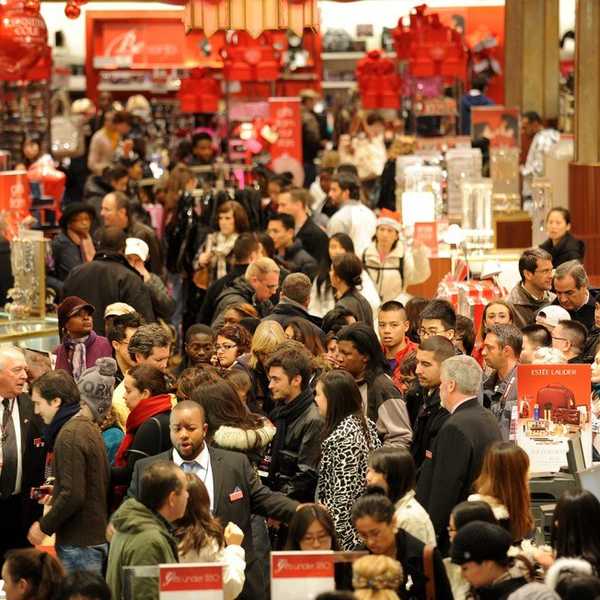
And with popular retailers — including J.C. Penney, Old Navy, and Macy’s — opening for “Black Friday” on Thursday afternoon (J.C. Penney will be open as early as 3 p.m. this year), consumerism seems to have consumed Thanksgiving, the one day explicitly dedicated to expressing gratitude.
“Black Friday could not be contained to a mere 24 hours,” writes Walsh. “It is Consumerism. It wants more. It always wants more. Nothing is sacred to it; nothing is valuable. So, now, Black Friday has eaten Thanksgiving alive.”
One of the few purely American holidays, Thanksgiving has held special appeal to the American public because of its secular nature and foundation on universal values of thankfulness, two characteristics which enable it to be celebrated on a large scale. Why allow consumerism to devour this holiday, which holds such a special place in the American psyche and national identity? (While celebrating European colonization is certainly questionable, the principle of setting aside a day to give thanks is surely laudable.)
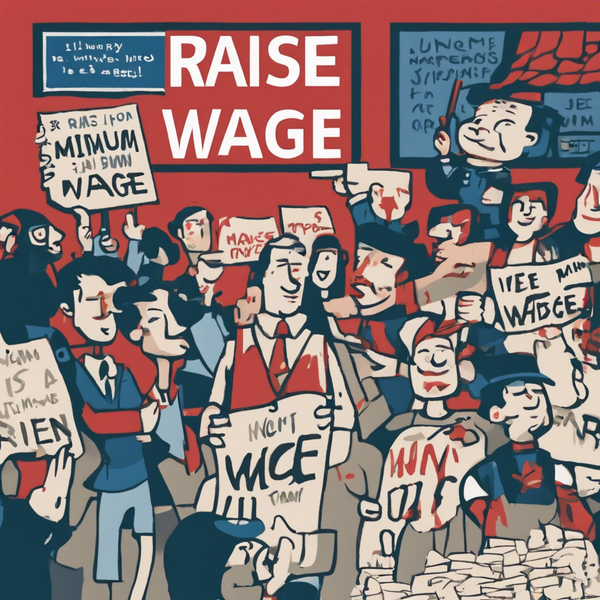
With Black Friday starting as early as Thursday evening, people will give thanks during Thanksgiving dinner and then immediately rush to stores to buy more things they don’t need. Not only is this morally ironic, but this situation also causes businesses to “rip them [their employees] away from their kids during one of America's most beloved holidays.” Unfortunately, the employees working these shifts don’t have much choice: either work or risk getting fired. Are those discounted jeans really worth forcing a single mom to spend her Thanksgiving toiling at her low-paying job?
This is not to say that we should all boycott Black Friday — I know I certainly enjoy the discounts. However, it is possible to approach the yearly holiday shopping frenzy more mindfully: be it by reducing the volume of “stuff” (gifts and other) we buy, or at least waiting until Friday to go Black Friday shopping, sending the message to retailers that there is no need to open on Thanksgiving. Let’s consider our families, the employees who work at our favorite stores, and the importance of giving thanks this holiday season. Jeans and TVs can wait, but family cannot.