
WARNING: The following article contains spoilers.
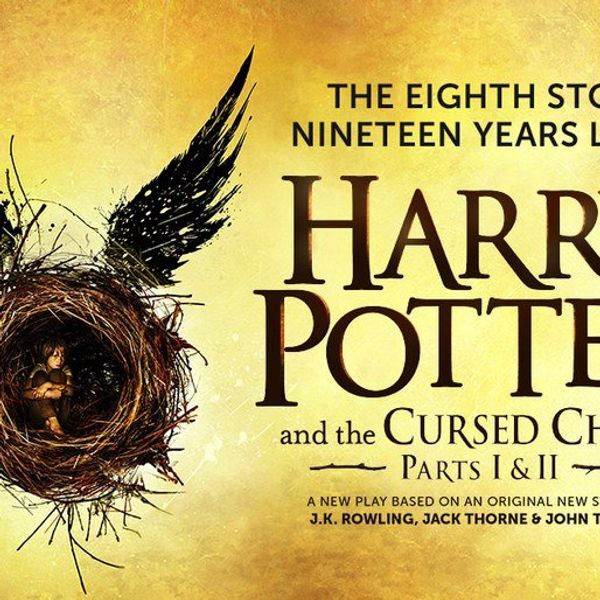
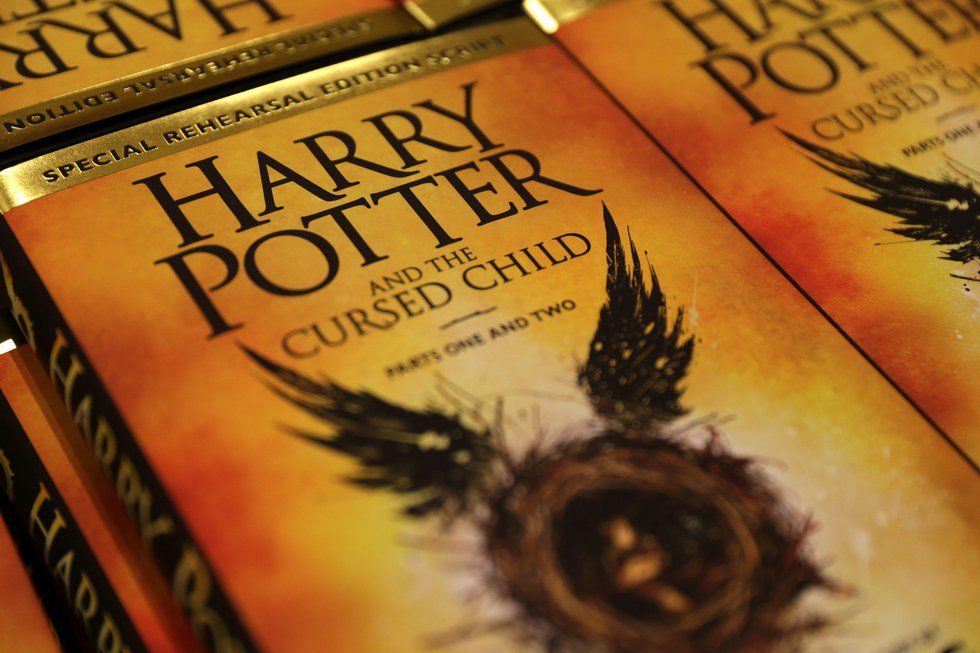
I have been waiting for the release of the Cursed Child script-book for well over a year now. If we want to be technical, I’ve been waiting nine years, ever since I first read those fateful words, “nineteen years later.” I knew in my Harry Potter loving heart of hearts that J.K. Rowling wasn’t done telling his story yet and I, like every other Potterhead, have been eagerly following every whisper, every rumor of an expansion to the Potter universe. I cheered when I first read about the theme park in 2007, I read every book the week it came out, I saw all the movies in theater, and attended the midnight premiere of Deathly Hallows Part II, the first year my mother would actually let me do so. I’ve been desperately tracking the progress of the Fantastic Beasts franchise. So really, after so many years of waiting, spending four hours in a line to get my hands on Cursed Child as soon as possible didn’t seem that big a deal. I counted down the minutes along with all the other crazy fans in my local bookstore and then raced home, ready to pull an all-nighter with my new treasure (an accurate description as the cover art is so golden).
But, I am sad to say; the cover was really the only thing that shined for me. I did tear up a bit as I read the first few pages, because they had picked up right where Deathly Hallows had left off, just as I had hoped. I read through the first four acts almost hungrily, speeding through Albus’ first two years at Hogwarts as if they only lasted twenty-five pages…Oh wait, they did. My first complaint about Cursed Child, and yes there are many, is that it was such a quick, easy read. I know the original series wasn’t exactly difficult, either, and, of course, this was the script of a play, it was limited by stage and time constraints, but even with the stage directions, I found myself speeding through acts. The entire book was essentially a repeat of my, I hate to say it, least favorite Potter novel, Goblet of Fire. The timeturner plot was corny and far-fetched, much less about the next generation’s adventures than about the Potters’ father-son relationship.
Honestly, the entire thing was written like an extended fan-fiction, and you could tell from early on. The book didn’t have Rowling’s usual flair, not to mention none of the characters really acted like themselves. J.K. Rowling had thought out every aspect and nuance of all our favorite characters, and that didn’t carry over into this script. Let’s start with the fact that Draco Malfoy and Harry Potter essentially abandoned their seven years of being enemies and started making house calls to each other. Sure it was all in the name of fatherhood and because their sons were best friends, another unlikely story, but I just cannot imagine Draco and Harry getting over their deep-rooted feud that suddenly. Ron Weasley, easily my favorite character of the series, was written off, basically irrelevant to the plot of the play. He was running the joke shop for some unknown reason (seriously, where was George?) and made out to be the master of all dad jokes. There were scenes with just Harry and Hermione that really felt like Ron could have been written in to. Just because he wasn’t a ministry official doesn’t mean he was any less involved as a parent. Harry himself had some character discrepancies. Harry Potter, the Boy Who Lived, the Chosen One, the boy who destroyed Lord Voldemort, the most famous wizard of his time, would not be satisfied and content with a desk job at the Ministry, and no one can convince me otherwise. Gone, apparently, were his dreams of becoming an Auror. Why was he friends, or at least civil acquaintances, with Dudley, what am I missing there? Also, I refuse to believe Harry Potter would ever be such a bad father. Yes, I know he didn’t have James around as a role model, but Harry had plenty of other examples of father figures that would have influenced his parenting skills: Arthur Weasley, Dumbledore, Hagrid, Snape, even Lucius Malfoy’s devotion to his son would have made an impression on young Harry Potter. Ginny, as well, was a bit of a disappointment. She didn’t have her usual fire or feistiness; she was literally just a mom, rival almost to the level of disappointment induced by the dull movie Ginny. Hermione’s position as Minister of Magic was surprising to me. I’m not sure what else I expected, it seems fitting that someone who so hated the Ministry during the war would want to change it, and such a brilliant mind would be perfect for the job, but I was surprised nonetheless.
Now, I know this play is supposed to be focused on the children and the next generation, it is entitled Cursed Child, after all, but don’t worry, I have some words about Albus Severus Potter, as well. I found it hard to believe that Albus would so quickly befriend Scorpius. If he is a true Potter, we know they hold grudges. How long did Harry hate Snape just because he was told his dad did? The only explanation to this friendship lies with my original take on the relationship, one that I believe I share with many other readers: Albus and Scorpius had a lot of romantic tension. You are lying if you say you didn’t ship them. I got very Scorbus vibes every time they awkwardly hugged, despite the writers’ obvious attempts to make Scorpius and Rose a thing. Why did Albus lack any Quidditch skill when he was born to two fantastic Quidditch players and likely grew up around the sport due to his mother being a Quidditch reporter? Why was he a Slytherin when he was, again, born to two stand-up Gryffindors? Where were his very Potter-esque troublemaking tendencies? Yes, I know James Jr. was supposed to be the Golden Child, the one casting the shadow that gave Albus such severe middle-child syndrome, but from previous books, we know things run in powerful wizarding families. Every single Weasley was a Gryffindor, and there were nine of them, every Malfoy a Slytherin. I’d like to believe the Potter name would be similar. I know we were shown an alternate reality in which Albus was a Gryffindor and was still miserable, but it just seemed convenient to the drama of the play to make him a Slytherin. It was a big, “Oh, of course they had to,” moment for me. Scorpius was very sad and sniveling, a big turn around from the pretentious, gloating, showy Malfoy’s of the original series. I would have liked him, at least once, to say, “My father will hear about this!” just for old times’ sake.
Those are really the only characters I can complain about because there were no other characters. Aside from very brief mention in the beginning and during the cathartic Albus/Harry talks, there was no talk of James Potter Jr. Rose Granger-Weasley was also conveniently out of the picture and her brother Hugo was virtually nonexistent. Where were Neville and Luna and Dean and Seamus and the rest of the gang? Where were the other Weasley’s? Where were Teddy Lupin and Victoire! Cousin Victoire! They were one of my favorite open ends of Deathly Hallows, an exciting potential plot. Granted, Teddy would have been long-graduated from Hogwarts but still, that storyline held such promise. No, instead of all my old favorites I got Delphi instead.
Oh, you didn’t think I was about to ignore the elephant in the room did you? Of course I need to talk about Delphi Diggory- I mean Riddle? Her alliterative name worked so well, at first, too. Where do I begin with Delphi? Bellatrix Lestrange did not have time to be pregnant during that war. As far as I know, wizard pregnancies work the same as Muggle pregnancies. Even if she had Delphi before the Battle of Hogwarts, she would not have been well enough to be fighting. Bellatrix would have been pregnant or nursing when she tortured Hermione at Malfoy Manner. Draco, as well as the then captive Luna and Ollivander, would have known about the baby. Someone would have told Harry. If Delphi had been born, would Voldemort have been nearly as concerned about his Horcuxes if he had a living, breathing, pure-blood heir? When did Bellatrix and Voldemort find the time to get down and dirty with all the hunting down of people and Hallows? Is Voldemort even capable of getting down and dirty? The fact that she was so young and knew such dark magic, that she could fly and was such a strong opponent for the great Harry Potter, was unbelievable. I did not understand why suddenly Harry’s scar was hurting, he was having dreams, and he was speaking Parseltongue again if Delphi had been around for nineteen years? She didn’t seem like she was trying to conceal herself in any way. Why was she so obsessed with stopping the death of Cedric Diggory when she could have just gone back to Godric’s Hollow 1981 as Plan A instead of Plan B?
Speaking about the time-travel, I have a lot of complaints about that. The various alternate realities became confusing to follow. In one reality, Albus didn’t exist and Scorpius was alone but then Albus popped out of the lake. Ludo Bagman and Dolores Umbridge came back? Hermione was leading a rebellion with Snape and liked to be called Granger? Snape was back for a brief while and very suddenly a nice guy. I guess he just has a weakness for helping those Malfoy boys with ridiculously impossible tasks. I don’t think that in any reality Ron Weasley would have ended up with Padma Patil. Don’t tell me that in one universe Scorpius is a nice, nerdy mix of Malfoy and Hermione and then in another he was basically Lucius reincarnated. There were just so many inconsistencies. The boys were doing magic outside of Hogwarts. The time turner was only supposed to give them five minutes but then they spent an entire day in Godric’s Hollow. If it were so easy to create and use illegal time turners, why did no one do it to bring back Fred or Dumbledore or Sirius or any of the other “Fallen Fifty” (a term that I highly doubt J.K. Rowling dubbed herself)? Harry was so reliant on Dumbledore’s painting, despite having felt very lied to and cheated by his headmaster in the past, and despite everyone telling him not to listen to paintings. How did they have so much Polyjuice potion so readily available on demand? How did Scorpius know what reacted with a love potion in Godric’s Hollow when he couldn’t make a potion in class earlier in the script? How did these two boys break into the Ministry of Magic without a hitch when it was such a struggle for seventeen year old Harry, Ron, and Hermione? How did Albus and Scorpius get into Bathilda Bagshot’s house so easily? How did all the parents keep showing up at Hogwarts whenever they felt like it? Don’t get me started on the suddenly demonic Trolley Witch? And, someone, please, tell me why Moaning Myrtle said she didn’t moan anymore?
My dislike of this script goes deeper than just the plot discrepancies. It wasn’t well written, and that’s all there is to it. The stage directions were blunt and straight forward and left nothing to be inferred. Thorne tried to throw in such un-Potter lingo (at one point a character said something along the lines of ubergeek). The jokes were weak and the plot just drew from all the old Potter books, nothing was original. It was a mixture of Deathly Hallows, Half Blood Prince, Goblet of Fire, Prisoner of Azkaban, and even Chamber of Secrets. The beginning was rushed, I didn’t have enough time to fall in love with these new characters for themselves, I found myself liking them just because of their parents. I wasn’t satisfied with the amount of detail I was given in the stage directions. In the end, I was left disappointed and with too many unanswered questions. I partially blame myself, for setting my expectations so high. I have such mixed emotions about this play because, even though it had so many flaws and my beloved wizarding world was a bit of a mess, it was nostalgic. I liked seeing where they took the characters. It was cyclical, which I can bring myself to enjoy (although, when Harry and Hermione and the gang let all their kids watch Voldemort murder Lily and James I had to question a few things). Again, reading this script is obviously a much different experience than seeing the play. I found myself questioning throughout my reading how these scenes would play out on stage- how would they make the staircases move, the bookcases engulf people, Delphi fly? I also often found myself wondering how much of it J.K. Rowling was actually responsible for? I’d recommend this book for the sole reason that it is a Potter book. While it certainly wasn’t my favorite of the books, it left me eagerly awaiting the day Cursed Child will come to Broadway, as well as November 18 for Fantastic Beasts (which I can only hope will make a better impression as I have literally no idea what to expect from it) and longing for a time turner of my own to take me back to the release of Sorcerer’s Stone so I could enjoy the Potter universe again from the start.

















