

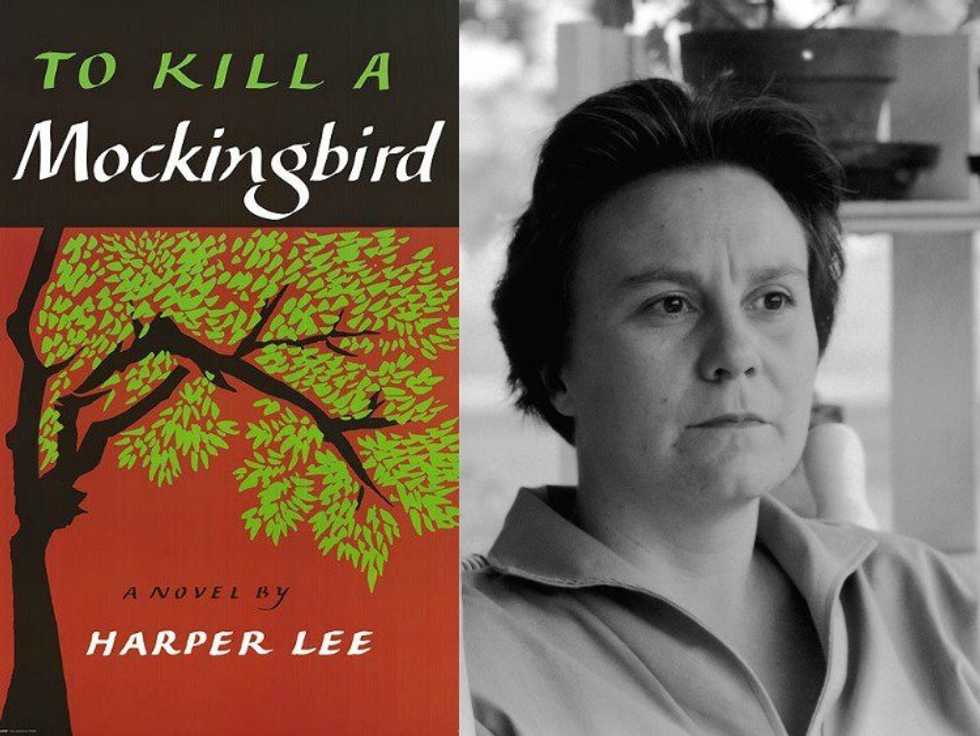
"You never really understand a person until you consider things from his point of view...Until you climb inside of his skin and walk around in it." Harper Lee, "To Kill a Mockingbird."
Harper Lee, author of the timeless classic, "To Kill a Mockingbird," and its recent sequel, "Go Set a Watchmen," passed away on Friday in her hometown of Monroeville, Ala. at the age of 89. "To Kill a Mockinbird" was published in 1960, and became an immediate best seller. Lee won the Pulitzer Prize in 1961, and the book was adapted into an Academy Award winning film the following year. Since its release, "To Kill a Mockingbird" has sold 40 million copies and is frequently taught in schools across the country. Its story, its message, and its characters have been openly embraced by readers for decades, and will probably endure as they have, for decades to come.
What is it about this story that strikes a chord with us? The 1960s were ruled by two waves of revolution. The rights of women and the Civil Rights Movement. Scout Finch, the narrator whose age ranges from six to nine through the course of the book, represents what women of this era strived to be: independent, assertive, and unafraid to speak her mind. Even today, the image of a swearing, pants-wearing six-year-old girl unfazed by the feminine societal standards of the Depression era, embodies the strong willed, powerful icon of the woman many strive to be.
What looms over the story of "To Kill a Mockingbird" is the subject of race, with the controversial trial of a white woman accusing a black man of rape which becomes the centerpiece. Scout's father, Atticus, the human portrayal of wisdom and morality, is a lawyer assigned to defend the black man, Tom Robinson. The trial and its aftermath are seen through the uncorrupted eyes of his young daughter, Scout, providing the audience with an unobstructed view of the racial tensions in the 1930s era Southern town where the story takes place. Her childlike honesty allows the reader to explore the tense subject of institutional racism with the highest level of objectivity, creating an environment to learn and develop as an audience.
"Atticus, he was real nice."
"Most people are, Scout, when you finally see them."
The book's heavy themes bear a considerable amount of weight on its reader while, at the same time, providing that reader with an of the complexities of humanity and our shared experience. Harper Lee leaves us knowing what it is to strive for justice within ourselves, and within our community. She leaves us with one important job, and that is to finally learn to see each other.
In an official statement released by Barack and Michelle Obama, they state that, "Ms. Lee changed America for the better. And there is no higher tribute we can offer her than to keep telling this timeless American story -- to our students, to our neighbors, and to our children -- and to constantly try, in our own lives, to finally see each other."