
As far as unpopular opinions go, this hits the target, apparently. I'm not going to apologize for what I am about to write nor am I going to sugar coat anything I am about to rationalize with you, but instead I am going to state facts in order to back up my opinion as to why Harambe, the silver-backed gorilla, was wrongfully killed because of what happened at Cincinnati Zoo earlier this weekend. Before you click that 'x' or that back button, at least hear me out.
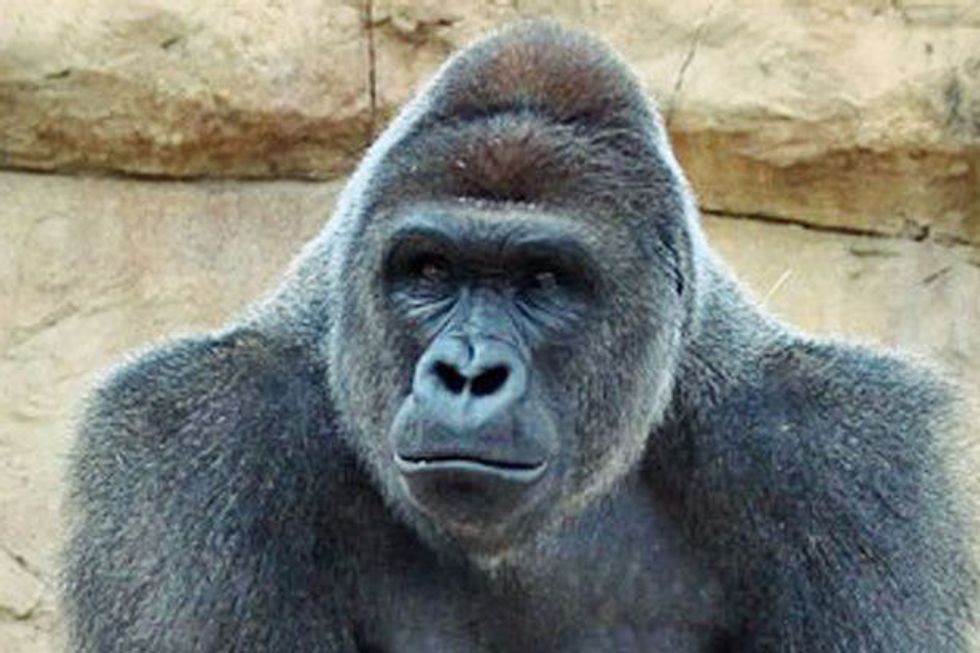
To give background, Harambe was a silver-backed gorilla, labeled as an endangered species. It is extremely important to know that gorillas, especially of the male variety, are natural protectors. They will do anything in order to protect those they consider family. There is a reason why they have been called 'protectors of the jungle.' Also, gorillas are extremely docile, gentle creatures. People tend to neglect this information due to the gorillas' large size with males ranging from 5'5" in height and anywhere from 300-450 pounds in weight with females at 4'5" to 5' when standing with weight at approximately 200 pounds. Yes, they are heavy and large animals, but they are one of the more non-aggressive species unless provoked.
In the case of Harambe, the real one at fault is the parent of the four-year-old child. The child made it clear to the mother that he wanted to get into the water of the gorilla exhibit they were observing. Knowing children, once they get an idea into their minds, they will strive to do whatever it is they want regardless of instruction. As a precaution, this mother should have had a hold on her child. Seeing as the child made his way into the gorilla exhibit, obviously, she did not. A bystander has told other sources that she had tried to grab the child before he went over the edge, but was too late. If the mother of this child actually had been watching her own child, much less holding onto her child, this situation would have been averted and Harambe would still be alive. As a young child, he should have been monitored at all times.
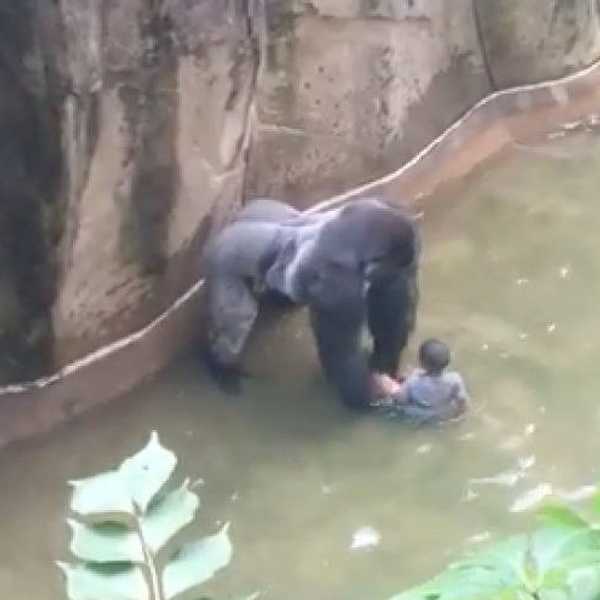
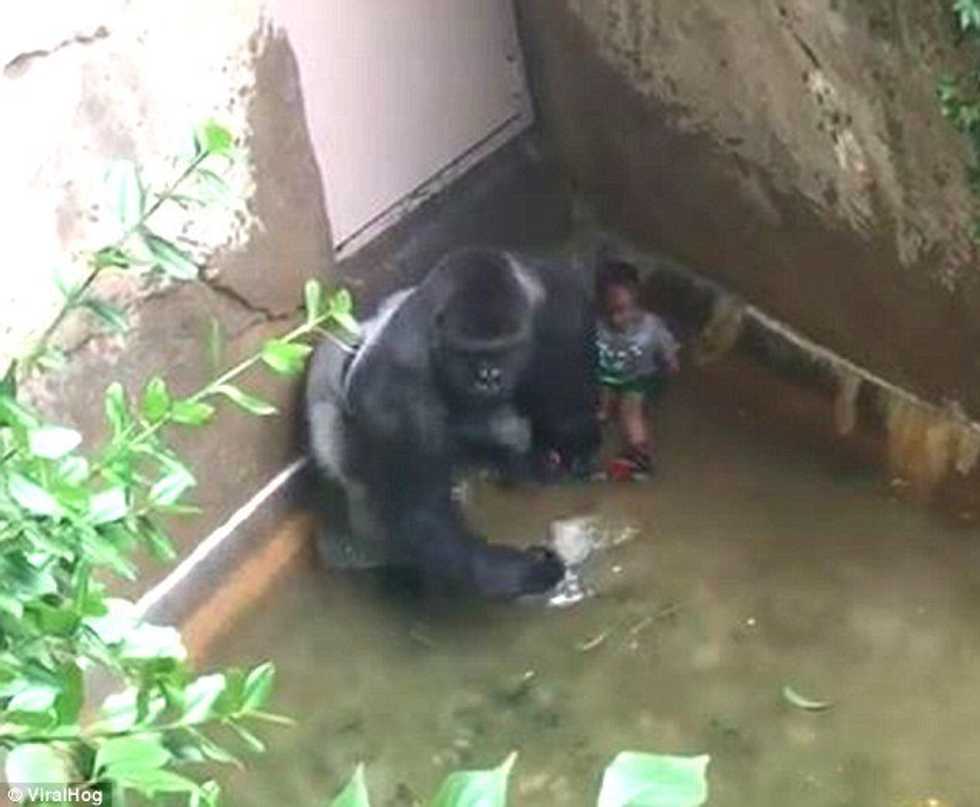
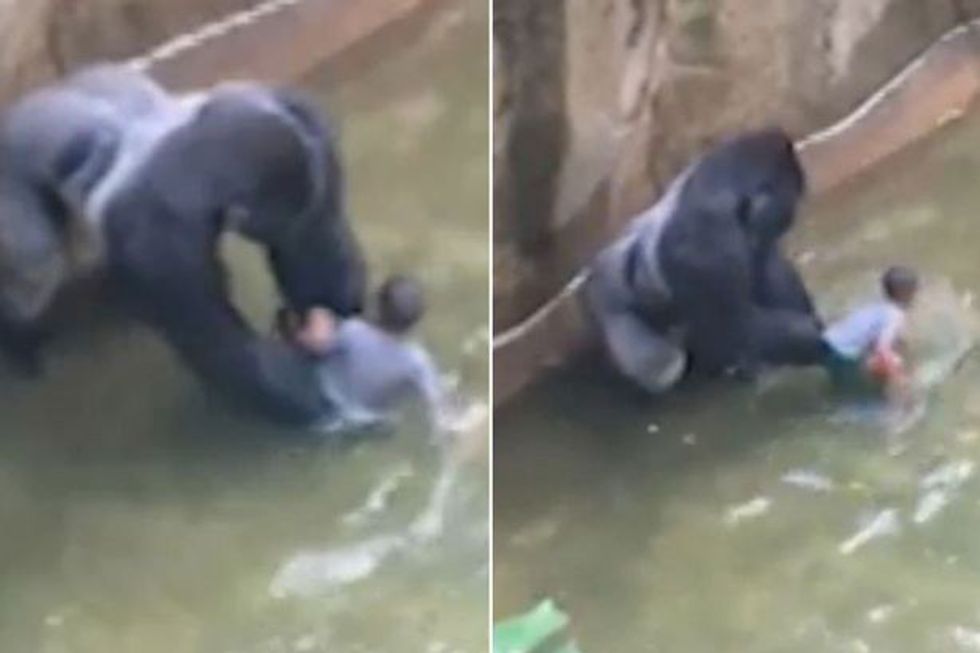
Once the child was into the enclosure, bystanders began screaming and causing a scene. This caused an alarming situation and Harambe did what any other silver-backed gorilla would have done: protect the little one from harm. As apes are a close relative to humans, it was only natural that Harambe assumed this little tailless creature was similar to him. As the screaming continued, he felt he needed to protect the child, therefore moving his body in between the child and the crowd to shield him from the chaos. He then proceeded to get him as far away from the uproar as possible. Yes, he may have handled the child roughly while carrying him, but it was not out of spite or aggression. No, this was typical behavior of a male gorilla protecting his baby. Keyword: protecting, something the child's own mother failed to do. Again, it did not help the situation that the bystanders were causing a great commotion. This may have caused Harambe to panic, causing him to increase his speed and carelessness when carrying the child over the water. If the crowd had reacted in a calm manner, maybe Harambe would not have been spontaneous in his actions or carried the child as far away as he did.
These are things many people do not think about: their actions do influence how animals perceive situations. If you strike a dog for no reason, do you expect her to act kindly towards you? No, of course not. If you get scared and freak out over something, wouldn't you think that the animal would also get spooked and panic as well? Of course, he would. Again, animals are influenced by human reactions.
As humans tend to overreact and jump to conclusions, it was assumed that Harambe was slinging the child around to possibly kill him and therefore it was he, the gorilla, who must be punished. It's understandable that yes, the child had to get out of there quickly before something critical did happen, but did they really have to shoot the animal and kill him? It was not necessary. Despite the gorilla not being a threat to the child, it was still put to death. Zoologists even confirm that the animal's body language was strictly that of protectiveness. There are a couple of other options that would have spared this animals' life. Harambe could have been tranquilized, though having a random sharp poke may have actually set the animal into a rage due to surprise. A trained professional who had worked with the gorilla before could have gotten into the exhibit and distracted the gorilla (with treats perhaps) so another professional could return the child to his mother. The gorilla was not posing as a threat, therefore, this probably would have been the best option for both the child and the animal. No bodily harm would have been inflicted, everyone wins. But of course, death is always the best choice, right? Wrong. Not only did Harambe, a seventeen-year-old silver-backed gorilla, perish, but we are yet another death closer to the extinction of the critically endangered silver-backed gorilla species as a whole.
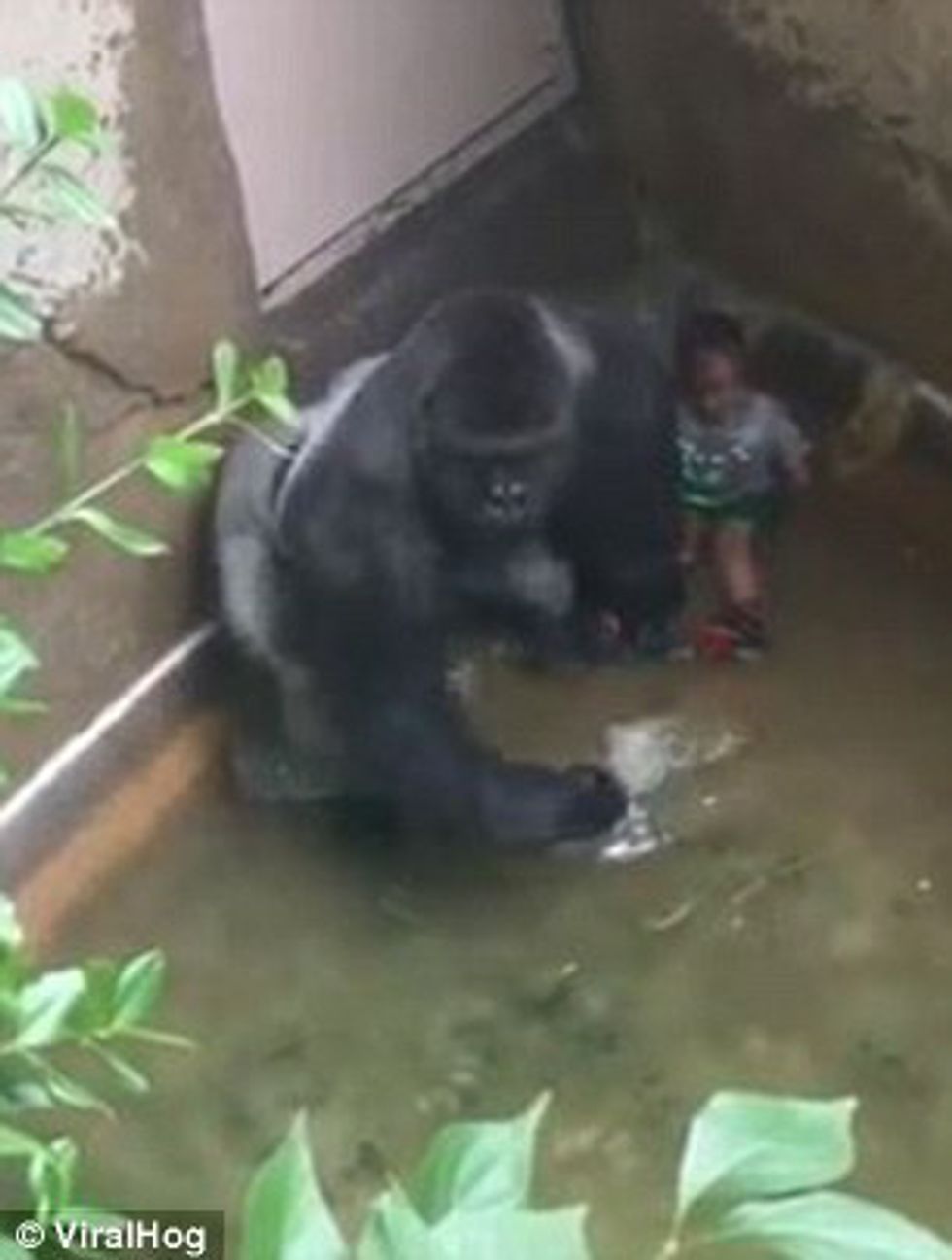
It's fantastic that the child is safe and well, but the animal also should be safe and well... and alive. Harambe was just naturally trying to protect the child from the chaos of the crowd. It's pretty sad when a gorilla was doing a better job at protecting and caring for the child than his own mother did. No one likes seeing a child harmed and no one likes seeing an animal harmed so, together, let's strive to prevent things like this from occurring. Watch your children and watch your animals; don't forget just how much influence you hold over both.