
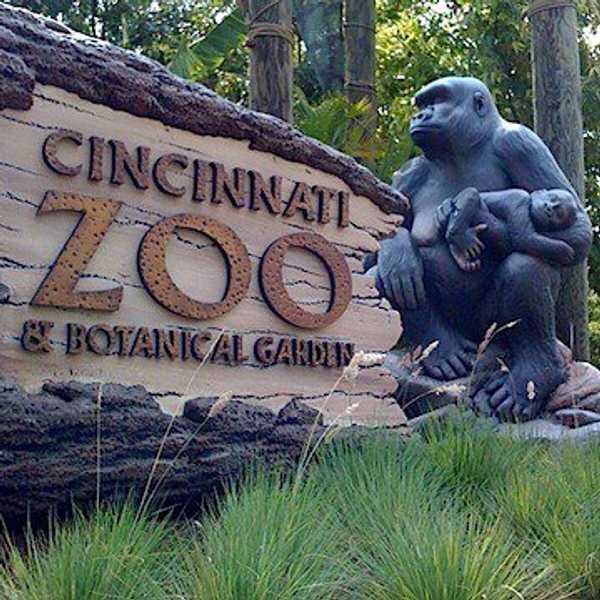

In recent news, beloved Cincinnati Zoo resident Harambe was fatally shot after a toddler found his way into the gorilla's habitat. This incident has caused an uproar in the media, with many blaming the mother's negligence which lead to this primate being murdered. Upon closer inspection of the zoo's security footage, primatologists such as Jane Goodall have stated that it appears Harambe was trying to protect the boy, much like Binti Jua had done to another curious child at the Brookfield Zoo almost 20-years ago.
The difference? Binti Jua survived, because it was clear to those around that she was guarding the child, who had been knocked unconscious by the fall. Some say that Binti even saved the boy's life. In Harambe's case, the child was fully conscious, sustaining no serious injury. Officials took the gorilla's rough nature to be a sign of attack, when in reality Harambe was treating this boy like he would have treated another gorilla baby. The Hamilton County Prosecutor, Joseph Deters, stated that the mother of the child would not be charged, and that it was a shame the zoo lost "a beautiful animal" but that Harambe was just that; an animal. "It does not equate human life."
Similarly, we are coming up on the year anniversary of the death of the beloved Cecile the lion. Cecile was illegally shot and killed by American dentist Dr. Walter James Palmer on July 1, 2015, who has previously been convicted of poaching. Cecile was said to have been "shot with a bow and arrow and then stalked for more than 40 hours before being killed with a rifle shot." The lion was later found beheaded and skinned. Cecile was evidently not the first lion Palmer has killed for sport, nor are lions his only prey (in 2008 he faced legal troubles after having killed a black bear in violation of his hunting license). Palmer faced a hefty fine of $50,000 which was later paid, however he never faced prosecution. His office was once again open for business in September 2015, after only two short months of leave.
These two animals may currently be the most famous for paying the price of human indulgence and negligence, but they certainly are not alone. According to Endangered Species International, "Of the 44,838 species assessed worldwide using the IUCN Red List criteria, 905 are extinct and 16,928 are listed as threatened to be extinct." Only approximately two-percent of the world's known species have already gone extinct, however an astounding 37-percent are facing the threat of extinction. North America has the highest extinction rate, with a whooping 256 known species that have been wiped out;coming in a close second with 185 known extinct species is the Oceania region, or Australia and its surrounding neighbors.
Unfortunately, many people think like Joseph Deters and Dr. Palmer. Many people believe that these animals are just animals, and their lives are not as important as ours. But what makes us humans so special? Scientists believe that a number of factors play into our superiority, such as language, the use of tools, the ability to create art and our dwellings. However, there are plenty of house-trained animals out there -- many people keep pets like dogs and cats in their homes. And I'm sure we've all seen the video of Suda the Elephant painting a self portrait. If you watch a primate fiddle around with some rocks and food, you'll notice them using these rocks as tools to eat just as our ancestors did, long before the invention of the fork. And we can't forget about Koko, the famous western lowlands gorilla who was raised by humans and taught sign language as a form of communication.
Sure, humans may arguably be the only species to be able to master all of these skills to form one single, functioning being (although our primate cousins are catching up quickly!) but does this really make us superior to Earth's other inhabitants? Does this entitle us to kill animals, not out of need but for pure sport? Does this entitle us to destroy habitats in the name of capitalism, to wipe out entire ecosystems for our own personal gain? Were we put here on this Earth to pillage it? To take what we want with no second thought about what may be living in those trees, in the brush, or even in our own backyards? And do we really believe that these animals that we take from don't feel loss, sorrow or fear? I believe the answer to all of the above is no. Humans, as a whole, must become accountable for their actions and crimes against the animal kingdom. This planet is not ours alone, and we must keep this in mind.