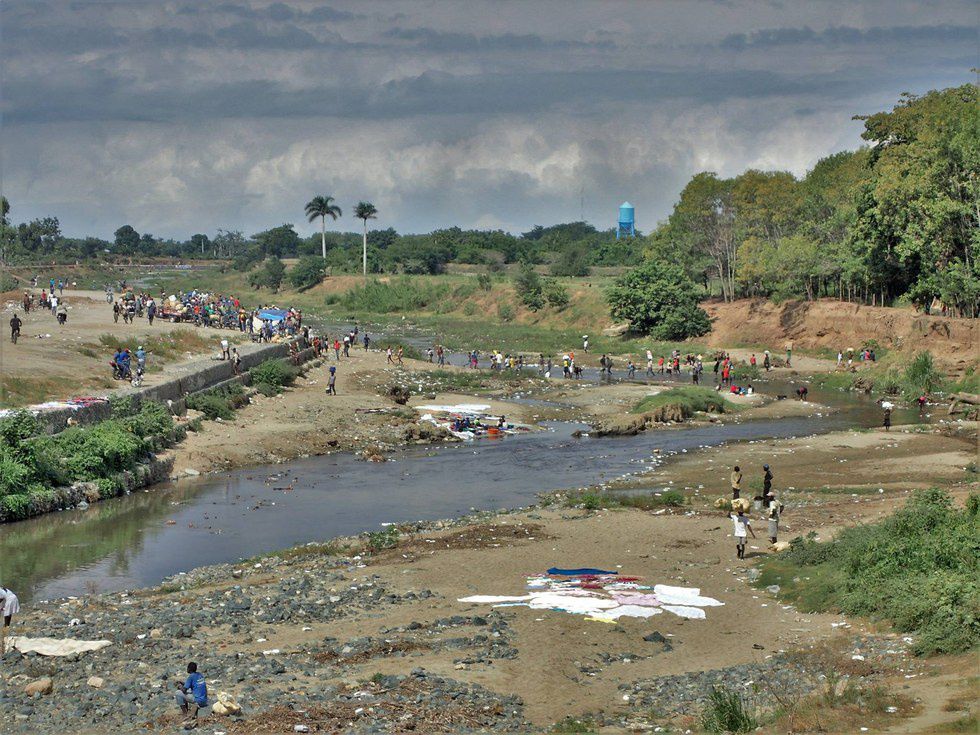
Every Monday and Friday, the border between Haiti and the Dominican Republic opens up in the city of Dajabón over the Massacre River. From 8 a.m. to 2 p.m., Haitian vendors are allowed over the border into the Dominican to sell their goods. The vendors occupy stalls in a huge concrete building built for exactly this event. Those who can't afford a spot in the building sit on the street with their items spread out on the ground, and the organized chaos of market day extends for about a half mile from the bridge separating both countries. It is not a place for the claustrophobic or the faint of heart.
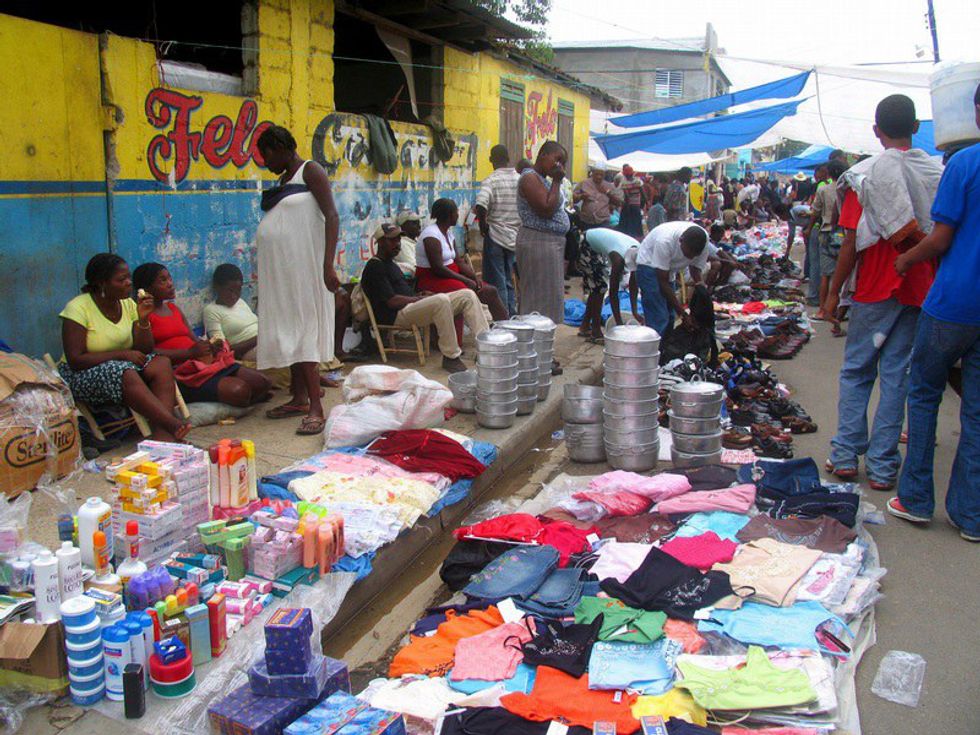
The goods that are sold? Everything. Shoes, clothes, bags, curtains, makeup, cookware, dishes, perfume, soap, purses, jewelry; if you’ve got it in your house, they were selling it at the market. The source of all of those goods? The first world. Yes, every single item that is sold on market day in Dajabón is a donation from people in other countries. And that bit about the Super Bowl Champion shirts and hats of the losing team being donated to Haitian children? True. Turns out, they just might not stay in Haiti.
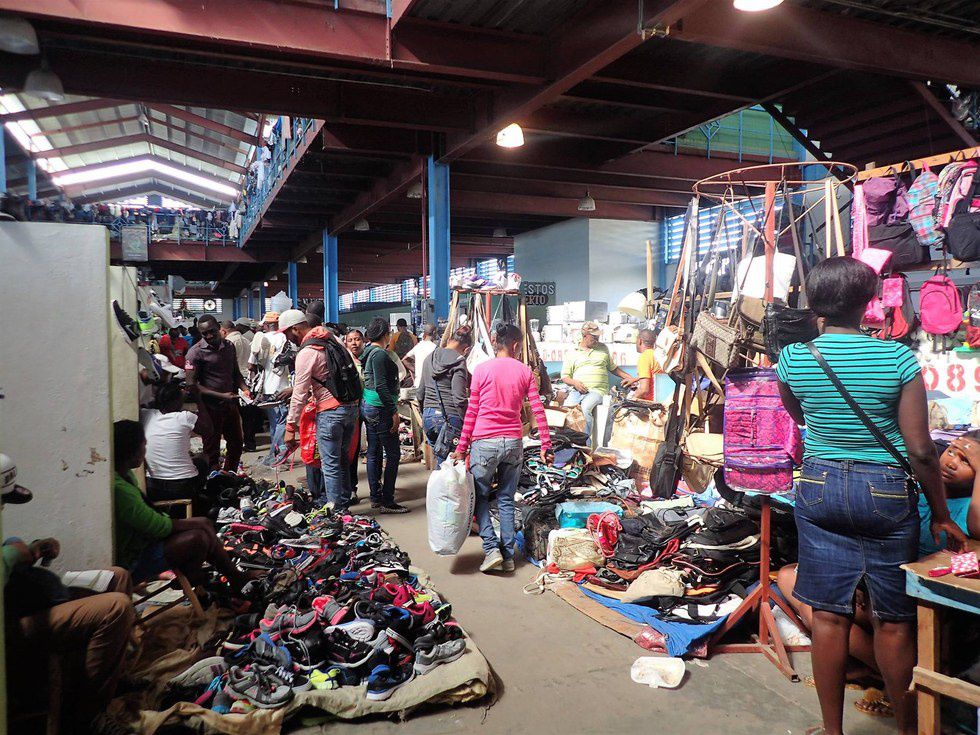
My time at the market was nothing short of sensory overload. The operation was massive, and people were yelling in three different languages across stalls and at prospective buyers. More than anything else, the market had a sense of urgency. Compared to a normal busy street or town, there was less friendly banter, less laughing, less casual walking, and I don’t think that that necessarily means it is a sad place or that the people there aren’t friendly. It just means that they were in a hurry. More than a hurry; they had literally no time to spare.
For many Haitians, the money made by selling the donated items at the market is their only source of income. I’ll never forget walking past a huge pile of black Tom’s shoes and wondering why one person would have so many. I was told that those shoes were given for the children to be used for school uniforms. From the perspective of a mom, however, selling the shoes for money to buy food is a fair trade if her child has to go to school barefoot.
Visiting the market was a look into what happens on the other side of the donation pile. Does it help or hurt to ship these massive amounts of unneeded goods to a place where they need other things more? What if more people were made aware of the real needs of impoverished nations, of impoverished individuals? I have no doubt that the Dajabón market is a great thing for many people, but I wonder how things would change if everybody in the world knew about what happens at the border on Mondays and Fridays.