I moved to Bowling Green, Kentucky, from New York City when I was eight. I started school and was immediately surrounded by friendly, front-toothless kids all eager to graduate to the second-grade hallway (essentially the mark of adulthood). Quiet, but open, I made friends quickly. I learned the foreign nuances of Southern culture, which included pronouncing "pen" as "pin" and saying "yes ma'am" and "yes sir" to my elders. I thought I was pretty cool with my American Girl Dolls in tow and my small gang of freckly girls that never left each other's sides. I was fitting in well and was enjoying life in the innocent way that eight-year-olds do. Although I was just like any other Southern second grader, I wasn't. Because there was one nuance that I could never master, the only one that truly set me apart, the one that drew questions and discomfort: the art of going to church.
It seemed like an art to me—a mysterious, forbidden adventure that happened inside works of massive architecture on Sundays. Afterward, you went to group Bible study with all your best friends and got to share life experiences that couldn't be had outside that big building. I was jealous.
I grew up Jewish. My mother's family immigrated from Russia to Montreal, and later New York City, in the early 1930s, barely escaping the devastating quake of Hitler's regime. Being Jewish has always been part of my identity in the way one has brown hair and green eyes. However, I didn't realize that it was a piece of my identity that could be extracted and examined until I moved to the South. Living in New York, half my friends were Jewish—it was no big deal. But in moving to Kentucky, I learned that it was rare to practice any other religion besides Christianity. As a child, I encountered no intolerance or prejudice. My friends all thought it was really cool that I was different. They came to my house and tried challah bread and latkes (which by the way, you should try if you haven't—to die for) and were more accepting and loving than I could have imagined. It just hadn't occurred to me that this part of my identity needed to be accepted—it was who I was. I always felt slightly outside the group in a way that I couldn't solve with any amount of sameness.
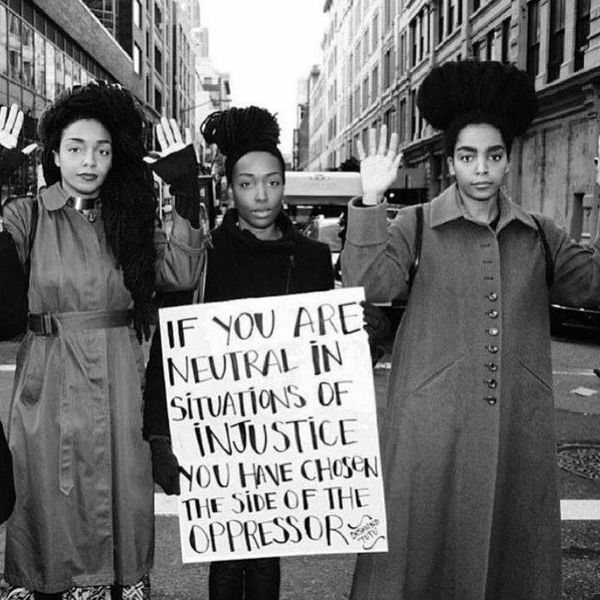
As I grew older, though, I encountered many instances where words of hate and ignorance pierced me and shocked the eight-year-old still inside me who thought that everyone was as kind and loving as my friends. "You stupid, dirty Jew," "Where are your horns?" and "You should have all died in the Holocaust!" All phrases that shocked and repulsed me. Embarrassed and hurt, I was ashamed of who I was.
It was not until I began to pity instead of hate the people who hurt me that I brought myself back to my roots. I found it terribly sad that they understood so little about who I was. Wanting to know more about my familial identity, I researched my family history and learned of all the amazing people who came before me—full of pride for their heritage. Why shouldn't I be?
Hateful words don't magically disappear, and ignorance is still alive and well, but we can all decide for ourselves how we deal with it. I choose pride. Although I have grown increasingly less religious with age, I still cherish and value my Jewish heritage in all aspects of my life.
This article isn't meant to necessarily highlight my personal struggle with identity, but to shed light upon the fact that it's the same struggle we all face as people, just in different packages. It is meant to give insight on how to choose differently about one's identity. Choose pride. For much of my life, I was self-conscious about my differences, but as I have grown older, I have learned that to be apologetic or uncomfortable about my background is to deny myself my true identity. I am proud to have grown up differently.
I am proud to be a Southern Jew.