

A sea of blue filled the field of my recent alma mater, Palisades Charter High School, on the evening of Thursday, June 9 as the Class of 2016 said our goodbyes to the past four years of our lives. My graduating class of more than 700 students was adorned in blue robes, caps and tassels as well as multicolored cords for various honors. Several speeches, including that of the valedictorian, started off the ceremony. Then, each name was called as students got up one by one to ceremoniously walk across the field as the orchestra played "Pomp and Circumstance" on repeat. At the conclusion of the event, the senior class was told to turn our blue and white tassels from the right-hand side of our caps to the left-hand side and to subsequently throw our caps into the air.
My graduation ceremony was far from unique. Across the nation, hundreds upon thousands of graduates across all levels of education have attended nearly identical ceremonies over the past several weeks. At my own graduation, nobody seemed to question these deeply engrained traditions. But as I sat there while name after name was listed, my mind began to wander and I questioned — How did these customs begin and where did they come from?
Caps and Gowns
Whether graduate school, university, high school or even middle school, hardly any graduation in the United States does not feature students dressed in caps and gowns. In fact, the tradition of wearing long robes originated in the 12th century, when university heating was limited and students did not want to be cold during their graduation ceremonies. Clerical robes were thus worn as the church provided the primary source for education in the Middle Ages. The square hat that accompanies the gown is also known as a "mortarboard" because of its resemblance to what masons used to hold mortar. Becoming popular in the 14th and 15th centuries, the "mortarboard" also resembles the hat conventionally worn by the Roman Catholic clergy called the "biretta."

(above) Students in their caps and gowns at Arizona State University's Class of 2010 graduation ceremony, courtesy of the public commons
Valedictorian Address
The valedictorian, or the highest ranked student in the class, traditionally gives a speech at graduation ceremonies. The term "valedictorian" comes from the Latin phrase "vale dicere" meaning "to say farewell." Thus, the valedictorian address, or "valediction," is conventionally the final address students hear before going off into the world.

Pomp and Circumstance
The soundtrack of graduation, known by students as “Pomp and Circumstance,” or “that graduation song” is actually an excerpt from Sir Edward Elgar’s 1901 “March No. 1 in D Major,” also known as “Land of Hope and Glory.” The song was first played in a U.S. graduation ceremony in 1905 when Elgar was invited to receive an honorary doctorate at Yale University and the New Haven Symphony Orchestra played his song to honor him. Other schools then followed suit until “Pomp and Circumstance” became a necessary staple in U.S. graduations. The title of the song — originally a war song — is taken from the line “Pride, pomp, and circumstance of glorious war” from Shakespeare’s “Othello.”
(above) Pomp and Circumstance audio clip
Turning the Tassel
Turning the tassel from the right side of the graduation cap to the left side is a fairly young tradition, dating back just 40-50 years. The tassel originated in the Middle East, where it was seen as a symbol of royalty, wealth and influence. Turning the tassel signifies turning a page in one’s life, thus it is done after scholars receive their diplomas for graduation.
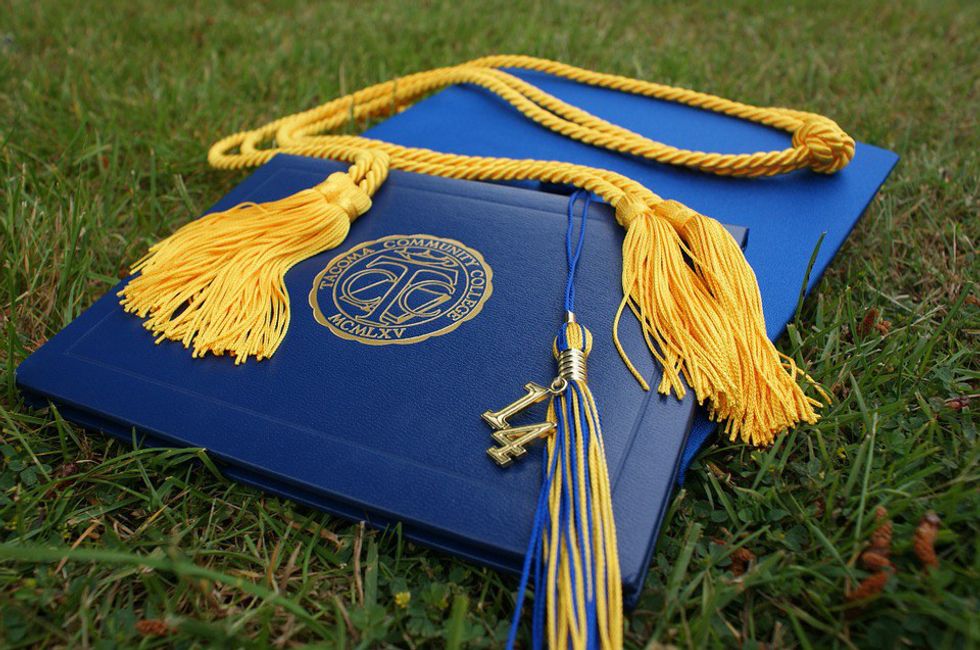
(above) Diploma, honor cord and tassel, courtesy of the public commons
Caps in the Air
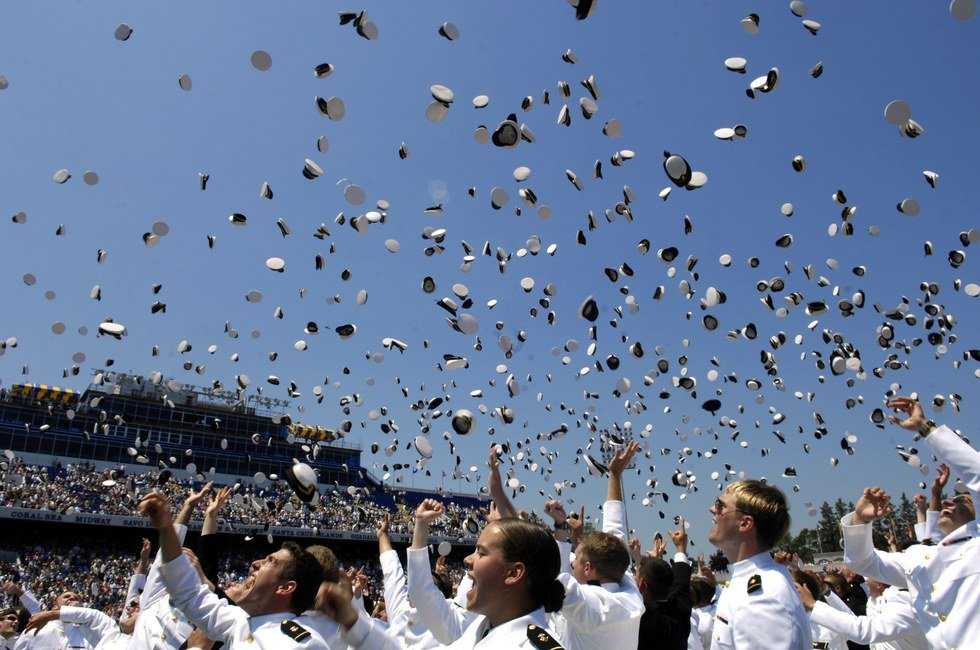
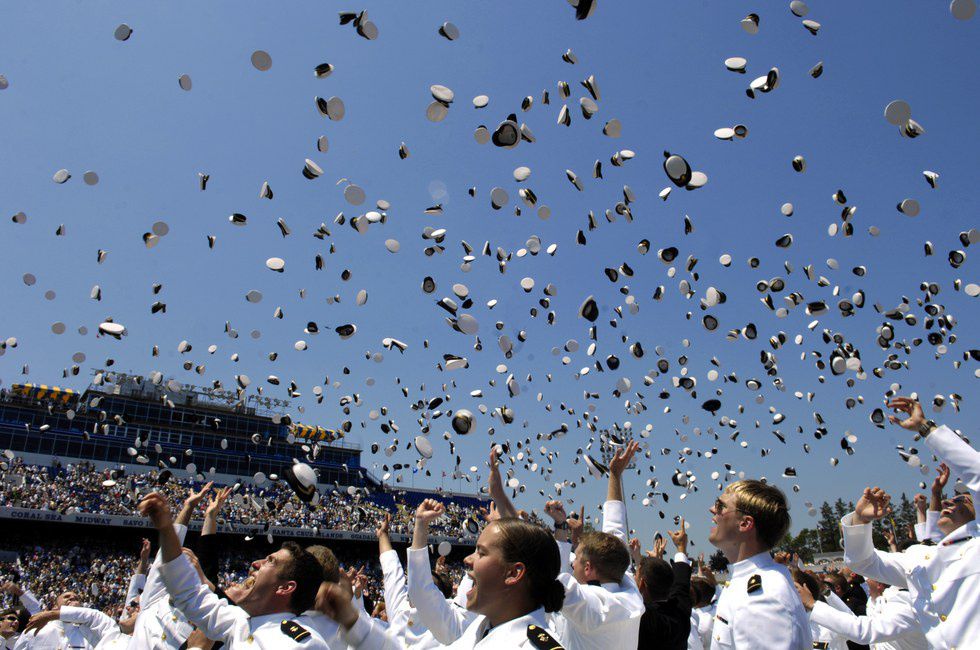
The tradition of tossing graduation caps into the air originated with the U.S. Naval Academy’s class of 1912, when students were given officers’ hats to replace the midshipmen’s caps they wore for the past four years. The graduates were so happy that they tossed their former caps into the air. This tradition has spread like wildfire as graduating seniors from across the country throw their caps in the air (like they just don’t care) as a symbol of saying goodbye to a part of their lives.
These traditions may seem silly and arbitrary when dissected, but they mean a great deal to us nevertheless. They have survived the test of time and stood out amidst myriads of lost customs. Thanks to these long-lasting traditions and customs, graduations across the nation feel more real, tangible and a part of something bigger. Cheers to the Class of 2016!