
In light of recent events, I have been thinking a lot about how to cultivate hope in the wake of tragedy. Thankfully, my friends and kind strangers have lent me a hand with their more-than-generous messages and stories on social media and in person. Facebook, blogs, and Twitter feeds are brimming with bravery, solidarity, and compassion.
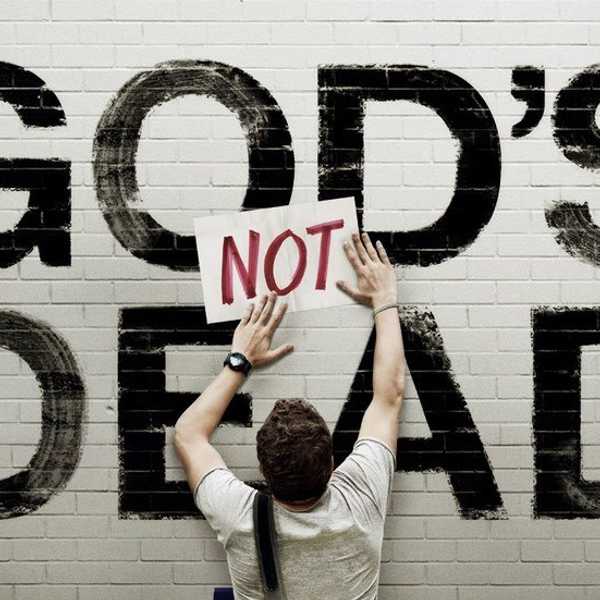
In times like these, many turn to God to pray for peace, ask questions, or simply give thanks. As an atheist, or maybe more of an agnostic (I’m still figuring things out), I struggle with how to frame my own response. Especially now, the ever-confusing matrix of God, hope, and faith continues to preoccupy my thoughts.
My feelings towards God and the concept of hope are not something I have just begun to explore. In fact, I started grappling with these issues at around age 14, when my dad was diagnosed with pancreatic cancer and told he had less than two months to live.
It was the exact time that people normally turn to God, and in the beginning, I did. I prayed for the first time in my life, but I didn’t feel entirely settled about it. Deep down, I had doubt. I couldn’t make myself believe, no matter how hard I tried to convince myself.
Although I didn’t have God, I did find an antidote to my fears: hope. Hope and poetry. Hope, to me, is embodied by human goodness and the power of positive energy. While I don’t believe in God, I do believe in karma and the existence of a sort of universal energy and conscience.
During my dad’s sickness, instead of reading prayers or psalms, I read poetry. Like religion, poetry has the ability to inspire belief in a greater power and evoke feelings of peace. What comforted me most was this interpretation of human experience.
The poem that most affected me at the time was “Hope is the thing with feathers” by Emily Dickinson. You’ve probably read it before in a high school lit. class, but if you haven’t, it basically personifies hope as a songbird that lives eternally in the soul, keeps us safe from despair, and doesn’t ask anything in return. Is that beautiful or what?
Since then, I have always thought of hope in such a way — as an internal energy that fuels us even through even the most trying times. Hope is the triumph of the human spirit over life's chaos.
Fast-forward to 2015, and I still believe in the same power. When I heard about the Paris attacks and read the subsequent messages on social media, I didn’t think about God, but about that little bird in the soul that somehow stays against all odds.
Each of us has one, and therefore each of us has the ability to cultivate peace. For this reason, I believe not in the goodness of God but in the goodness of people. Sometimes things get in the way of this virtue — desperation, pain, loss — but I do sincerely believe that there is always a way to unearth it.
My dad passed away after two hard months battling pancreatic cancer. Some people told me it was part of God’s plan. Others told me “everything happens for a reason.” But I choose not to believe either of these explanations. I like to think that sometimes things in the universe happen for no reason at all.
Even though I lost my father, I didn’t lose that sense of hope. The thing about hope is that it’s an infinite resource. Like God, it’s there when you need it and you just know it. No questions asked.
I hope (no pun intended) that atheist, religious, or altogether unsure, we can all cultivate a little hope right now. Not the kind of hope that is overly optimistic or passive, but the hope that changes perspectives. I simply mean we can try to see the good in people and practice optimism, even when it seems like there is none left.
As long as the bird exists, there is a future. God or not, Atheists too can see light in the world.