
“My God, My God, why have you forsaken me?”
These are some of the last words of Jesus of Nazareth, naked and crucified, according to Matthew 27:46. This gospel paints a picture of Jesus in his last breath uttering these haunting words. In fact, Jesus is quoting Psalm 22:1.
How many people over the course of history have uttered these exact same words or had similar thoughts? The history of the world is rarely a story of contentment and easy living. In every era the majority of humanity is forced to scratch out a meager existence on almost no income while a small minority shapes the world and enjoys the pleasures of life. This controlling minority is made up of kings and emperors, popes and CEOs. They have largely decided when to go to war. When it comes to war, the powerful do the deciding and the poor do the dying. This is just as true today as it was in Jesus’ day and age.
In today’s terms, Jesus would be qualified as a working-class citizen. His country, Isreal, was occupied by another: the Roman Empire - a country with radically different customs and religious beliefs than his own. Imagine if China had invaded the United States and decided what laws were to be put in place, who lived and died, and how much money you had to pay them. This was a daily reality for Jesus and his fellow citizens. Many other Israelites were not happy with the way the system was set up. They wanted to have religious and political freedom as their own independent nation. Many wanted God to raise a military leader with divine power to overthrow the Roman Empire and become Israel’s leader in an age of peace to span the entire globe. The only people who were happy with the current set up were the Sadducees. They were in charge of the priesthood. They had the religious power in the country. Due to their deals with the Roman Empire, the Sadducees made quite a bit of money from the Temple and were protected by the Empire’s military. All of this is going on in the background of the Bible’s account of Jesus’ life.
Today, like Jesus’ day, war and poverty are not uncommon. Throughout the Middle East and Africa, war and famine are killing and displacing millions of people. Many of us have heard of the terrorist organization commonly referred to as ISIS. ISIS is a radical fundamentalist group which is willing to kill and destroy everything it believes stands in its way. ISIS believes it can rule the world through force. Their acts of barbarism are horrifying. These acts include slaughtering hostages, destroying religious relics, and forcing women to take birth control so that they can rape them repeatedly without fear of pregnancy. Religious fundamentalism is nothing new to the world. Jesus too experienced religious fundamentalism. The Zealots were a growing sect in his time of angry Jews who believed they needed to use military force to terrorize their Roman occupiers. About forty years after Jesus died, these Zealots actually managed to take control of the city of Jerusalem and the Temple inside. The Romans responded by killing all inside and destroying the Temple.
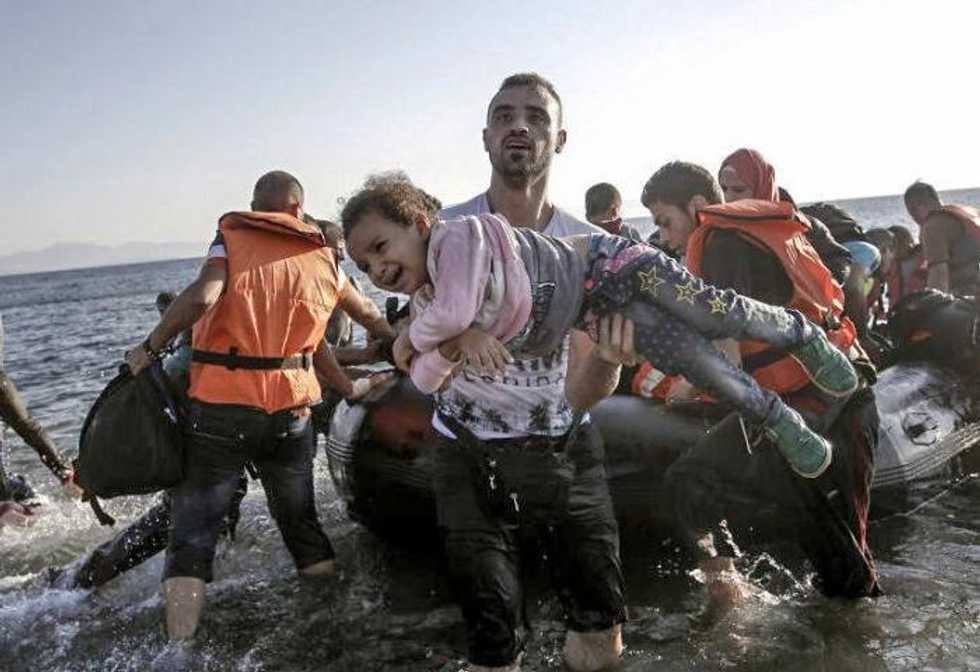
War by groups like ISIS has people of all ethnicities, races, and religions fleeing their homes to find safety from these horrors. Refugees rarely find life to be much easier after they escape the immediate war-zone. They find themselves without shelter, without food, and without their loved ones. Currently, refugees fleeing from ISIS, the Syrian Civil war or famine attempt to go to “civilized” countries in Europe. Many of these countries have created barriers for these refugees to enter their countries, and some have actively worked to keep refugees out or send them back into the world of violence when they enter. When refugees do enter countries which allow them, these poor souls can experience hatred and disgust from those lucky enough to be born as natives. Jesus was no stranger to fleeing political violence. The gospels recount that his family had to flee to Egypt when Herod, the puppet king, became fearful that Jesus was the Messiah meant to replace him and his family. Jesus had to leave his home because of this power hungery ruler who wanted him dead.
Jesus was not a fan of the powerful oppressing the poor and weak. An example of this is when Jesus entered the Temple and saw what the Sadducees were up to. Most people during this time did not own land and could not raise the livestock needed to make sacrifices to God. They had to buy these animals. The Sadducees were more than happy to sell thesse people what they needed…at enormous costs! The selling of animals in the Temple occurred in the lowest level of the Temple which was where the Gentiles, who were not Jewish, were supposed to worship God. The selling of these animals in this area made it impossible for the people who needed them to pray to God in the proper manner. Jesus saw these evils in the exact place this sort of thing should not be happening and decided he needed to take action. He cleansed the Temple, chasing out those who would dare take advantage of his people and stop seekers from worshipping his God. Those in power were not happy with this. Matthew, Mark and Luke all show that almost immediately after these events, the Sadducees capture, torture and crucify Jesus - with the help of their friends the Roman Empire, of course. It would appear that the powerful won again. Jesus was said to be the Messiah, the person who would rescue Israel from its oppression and create God’s reign on earth. This was the expectation - but here he was dead. To those who watched what happened, even his disciples, his death was clear proof that Jesus was just one of many Jews who had said they were the Messiah, but had been proven wrong when push came to shove.
Across the world there is fear. Fear of disasters, terrorism, war, disease, famine. We lucky few in first world countries get to sit back and watch horrible events unfold. We consider ourselves lucky, and even say so! We fear that these things may happen to us and even take great precautions to stop suffering from entering our own homes. If this means stopping refugees from entering our country, so what? After all, we have our own citizens to worry about. What if they are terrorists? There are many things to be afraid of, and we need to protect ourselves from them. If we help, we could suffer! We could even die! Who would take such chance on people who will probably die anyway?
Jesus would. He knew that he was opposing the powerful of the world when he stood defiant in the Temple. This didn’t matter to him. He was the Messiah. He knew that the Messiah was to stand up for the weak. The kingdom he would set up would go against the way the powerful normally run things. He sided with the poor, weak and meek. And he did it all non-violently. His death on the cross was not the end of the story. Three days later he resurrected, and he promised us that we too would resurrect when his kingdom is fully established. Until then we are to do as he did. Going back to the quotation I began this with, many Bible scholars believe that when this verse is cited, it is saying that Jesus said the entire Psalm 22. This Psalm does not end with defeat, but ringing victory and trust in God. Death is not the final word. It is just a chapter in a never-ending story.
So the question remains: when refugees are at the door, what would Jesus do?