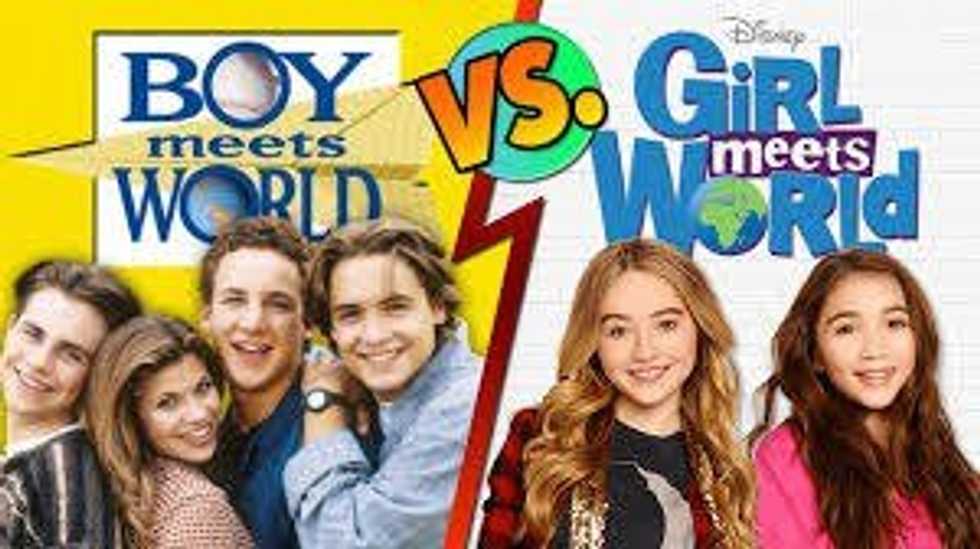
I loved the television show "Boy Meets World" growing up for so many reasons. I loved that it was unafraid to handle heavy subjects, I loved that the characters were real and flawed and dynamic, and I loved that it was a show marketed to kids that didn't talk down to its viewers or act like they were only equipped to view tired tropes featuring hetero-normative middle school relationships. "Boy Meets World" was a kids show that portrayed situations like death, failure, loneliness, and so many more in a relatable way that allowed viewers to emotionally grow through the series. It allowed kids who faced this sort of strife in their actual lives to see someone on screen whose struggles finally echoed their own. This sort of connection to media is rare overall, but it is especially rare when it comes to media targeted at kids and teens.
When I heard that a spinoff of this show that was so important to me was actually going to be produced, I was so excited. Initially, I was just so enthused to get to relive some of my Boy Meets World days through it. I was so ready for the nostalgia. The show definitely delivers on that front. With Cory, Topanga, Shawn, Eric, Jack, Cory's parents, and even Mr. Feeny returning in the spinoff, the show is gold for nostalgic "Boy Meets World" fans.
The show follows Cory and Topanga's daughter, Riley, through similar trials and tribulations that Cory and Shawn faced growing up. Cory is her teacher and echoes the lessons Feeny taught them growing up. Riley's best friend Maya's experience resembles Shawn's, she also lives with a single parent who is often absent.
I became even more excited that this next generation could have a similar experience, though. I was thrilled that it was "Girl Meets World" and that it might deal with the specific issues girls are faced with growing up. There was just one problem: it was on Disney Channel.
I don't mean to imply that Disney Channel is incapable of producing quality content (we have countless Disney Channel Original Movies and "Lizzie McGuire" to prove otherwise). The real issue is that Disney Channel is a kids network. "Boy Meets World" aired on ABC. Granted, ABC's demographic is generally families, which would make it counterintuitive that they would have more wiggle room than Disney to include heavier topics but, it seems to be a network that is more progressive and more capable of taking risks. There are shows like "the Fosters" and "Pretty Little Liars" that deal with LGBT+ issues, which is more than Disney can say. In practice, ABC Family seems to be less marketed toward kids and more marketed toward teens, which allowed Boy Meets Girl to address taboos like sex or deeper topics, like death, fearlessly.
Putting Girl Meets World on a network catered toward children will undoubtedly hold it back. Boy Meets World featured gang violence, problematic cults, child neglect and abuse, and so many more dark, risky topics. Disney Channel is not going to be able to include any of these issues because the parents of the seven-year olds that watch it would flip out.
That being said, Girl Meets World is more than simply another Disney Channel show comparable to Austin and Ally or other shows airing today. Girl Meets World has handled some really important social issues already, and it seems to be tackling trickier subjects as it progresses through its second season.
For example, in the show's first season, "Girl Meets Popular" aired. This episode took on not only the issue of finding identity when the person you are does not reflect the person you want to be, it also deals with cultural appropriation. In this episode, Riley struggles with not being popular and adopts the style of a Harajuku girl. Cory teaches the class that it is wrong to take this style from real people that is a part of their actual culture and minimize it for stylistic westernized reasons.
Additionally, the show's second season featured an episode titled "Girl Meets I Am Farkle" which dove into the possibility that a central character, Farkle, was autistic. For the most part, the show approached the topic of autism in a positive way. Farkle's friends told him that, if he is autistic, autism is a part of who he is and they love who he is. Farkle ended up not being diagnosed with autism, but his romantic interest, Smackle, revealed that she was autistic. Farkle was wholly accepting and supportive of this and the episode painted autism in a positive light.
Season Two also included an episode that channeled the emotional quality of Boy Meets World. The episode "Girl Meets Rileytown" depicted Riley's experience with a bully. She was torn apart by this bully and could not even tell her best friend about it. She took her fear, anger, and despair out on her friends. Her emotion seemed real and it was clear that this bully had ripped apart her confidence and made her question everything she thought about herself. She became an insecure shell of who she used to be, but ultimately beat the bully when her friends gave her support and restored the confidence that the bully called into question. This episode not only revealed to me that the actresses could pull off Boy Meets World level emotion, but also that Disney Channel could adequately feature sensitive material that could elicit such strong emotional reactions in viewers.
Another essential feature of the show revolves around Maya's character. Maya's home life is similar to Shawn Hunter's from "Boy Meets World" as they each only had one parent who was often absent from their lives. Maya is open about the way this affects her and it adds another emotional element to the show. Her experience living with inadequate parenting brings exactly what was missing to the show. It's raw, it's real, and it is so much more than traditional Disney characters dealing with surface-level problems.
While the show has been making progress, to truly win me over it will need to make some important changes. First of all, the first season featured an overwhelmingly white cast. If Girl Meets World is going to be progressive and important, it needs to have more people of color. In Season Two, a black character named Zay was introduced. He is funny and charming and adds a lot to the show, so I would love to see him, and other characters of color, become more central to the plot. It's essential that the show does not perpetuate the practice of including insignificant side characters just because they are racial minorities. We need complex, dynamic characters of color. I think Zay could become just that.
The show also needs less heteronormativity. The structure of the show presently is that two girls are pining over the most traditionally attractive male in the class. When the idea of a "gay character" was pitched to the writers, they claimed they were considering it. The problem is, I don't just want some gay side character who is in two episodes. I want one of the central characters to be LGBT+ and I want to see the specifics about how LGBT+ people meet the world.
I don't want "Girl Meets World" to be solely about how an able-bodied, white, straight, cis, traditionally feminine girl meets the world. I want it to be more inclusive than that. If that happens, if Disney allows that to happen, there will be so many scared kids who feel different and alone that will finally feel like they matter and that these narratives are for them.