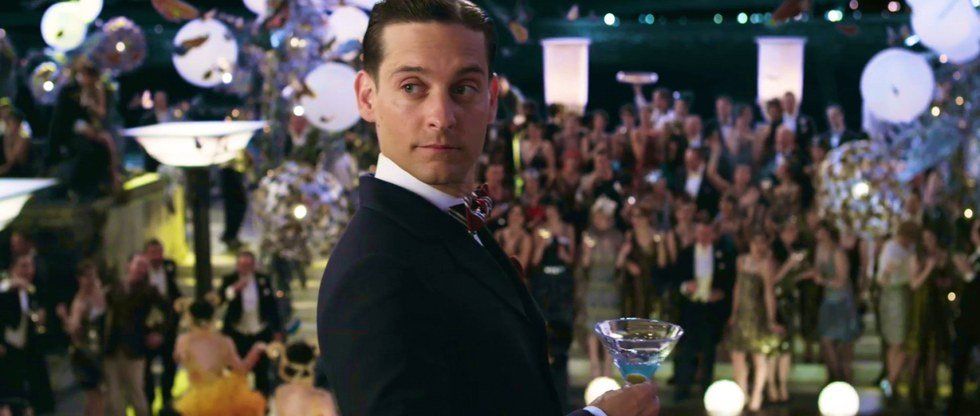
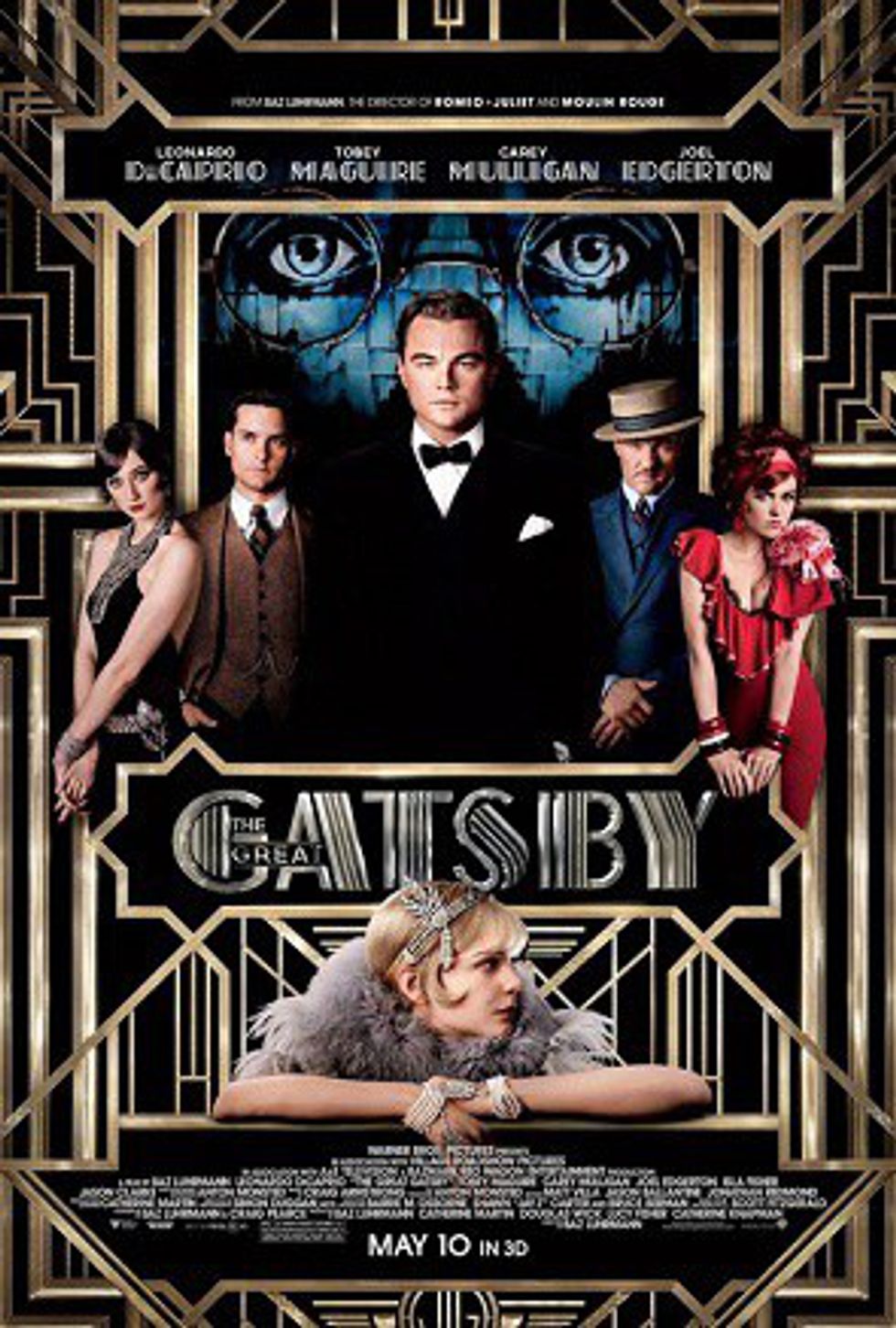
Baz Luhrmann’s movie adaptation of F. Scott Fitzgerald’s novel, The Great Gatsby, is an interesting twist on the original narrative, paying tribute to the novel while drenching the story deeper into the liquor laden 1920's. Luhrmann stresses the corrupt nature of Gatsby’s relationships and the collateral damage his monomaniacal undertakings cause.
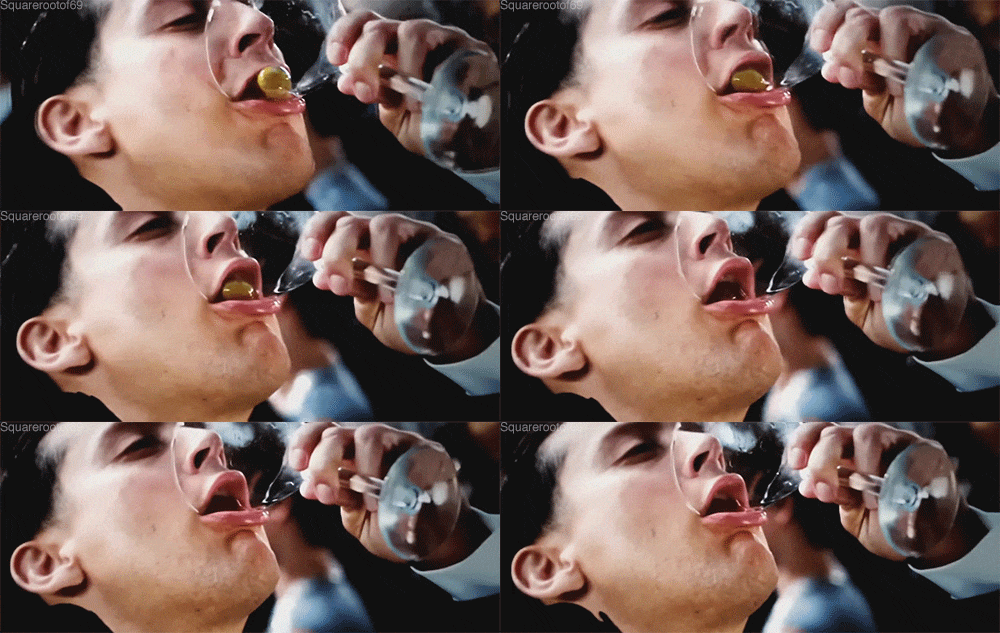
Nick Carraway’s character, in particular, falls further under the influence of not only Gatsby’s manipulative and myopic demeanor, but actual alcohol as well. Because Nick’s character clearly is more damaged at the hands of Gatsby in the movie than in the novel, Luhrmann decides to de-emphasize the other relationships that play a role in Nick’s life outside of Gatsby’s influence. While this adaptation does show how truly infatuated Nick becomes in Gatsby and creates a captivating movie plot line, it fails to address the nuances of Fitzgerald’s original writing. The lessons in Gatsby’s folly of attempting to relive his youth, recapture his lost love and use wealth to mask his true self is told through Nick’s fundamentally impaired perspective, more so in the movie than in the original novel.
To support the idea that both the East Coast life and Gatsby have a detrimental effect on Nick, Luhrmann totally revamps the scene at Tom Buchanan’s New York apartment. In the book, Nick claims that Tom’s party was one of only two times he has been drunk, and when reflecting on the ambiguous series of events that occurred, he has a sense of regret. He hates Tom’s shameless flaunting of his affair and the callowness of the other partygoers. In the movie, however, Luhrmann treats the party as a catalyst for Nick’s “morbid alcoholism.”
An innocent Nick ends up drugged and making out with Myrtle's sister. Nevertheless, he seems to have enjoyed the bizarre soiree when he says “...better than the Yale Club.” Luhrmann clearly lays out the party’s happenings, moving away from Fitzgerald's original writing, which left much more open to interpretation.
Nick’s eventual “morbidly alcoholic” state acts as a narrative umbrella over the whole storyline in Luhrmann’s adaptation. However, in the novel, there is no indication that his corruption became that extensive. The movie’s first scene takes place in a midwestern sanitorium examination room where Nick is talking about his troubles with a quite cocksure psychiatrist. When Nick has trouble discussing the shattering details of his experience in New York, the psychiatrist encourages him to write everything down. Nick proceeds to do so in journal-like entries, eventually stringing into a whole book. Nick’s writing process allows him to voice-over Fitzgerald’s vaunted original prose more organically as he types methodically on his typewriter, acting as a testament to Fitzgerald’s talent. Nick’s unfortunate alcoholic state is explained through this voiceover and justified by Gatsby’s untimely and understated psychotic breaks, specifically shown in the Plaza scene and Gatsby’s suspicious phone calls.
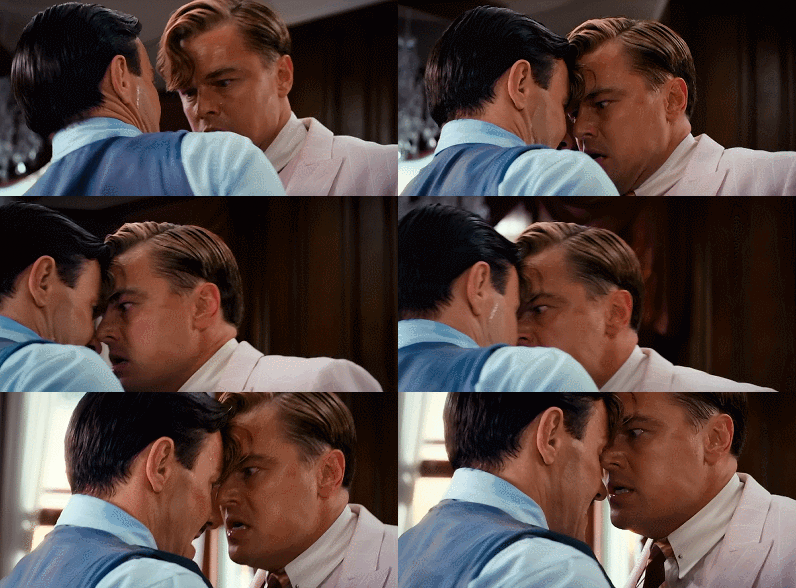
Through Nick’s eyes moviegoers can see the indubitable tension between Gatsby and Tom in The Plaza hotel room as well as the damage that tension ensues. While the dialogue of this scene is incredibly faithful to the novel, that faithfulness disintegrates at the climax when Gatsby violently grabs and yells at Tom. This is a huge turning point in the movie, because it is the moment that the incredibly frightened Daisy decides she will not leave Tom for Gatsby. But, in the book, Gatsby displays no violence, and Daisy decides she will stay with Tom primarily because of the security his money promises. For a brief moment in the movie scene, Nick’s reaction to Gatsby's aggression is quite profound. He seems not only lost for words but disappointed. Once Tom makes Daisy drive home with Gatsby, it is clear to Nick the extent to which Tom has control over Daisy and to which Gatsby cannot let go of his desire to spend his life with Daisy.
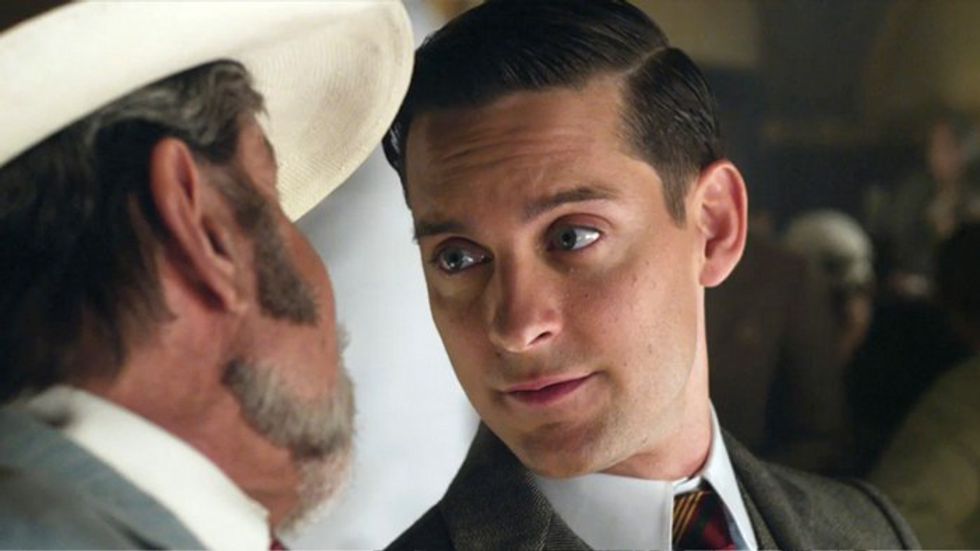
Later on, Nick is the only person to find out the truth of Myrtle's death. Only he knows that Daisy is the one who killed Myrtle, and that Gatsby is in fact innocent. In this sense, Nick is in control of Gatsby’s fate. If he pleased, he could have called the police or told everyone the truth, that Daisy - not Gatsby - committed the crime. Perhaps, if he had done so, Gatsby would not have been shot by Myrtle's distraught husband. Gatsby’s actions put Nick in a place of huge responsibility, which ultimately contribute to his corruption.
It is important to note that in the movie, Gatsby is shot while on his way to answer a call from Nick. Even though Gatsby believes it is Daisy on the phone, Luhrmann’s choice to include Nick’s untimely phone call reaffirms the responsibility Nick has for Gatsby and the burden that puts on his shoulders. While Fitzgerald did write about the pain that Gatsby’s lifestyle inflicted upon Nick in the long run, Luhrmann’s movie takes the conflict to a whole other level by emphasizing the control Nick has over Gatsby’s fate through his knowledge of the car crash and his deathly phone call.
In the movie, Gatsby dies in peace because he’s under the impression that Daisy had called to make amends and confess her love. Before he is shot he believes order in the universe has been restored and that he and Daisy could live happily ever after. Nick, on the other hand, is not so halcyon, but instead an aural witness to Gatsby’s death. He hears the shots of Wilson’s gun over the phone - quite an emotional experience for an initially innocent and young man with the simple dream to be a bondsman.
In both the novel and the movie versions of The Great Gatsby, Nick assumes the responsibility of planning Gatsby’s funeral. He makes all the arrangements for the somber event - calling everyone Gatsby knew in hopes of their attendance. In both versions of the story, Nick’s efforts are not successful. However, while in the novel Gatsby’s father makes an appearance, he fails to attend in the movie. It is clear that Gatsby isolated himself from true, caring friends when he embarked on the incessant journey towards Daisy’s heart. Although he held huge open house parties and had many acquaintances, all of those relationships were ingenuine. Nick, being the “principled” midwestern boy he was raised to be, is left no choice but to fill in the roles of all the people Gatsby pushed away. No one but he cares. Luhrmann emphasizes this unfortunate result of Gatsby’s life choices by increasing the weight of the burden on Nick’s shoulders. Nick’s dedication to Gatsby is noble in pursuit, but Gatsby is at fault for forcing Nick to assume the responsibilities. Gatsby causes Nick to be more corrupt and, under the influence, per se, in the movie than in the novel. As Gatsby pulled Nick into his life, he prevented Nick from being his own person.
Luhrmann probably cut Jordan and Nick’s romantic relationship and decreased Nick’s discussion of his family back in the midwest for timing purposes. But, the choice does serve a greater purpose. By limiting the number of meaningful relationships Nick develops, more focus is put on his relationship with Gatsby. It creates a stronger foundation for the claim that Gatsby was the one who truly corrupted Nick and drove him to his alcoholic, sanitorium worthy, state.
Ultimately, in both the novel and movie versions of The Great Gatsby, Nick is pushed to the edge by Gatsby’s foolish and myopic efforts to relive the past, recapture lost love and use wealth as a façade over his true feelings. In the novel, Nick’s reactions to Gatsby’s are much more nuanced. Fitzgerald does not explicitly state that Nick becomes intrinsically damaged by his relationship with Gatsby, but rather has a more objective view on the series of events. Baz Luhrmann takes Nick’s emotions down a slightly different path. Luhrmann amplifies the intensity of the effect Gatsby’s life choices had on Nick by cutting out certain non-Gatsby relationships Nick had in the novel and also making Nick more culpable for Gatsby’s unfortunate fate. Unlike the novel, where Nick just dips into the pool of East-Coast 1920’s liquor filled extravaganzas, in the movie adaptation Nick practically drowns.