Before Friday morning, I would have written a very different article. The content touched on would be the exact same, but the conclusion would be very different. Before Friday, I would have written about why no rapper should feature Kendrick Lamar on a track, because Kendrick has a way of making every song his own. It's not a knock on K.Dot, it's more about how little space for other artists he leaves in his very holistic approach to every project he comes to. Then I heard something Friday morning which surprised me and which made me optimistic and happy. More on that in a bit.
There are two kinds of rappers who collaborate and feature on other rappers’ tracks. First, there are rappers who get phone calls for features and just say, “Oh yeah, I like that idea. I would like to contribute to that idea, without stepping on your toes, of course. I will record for you something substantive that supports the claims you have made on each verse, hook, and/or chorus” (See: Drake, Ludacris, Jay Z). Then there are rappers who say, “Yes, I will do this verse, but I will peer deeply into the content of your verses and hooks, fit myself between the small spaces you’ve left between tightly knit concepts, and I will rip your art to shreds by being immeasurably better and smarter than you” (See: Andre 3000, Kendrick Lamar). Over the last five years, Kendrick Lamar has made a healthy habit of making Nicki’s verse on “Monster” look like a merciful bow.
When Kendrick Lamar agrees to do a track for another artist, he does not simply come into the booth with a few words that happen to rhyme. No, when Kendrick gets the green light on a feature, he shows up to work with the desperation of a pre-Drought 3 Dwayne Carter, the ferocity of post-"Move B---h" Mystikal, and the biting wit of a post-Drought 3 Dwayne Carter. You ask Kendrick for 16 bars, he gives you a finale. You ask Kendrick for a solid mid-verse feature, he puts three-fourths of the rap game on notice. You ask Kendrick for a hook, he gives you that and a closing verse so intense that it must be performed a capella. K.Dot plays no games when it comes to features.
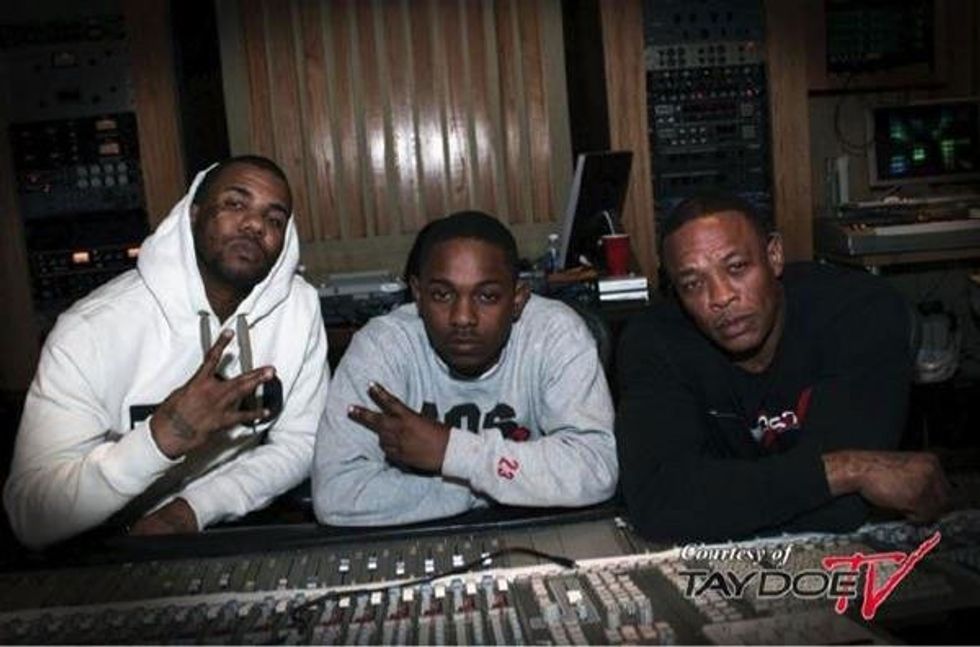
Some of Kendrick's most consistent collaborations over the years have been with his Compton companion, Jayceon Taylor, AKA The Game. Game's Documentary 2 dropped Friday October 9th in the year of dopeness, 2015, with a ludicrous 18 features from different artists. One of whom was of course from the good kid himself, Kendrick. Tenacity is lost on neither Game nor Kendrick, even as both artists are in the midst of a sonic overhaul, working backwards towards older varieties of beats and melodies. Before I get into "On Me," the aforementioned collaboration, I have to describe their two previous projects to provide context for the novelty of "On Me."
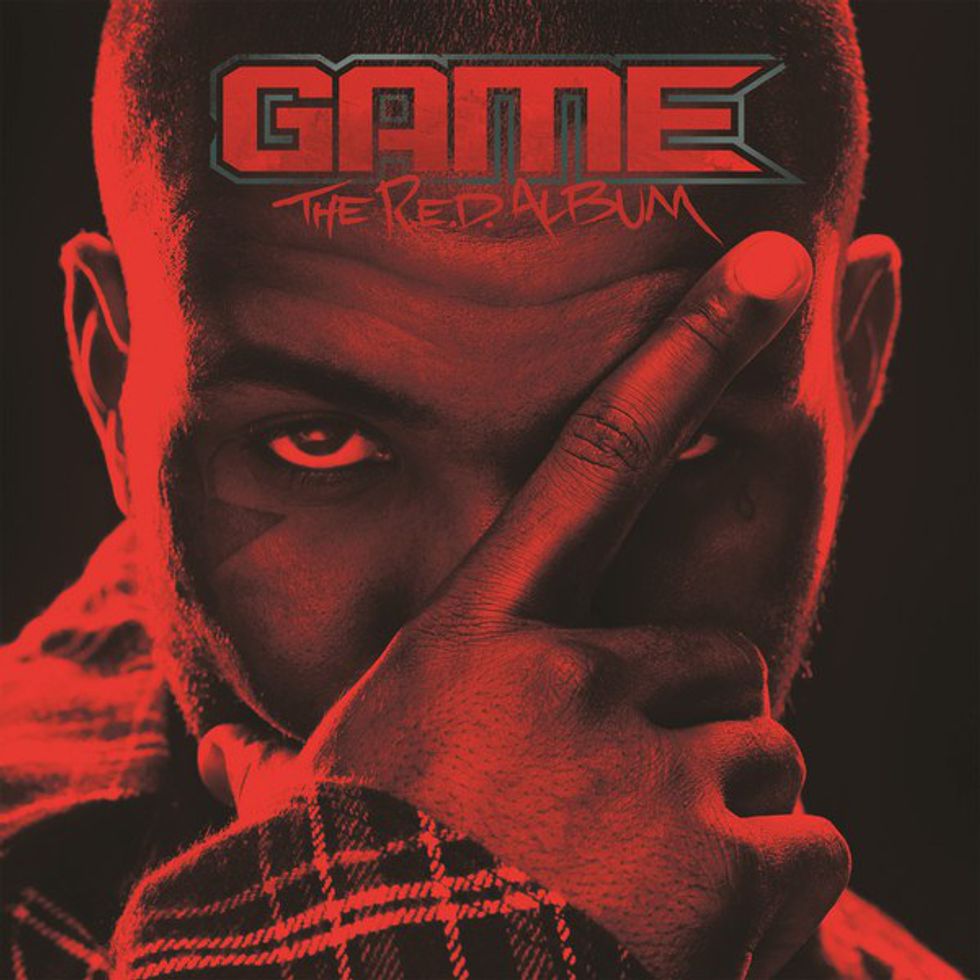
On Game's The R.E.D Album (2011), Kendrick shut down "The City" with not only the hook he performed, but the relentless closing verse. He commanded dominion over the beat as well as the track's empty space as his echoing voice filled up the end of the track until he said all he had to say. The final verse begins with the last hook, "Recognize my life, / Ridicule my fight . . ." It begins smoothly, but as he continues his emphasis rocks back and forth until he reaches the end, saying "Look at my heart, n---a, / F--k your feelings this is me." The syllables punch more and more rapidly with an off-kilter flow, an early marker of Kendrick's style.
Kendrick was still so youthful and misguided at the time of this collaboration, and his flow reflected that. The art of Kendrick's hook and verse on "The City" was balancing that lack of direction on a very clearly structured verse-hook type of track. It was never clear which words were going to rhyme for Kendrick until he got to the punch of the rhyme, while Game very clearly hit the rhymes at the end of each line, in rhythm and on the downbeat. Of the pair's collaborations, the dichotomy between establishment and hunger was most evident in "The City," and in his urgency, Kendrick gave Game's track intangible character and color.
Two years later, the Compton kings reunited for "See No Evil." This time, Kendrick was coming off of his non-narrative masterpiece, good kid M.A.A.D city (2012). With a Grammy nomination on his shoulder, he came to the booth much more lucid for a collaboration. The hunger was not on display, but it still resonated in his gut. The desperate intensity that defined "The City" was nowhere to be found on "See No Evil." Kendrick instead opted for a faster flow, while remaining more reflective, following the unusually reserved tone Game set at the track's start. While still a strong verse, Kendrick limited his time to the 16 bars Game asked for. It was less of a collaboration and more of a true feature, with Kendrick still having the most novel verse, fitting in extra syllables off the beat and not ending lines cleanly when moving into his next line. The quiet nature of "See No Evil" was apparently the calm before the 2015 storm, "On Me."
As I said earlier, something happened on Friday, October 9th, 2015. This track happened. This track was one of the most "West-west!" type of tracks I have heard in a few years. After spending so much time talking about Kendrick, in the end, this article is about Game. With Kendrick ripping every other feature he hops on, Game found a way to get K.Dot to buy into his ideas and leave room for him to fill up the rest (and Game does fill it up on the third verse). The first verse of "On Me" is reminiscent of "See No Evil," in that Game starts almost as soon as the beat drops. His introductory verse illustrates a scattered backdrop with scenery being the only common thread holding the loose concept together. Kendrick quickly comes in and fills up the scenery, putting himself in the first person, "And if Game told me, "Drive by it," I raise AK / Ain't no shame on it, cry about it, f--k that, I'll play / Like no name on it, blindsided, ain't no one safe." After Game gets the full big-homie-treatment from one of 2015's hottest emcees, he uses that hype to crush the rest of the track.
Strangely enough, Game channels the same alliterative emphasis Kendrick wielded on "The City" to pick up the baton after Kendrick's interlude. He begins, "Bout to hit a home run, K. Dot, grab the pennant, n---a / Pin it on my Pendleton, / trap late night, Jay Leno them / Got my mom a tennis bracelet, Wimbledon of Wilmington." Rather than handing off the verse this time, however, Game assumes his position at the end of the track and eases into a rhythm, "Ain't no gimmicks 'round here, this Compton, me, Doc and Kendrick / Chronic, good kid, my first year, 3 documentaries / Now I'm blockin' sentries, 16 Impalas / They bounce like they Iguodala." Again, Game maintains a reserved tone and lets his lyricism and flow project the arrogance that a West Coast anthem deserves. This is one of those tracks with an old soulful sample and some Chronic 2001 drums that Kendrick used to live on. It had to have been difficult for Game to maintain control of the track, but he absolutely did. Bless the big homie. Ten years after his smash hit Documentary and he can still hold his own. Can we get please stop sleeping on the West Coast Gawd???