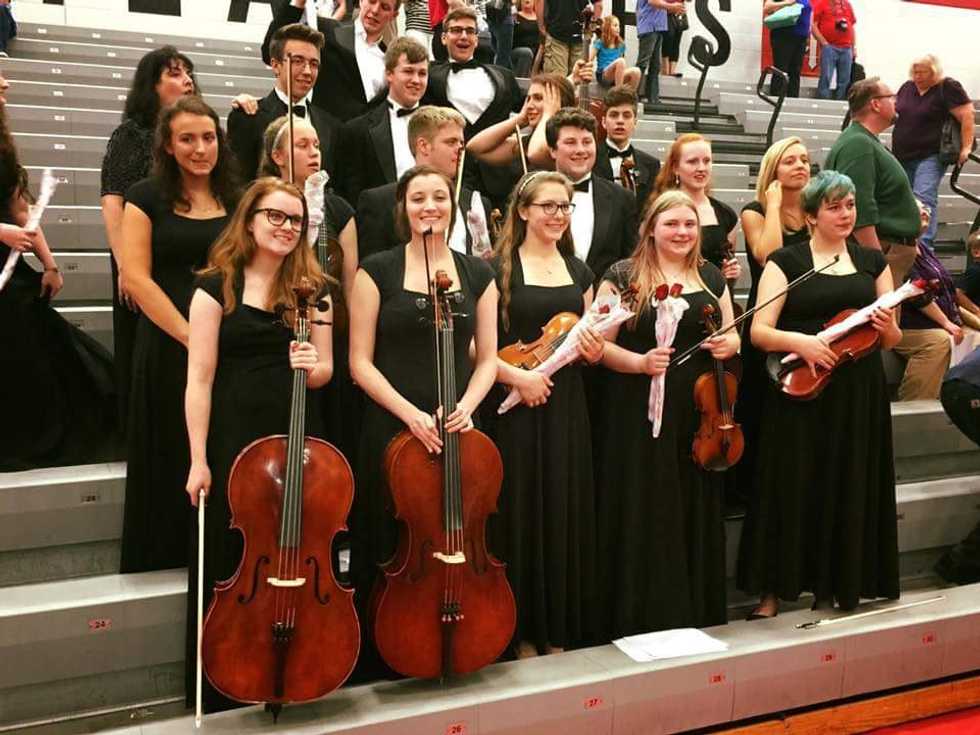
Senior year in high school means a lot of different things to a lot of different people. Varsity players are competing in their final games of the season, teenage girls are excitedly prom dress shopping at the mall, and groups of friends will soon be exchanging tears as they depart from high school graduation. There is one particular, lesser known group of students that prove being a senior can take a lot more than earning a letterman jacket and a 4.0 GPA. These are the kids who go from performing Michael Jackson at the football games to sitting through hours of classical music rehearsal: the orchestra, band, and choir kids. Specifically, those determined enough to become an instrumental music major by the time next school year rolls around.
Senior year for this group of students proves time and time again to be one the most brutal challenges a student can take on. While our peers are writing college application essays, obtaining letters of recommendation, and simply pressing the ‘submit’ button on their computers, we are doing far more extensive investigations in our quest to find the perfect music school. Music kids not only have to submit these applications and essays (early decision, for the best audition dates!), but we have to do so while spending the year preparing an audition. For those unaware, college auditions are similar to AP tests in the way that your past years of dedicated practice all boil down into one evaluation.
Many schools, depending on the instrument, have audition requirements including concerto movements, technically challenging etudes, and movements of Bach. College audition repertoire, for many, is the most advanced music we’ve have ever performed. Some over-achieving music kids have had their pieces chosen since the beginning years of high school. The rest of us picked our pieces in the end of junior year, unaware of the undertaking that we were choosing for ourselves. These advanced pieces meant practice, practice, and practice. Students not looking to major in music the following fall should count their lucky stars that their callings don’t include thousands of hours of solitary rehearsal that combine the audience, student, and teacher into one person.
The months quickly passed by and finally, it was February. For any music major hopeful who didn’t go the route of early auditions, the month containing Valentine’s Day is one where many weekends are spent in different cities and states, playing painstakingly perfected music for a panel of strangers who don’t understand how much of our souls we gave away in preparation for this moment. Immediately after auditions, some might think about what could have been done differently, how a performance could have been more perfected. Even after the auditions, especially in the case of top-notch schools, the anxiety and stress doesn’t pass until those decision letters arrive. An added challenge is that during these months, we’re expected to keep up-to-speed with projects, speeches, and presentations that have no relevance to our future majors. Many teachers and peers don’t understand the challenge of maintaining an expectedly solid academic record while preparing for the field that will actually be our futures.
After all the auditions and hundreds of miles traveled, time starts to pass, albeit incredibly slowly. As the days and weeks start to slide by, acceptance and rejection letters alike make their way into many mailboxes and email addresses. After scholarships are weighed and decisions are made, things started to wind down, and finally, we can take just a breath of fresh air without feeling a pit in our stomachs for not being in a practice room.
The thing about being a musician who is determined to reach professional status is that as the years pass, the hours of dedicated practice and commitment only exponentially increases. Our senior year of high school will prove to be only a step up a very large mountain that will continue to challenge us in reaching our goals.
I might be a little biased in the area, having sacrificed many hours of my own high school career to rehearsals, festivals, and individual practice. Nevertheless, after reading this article, please take the opportunity to hug your future music major. We’ve accomplished a great feat--but we have at least four more years of hard work staring us right in the face for the next part of our journeys as musicians.