What I Knew
Growing up, when I was asked about my race and ethnicity, I knew I was a black Jamaican. Black because it was the defining word that summarized what I looked like. I am Jamaican because it was the place of my birth. The Jamaican aspect defined the culture I knew and the history of my people, and the black aspect defined my future interactions in the world I live in, due to my physical features. However, this description soon became distorted as I began to travel and interact with others who had a different meaning as to who I am.
Nowhere To Go
The first time I was told that my description of myself was wrong was my freshman year in a New York City high school. I said I was black in casual conversation and a friend interrupted me and stated, "No, you're Jamaican." I looked down at my skin and jokingly stated that it wasn't literal and just a way of identifying how I looked. I had dark brown skin, black coiled hair and a broad nose, thus I looked like a black person. However, she wasn't open to discussing the meaning of black because it went against the definition that she knew all her life. It was then I first realized that being black in the Caribbean was different from being black in America. We have a unifying understanding that black is a description where I am from, but in America black has many different definitions.
Later on in college during my freshman year again, I was informed by a fellow Caribbean student that I was not Jamaican, either. This student had lived in Jamaica all her life and arrived to America for the first time to go to college. She believed that due to my long departure from the country, I was no longer Jamaican. My experiences weren't the same therefore I could no longer claim the country that she thought I no longer connected with.
Now that I was told that I was neither black or Jamaican I questioned what were the race and ethnic options left for me. I wasn't African-American in my opinion. And even though my teacher once told me there was only one race, the human race, I still knew that I belonged to a specific people and wondered why people were so adamant on tearing down what I knew.
The Problem with Being a Foreigner
Once someone migrates, they open themselves up to losing connections with their home and identifying with another culture. However, if that person is able to maintain ties after migrating, then they deserve to keep the nationality they identify with. Even though I migrated from Jamaica, I was still raised in a Jamaican household and community. I still knew my history, kept up with the trends, news and politics. I still ate the same food. My accent remained the same. And trust me when I say my punishments when I was younger living in another country, were no different from the punishments someone got in Jamaica.
For someone to single out a fellow foreigner and state they are no longer a part of the culture without knowing their 'broughtupcy' (Caribbean term that describes the proper way to raise a child) provides another form of division within the Caribbean community. I also find that the ones usually dictating others nationality were the ones that recently moved to America themselves. Soon enough these same people will be the ones staying here past college, raising their children here, and eventually their children will be the ones that are told they are American and not Jamaican.
The Problem with the Term 'Black'
I and so many others around the world grew up to know black as a description. It was here in America that I realized the word was used to describe only black Americans.
The term became distorted in America sometime during slavery when the standard of white became so exclusive that people who were 1/8th black had to identify as black even though they had characteristics that matched up closer to whites rather than blacks. It also became distorted in other areas like Hispaniola where the countries of the Dominican Republic and Haiti are located. The two countries have had a tense relationship that stem back to the opposing rulers in which the Dominican Republic was colonized by the Spaniards and Haiti by the French. Haiti had predominantly black people because it was the first black Republic in the world, and it was also the first country in the Western Hemisphere that abolished slavery. The country was basically the first country to become unapologetically black. Thus, being black became a characteristic associated with being Haitian. Modern day Dominicans tend to not want to identify as being black due to the correlation between being black and being Haitian. It can be seen in the way Dominican grandmothers always tell their grandchildren not to play in the sun so they won't become black or the culture of constantly straightening one's hair because curly hair is seen as not being "done" and being black/Haitian.
This redefinition of the term black, and applying it solely to one country, separates the global black community. We are no longer unified under one descriptive word that is globally used to describe a phenotype. This phenotype defines our unique interactions as a people, no matter where we travel. People can not tell I am Jamaican from simply seeing me but no matter where in the world I am I look black and will be treated as such depending on the country.
The Problem with the Term 'African-American'
The first word in the phrase African-American is African and therefore denotes that the person has some form of connection to the continent. Last time I checked, we all do. Africa is the origin of humanity and therefore everyone at some point originates there. Therefore there isn't any need to add the word African to one's ethnicity unless the person has direct links to the continent. Most "African-Americans" that I know do not have much knowledge of the continent. How many really know about Africa besides knowing they are descendants of African slaves and that humanity originated in Africa? How many have direct relatives on the continent? How many know the country or tribe they are from? Yet the term African is placed in front of the word American to describe them. Black people have lived in America for centuries so why do we continue to tie them back to a continent they barely know today? It perpetuates the separation of blacks in America and aides in separating black Americans from the country they built.
Generations later the connection has been lost and the only culture and country they identify with is the American one. Dropping the African aspect of the description does not break the connection to the continent. Black Americans know their history, but they also know their nationality is American. A black American can claim they aren't treated as a citizen of America because of injustices to black people in America, but in the end he/she has to admit that black American culture and history is embedded in America.
Also, let's twist up the definition a bit more. Let's say a white person from Zimbabwe migrated to America, what would their ethnicity be? Would they be an African-American? Would they now share the same title as a black American that has no immediate link to the continent? The term is inaccurate and open to too many misleading questions and answers.
You Can't Sit with Us:
The need to claim and abandon people from your own ethnic group causes division, isolation and confusion in communities. People need to know their history and culture because there is strength in similarities.
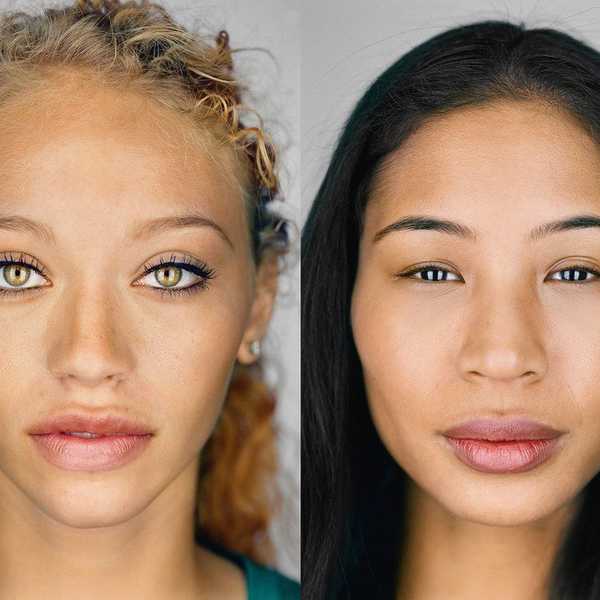
Unfortunately, identifying one's race and ethnicity isn't that simple. Migration, history, and interracial relationships complicates these definitions. First of all, migrators can identify with multiple countries, but where their loyalty and cultural ties lie, is where they will find their identity. Secondly, interracial relationships produce mixed children with features from multiple races. A mixed child with light brown skin will be treated differently from a child with dark brown skin. That’s why mixed children should identify with their mixed heritage rather than choosing one race and disqualifying the other. The biggest problem of all is that history is against the concept of simply stating your nationality and your physical description. People have become accustomed to what they view as a stereotypical American, African-American, Caucasian, Jamaican, Haitian, Dominican, Mexican, and more. There are white Africans, black Dominicans and mixed children. It's a new age, and it's time we remove the labels placed on us and be honest and define who we truly are.
Solution:
This entire article is about being honest with yourself in order to properly identify the ethnic/racial group you belong to. Do you call yourself African-American because you have direct connections to the continent? Or are you using it because it was used for African slaves and the term continued through the centuries after? Are you truly black and can identify 100 percent with the race? Or are you mixed with white and black, therefore you have features of both races? Can you truly identify with being Jamaican? Or are you using your grandmother’s heritage so that you seem exotic? Be true to your physical features and your nationality whether you are black, white, brown, mixed, red, yellow, African, American, Brazilian, Dominican, Haitian or Jamaican. The day will eventually come when I will also have to be true to myself and admit that I have learn to identify with black Americans. Until then, I want you guys to know:
Hi, I am Dawchelle Lee Hamilton, and I am a black Jamaican from Portmore, Jamaica.