

Hattie McDaniel is best known for her portrayal of the maid Mammy in “Gone with the Wind.” However, her earlier career was in music.
Hattie McDaniel was born in Wichita, Kansas, on June 10, 1893. She was the 13th child of a former civil War veteran and slave Henry McDaniel and Susan Holbert, a domestic. In 1901, her family moved to Denver, Colorado. She was one of two Black students in her class in elementary school and was popular among her peers in school, at church, and among her siblings because of her singing talent.
Her professional singing career started while she was attending East River High School. She was part of the "The Might Minstrels" as a dancer and singer, and she also performed acting skits. She decided to quit school in order to concentrate on her career as a performer and joined her brother’s troupe. By 1911, she organized an all-female minstrel show and married a pianist, Howard Hickman.
By the 1920s, McDaniel worked and toured various vaudeville troops and with Professor George Morrison’s orchestra for five years. By the mid-1920s, she performed on Denver’s KOA radio station. After her performance on KOA, she continued to tour vaudeville and became known for composing and singing the blues.
In the 1930s, McDaniel’s brother Sam and sister Etta convinced her to move to Los Angeles, where they had been working doing small roles in the movies. Sam was also a regular on KNK radio show called the "Optimistic Do-Nuts." McDaniel also appeared on the show and became the favorite to listeners. Her nickname on the show was “Hi Hat Hattie” because she would be dressed in her best formal wear.
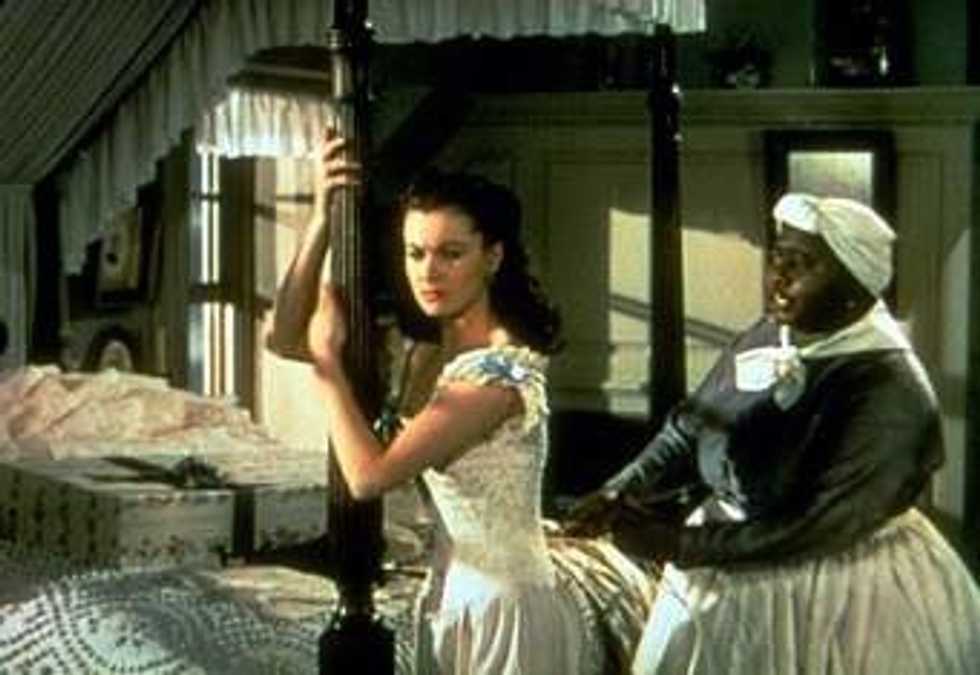
By 1931, she started to gain small roles as an extra in Hollywood films, and in 1932, she was featured as a housemaid in "The Golden West." In 1934, she finally landed a major on-screen role singing a duet with Will Rogers in John Ford’s "Judge Priest." In 1935, McDaniel won the role of Mom Beck, starring Shirley Temple and Lionel Barrymore in the film "The Little Colonel." After this role, she was noticed by many in the Hollywood community. She was offered many roles, including a tour performing a Hammerstein musical stage version of "Kern." In film, she performed as Queenie in the 1936 version of "Showboat" with Irene Dunne. Her most famous role came by as Mammy, a house servant of Scarlett O’Hara (Vivian Leigh) in "Gone with the Wind."
In the year 1940, McDaniel became the first African-American to win an Academy Award. She won for best supporting role as Mammy in "Gone with the Wind." In spite of this, the NAACP was highly critical of her playing roles and being typecast as maids. Her response was either saying, “I’d rather play a maid than be one” or “Why should I complain about making $700 a week to play a maid? If I didn’t, I’d be making $7 a week being one.” She was hurt by the NAACP because many times, they would compare her with Lena Horne, and many times, she would state that she was doing the best she could with the opportunities that were given to her. As the Civil Rights Movement progressed, Hollywood omitted characters that had roles as maids in their production, and she went back to radio.
In 1951, while filming a television show, "The Beulah Show," McDaniel suffered a heart attack. In 1952, she was diagnosed with breast cancer and died in Los Angeles on October 26, 1952. After her death, she was awarded two stars on the Hollywood Walk of Fame, inducted into the Black Filmmakers Hall of Fame and in 2005, a biography was written about her life, titled “Hattie McDaniel; Black Ambition, White Hollywood,“ by Jill Watts.
The more things change, the more they stay the same. ”Honor what has changed and be the means of change when injustice is witnessed." -Jean-Baptiste Alphonse Kar

















