
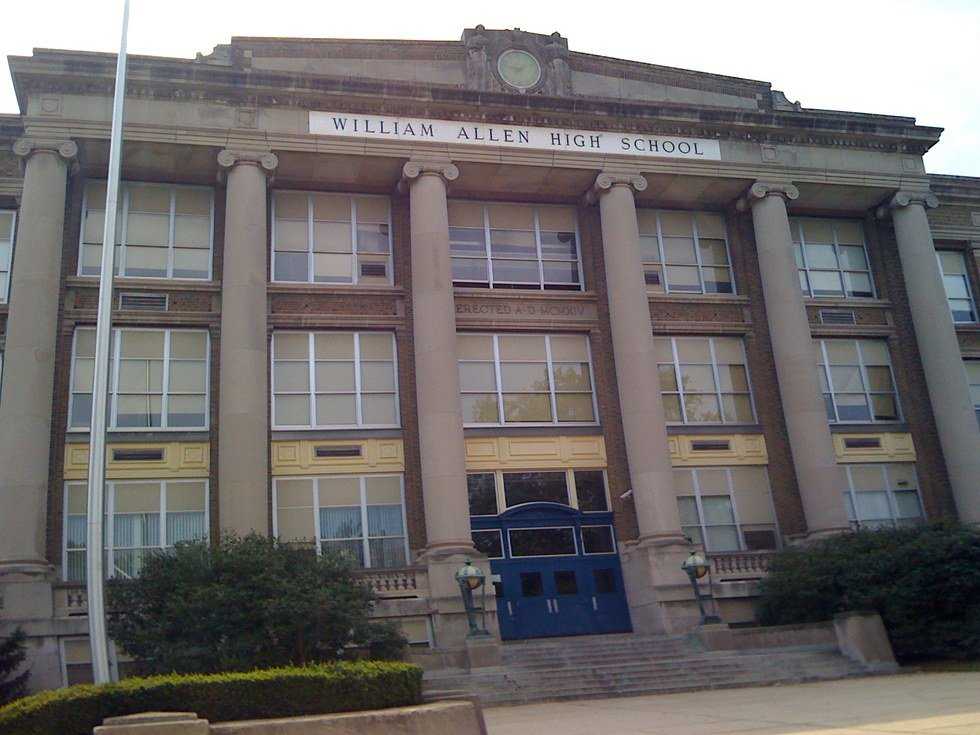
After class on Oct. 29, 2015, fighting broke out at William Allen High School. By the time it was over, 200 students had gotten involved, and four police officers were injured. Media coverage was swift but narrow. That is, in the 24 hours following the fighting, almost none of the many articles written about the fighting sought input from students themselves. Instead, they ran the same few facts and two videos on each news source.
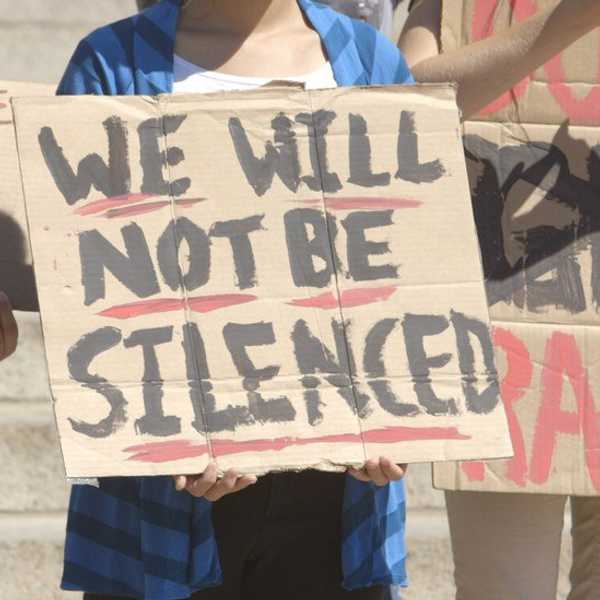
So we had to wonder why students' voices were largely unheard (except in this article from the Morning Call), and we saw how such narrow coverage affected the views of those not directly involved. After speaking with students at Allen and nearby Muhlenberg College, we confirmed that this limited perspective relayed in the media damages opinions and impedes both conversation and understanding.
Seeking Allen's Perspective
by Forrest Kentwell
I have been privileged to talk with a few William Allen High School students about the recent fight that broke out on Thursday, Oct. 29, after school. None of them wish to go on record, which I find quite reasonable. These Allen students have attempted to appeal to larger Allentown and the media on several occasions (such as the walkouts) about the quality of their school. Now, many of the problems that can be seen at William Allen High School stem from the gross inequity of money distribution between schools in the state of Pennsylvania-- where Parkland students get iPads and Allen students get nothing. Despite this, however, last week Allen high school's debate team beat Parkland's. This reminds me of the story from few weeks ago about the group of Prison inmates that beat Harvard's debate team. Those deemed criminals in our society, who are seen through perceived class (the perception of which is only enhanced through the intersection between class and race) have their intelligence and consciousness stolen from them by our culture.
Now, what does this have to do with the recent fight outside of Allen? Tensions are high in this school district. Poverty consumes many in Allentown and the school system has disillusioned students regarding the purpose and beauty of real education [the seeking of truth]. I have not been able to identify if this fight dealt with "gang" or "family" violence, but what I will say is that the conditions surrounding WAHS as a whole shed light, based on a socio-historical reading, on the strong possibility of violence. On Friday afternoon (the next day) this incident was not discussed in classrooms. Conversation was shut down by teachers as police officers walked the halls and interrogated students. This is the way America works. When a group of individuals is being systematically discriminated against, leading to varieties of outlash, the solution is not to solve the issues that caused the moment, but instead to send in a violent force to "combat" or quell the violence. How this will happen I have absolutely no idea. After watching a police officer attack a 16-year-old black female student at Spring Valley High School in South Carolina, I find it horrific that a school would call in the police to inform their decision about such an incident.
William Allen High School and schools across PA should be rallying as student bodies, faculty, staff, and administration, to start a larger conversation about school funding and the crucial importance of education. Furthermore, this fight is in no way representative of the whole student body. Allen students should not be subjected to a colonizing force in a space that should be liberating.
What I will say is this. It is clear there is unfinished business at Allen. That means a few things:
A) There will be violent confrontations between police and students in the future,
B) disillusionment with school and the want for better education are two sides of the same problematic coin that is a devastating education, and
C) as long as we continue to ignore the systematic problems facing Allen Students while not recognizing their amazing accomplishments (and instead focusing on fights) we can only expect to see more of this pain and suffering in the future.
Limited Perspective, Limited Understanding
By Ashley Malafronte
The stifling of student and community perspectives is not limited to what is going on inside of Allen itself. This enforced ignorance is structural, so it pervades throughout media coverage and community reactions, too, shaping the narrative of Allen High School's students in such a way that demonizes their thoughts, words, and-- especially-- actions.
Mere blocks away at Muhlenberg College, very few people had even heard about the fighting at Allen when asked. Of the 30 or so people I asked throughout the day, only three had heard about the fighting before talking to me. Once I had explained the situation in as much detail as I could garner from the news and social media, the most common reaction of my fellow students was to mention how this was the fault of the "muhlenbubble"-- the self- and school-imposed isolation that keeps Muhlenberg students from exploring the rest of Allentown. The muhlenbubble is a phenomenon unto itself: through hushed warnings of "don't go below 17th Street" and an architectural design that keeps students from even thinking about leaving campus, Muhlenberg is quite insular. The muhlenbubble separates Muhlenberg's students from the city of Allentown. Thus, the perception of Allentown on Muhlenberg's campus is limited to the few blocks around campus and whatever people read in the news.
Despite the pervasiveness of the muhlenbubble, I was surprised at how completely it fostered ignorance with regards to the recent events at Allen. This is a school where protests and sit ins were held last year when Darren Wilson was not indicted for killing Michael Brown. This is a school where people set up busses to get to marches, protests, and rallies in cities like New York and Washington, and where the video of the police officer flipping a student out of her chair at Spring Valley High School was played on repeat in the student union for hours. Yet this is also a school where there is hardly any conversation about what is happening right here in Allentown. So we set up a survey to find out what Muhlenberg Students thought about the events at Allen High School-- if they were thinking about it at all. Responses were varied, but most agreed that Muhlenberg's response (or lack thereof) was strange and wrong. In the words of one student named Alexandra, "I found out about the fight... not through the Muhlenberg community posts which worries me, because that very fight took place five minutes away from our campus." In the words of another student who asked to remain anonymous, "The silence is deafening."
However, not all students see the muhlenbubble as a problem. One such student pointed out that "expecting the Berg community to react to this is funky.... Berg (like many small liberal arts schools) often serves as a bubble and students aren't aware of Allentown and its issues. That's it." This student expanded upon this opinion elsewhere by calling out the survey itself with the following quote:
Honestly I think it's very inappropriate... to be asking Muhlenberg students about this. We so rarely interact with Allentown, especially Allentown high school students, and by asking us about them only right after a fight happened, you're perpetuating negative stereotypes. A fight happened. Not everyone was involved. I'm sure everyone at Allen has different opinions on it. Berg students are in no way eligible to judge Allentown students by taking a survey on them .
This anonymous student makes a good point: Muhlenberg students definitely should not be judging Allentown students, especially since the muhlenbubble keeps them from having much firsthand experience with the rest of the city of Allentown. In fact, Muhlenberg students should be expected to interract with the rest of Allentown more frequently and be cognizant that there is a whole city around the school to know. This student's point actually falls very much in line with my own: Muhlenberg students do not know enough about what is going on around them, and cannot adequately understand and respond to their surroundings. I believe that this is a problem and that it should be changed.
Without more contact with the people of Allentown, Muhlenberg's students are left with only one side of the story: that of the media, which becomes that of those in power. Aside from two short videos taken by students and one impassioned statement from a mother, virtually all media coverage has reported only from the perspectives of the police and the city government. Muhlenberg student K. D. Wilson brings up the point that this focus on only the police officers' injuries "makes me wonder if there would have been coverage if no officers had been hurt." Another anonymous student points illuminates similar concerns about the media's response:
The Morning Call [A local newspaper] used language that evoked some kind of comic book commentary instead of representing, in a more fact-based and objective manner, the event. It's surprising to me that, in cases like these, we rarely hear the stories of the "aggressors," and rather the narrative is told by the "heroes" who valiantly save the day. The coverage read much like a press release from a police chief.
Both Wilson and this anonymous student point out the bias of the media, and both recognize that it leaves holes in the story. In the day immediately following the event, there was little to no media coverage of why the fight had started or how it had escalated, leaving those in the muhlenbubble without any reliable account to lead them toward an actual understanding of the situation.
Unfortunately, Muhlenberg and its self-imposed bubble are not unique. In this specific case, only those who experienced the fighting at William Allen High School firsthand can have access to information that would lead to a comprehensive understanding of the situation because the media only presents the views of those in power. Of course, those are the only threads of the narrative that are told, so those in the muhlenbubble are left without a way to fully understand the situation.
The problem here is manifold, but one of its central components is this lack of available information about any perspective besides that of the most powerful. The solution is difficult to name and will be even more difficult to implement, but it must start with the representation of these differing perspectives. If we only ever hear a single view, how can we be expected to understand the entirety of an event?