“If modern feminism is simply about exclusivity, abusively picking nits out of each other's differences, and organizing bullying mobs against women, then count me out." -Sadie Smith
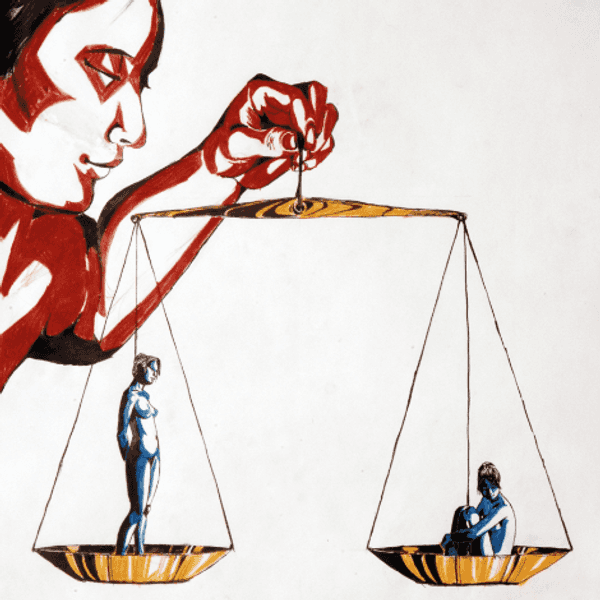
These words represent the thought process that most people go through after viewing the typecast that has befallen feminism. After all, who would choose to identify with a narrow label that repels diversity? Overall support for modern feminism has grown exponentially in recent years, however, there are still many people who consider the movement to be flawed and refuse association with it. Unqualified generalizations and beliefs that feminism restricts the capabilities of each sex have created a divide between those who adhere to the label and those who do not. In educating oneself on the primary goals of feminism, it becomes clear that the movement is not niche, restrictive or superfluous. Upon analyzing the basic principles of feminism and how they are employed, we can see that the non-radical movement is mutually beneficial to both genders and does not exclude minorities or men from adhering to its values.
Feminism fights for basic human rights and believes that all people, regardless of sex or gender, deserve equal opportunity. Yet over the course of it's lifetime, the movement has somehow strayed from this unadorned belief and been branded with a plethora of negative implications. Presently, a stereotypical feminist plans to overthrow men from all power and does not place sufficient value on important factors that also impact equality, such as, race, class, religion and culture. By being a feminist, it is routinely assumed that you hate men and are ignorant to global suffrage. Those who trust these misconceptions do not realize that they are taken from the surface, outdated, and fail to accurately depict the modern feminist. Stereotypes are a dangerous thing that can very wrongly represent the majority of a populace and harm the forward trajectory of movements like feminism.
Those who are not educated on the subject and allow the stereotypes to effect their opinion will likely not identify with the label, and I truthfully don't blame them. People are often scared of what they do not understand. It is easy for harmful prejudices to be made and strong opinions to be formed when only observing feminism in the way it is presented by media and activist hype. One view is that feminists do not take intersectionality into account, neglecting the many other aspects of a person that can lead to discrimination. Others believe that, by supporting feminism, you are denigrating the role of the traditional wife and mother. Perhaps the most harmful of these prejudices is the one claiming that female rights activists tear down those who do not conform to their belief system, even turning hypocritical when others have the nerve to disagree. The danger of the fallacies is that they effect how feminists are presently viewed.
The truth is, the term "feminism" has altered greatly since the 1960s. In the second wave, women were fighting simply to be in the workplace alongside men, and to cast off the role of the submissive homemaker. Now that we (in America) have generally achieved these goals, feminism and its cornerstones have changed as a result; in defining feminism, it becomes clear that it's not ridden with any wild implications or extreme claims. It is “the belief that men and women should have equal rights and opportunities" and “the theory of the political, economic and social equality of the sexes," as Equality advocate and British starlet Emma Watson puts it.
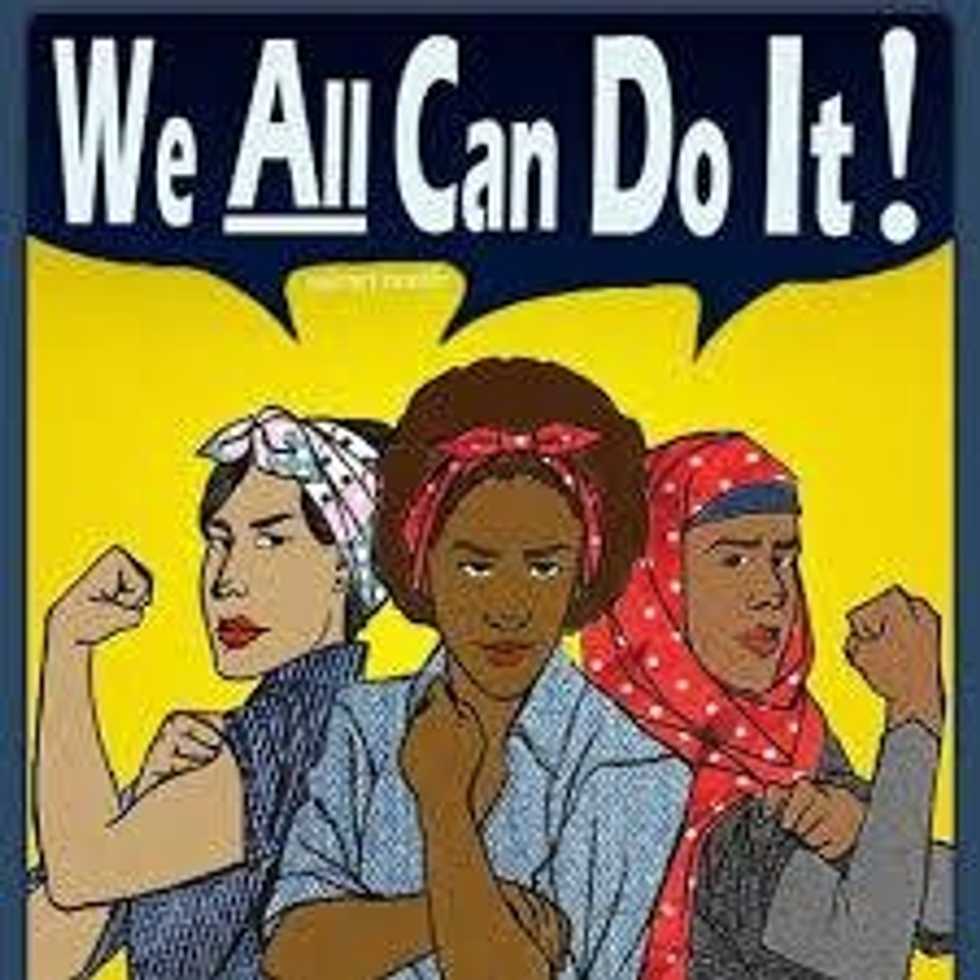
This is not an insane definition; in fact, it is actually quite an uncomplicated one. Based on this definition alone, I bet that the majority of people would proudly call themselves feminists. Young activist Lena Dunham tested this hypothesis in asking, “Do you believe that women should be paid the same for doing the same jobs? Do you believe that women should be allowed to leave the house? Do you think that women and men both deserve equal rights? Great, then you're a feminist." By outlining these criteria, which most of the world would agree with and file under basic human rights, Dunham is labeling a vast majority of the public as feminists, all of who simply do not identify as such. She highlights the observation that the argument is not over the actual politics, but the terminology and classification that goes with it. In reality, feminism simply states that all women, despite race, ethnicity or religion, should be equal to men of all the same varieties.
It is for this reason that arguments over feminism's neglect of intersectionality seem unmerited. Just because someone primarily advocates women's rights and their compared equality to men, it does not automatically mean that they trivialize racial and religious anxieties. In 1989, African American feminist Kimberle Crenshaw, a prominent figure in race and gender theories, even published a paper that attributed the interconnected nature of social categorizations to feminism. She argues, “Intersectional approaches arose from feminist scholarship, which recognized that there were important differences among women and men rather than simply between them. Feminist scholars argued that gender, race and class are interconnected as 'intersecting oppressions.' " With so many different branches of feminism, literal "intersectional feminism" included, it is impossible for an educated person to say that the movement does not account for minority groups.
I can appreciate that intersectionality and race discrimination are extremely important and commonly suppressed issues, but I feel it is totally unfair to assume that every feminist is unconcerned with it. In fact, it is a large concern to the majority of us. Among Crenshaw and an immense network of other feminists, fiery writer and media analyst Flavia Dzodan is an example of an equality advocate arguing that feminism requires the acknowledgement of other intersecting oppressions. As a South American, as a Latina, as an immigrant living in Europe, she proclaims, “My feminism will be intersectional or it will be bullsh*t!" Dzodan is passionately certain that intersectionality NEEDS to be recognized and that we CANNOT have one movement without the other. She asserts that without taking into account racism, class, sexual orientation, and every collective repression, feminism will fail. In summation, feminism does not define which ethnicities or minorities it will choose to advocate for. The last thing that feminism is, is exclusive.
Nevertheless, the supporters of the "men's rights movement" would contend otherwise; they feel that feminism excludes men and fails to sponsor their quest for equal rights. It is undeniably true that males are disadvantaged when it comes to family law, reproductive rights, domestic abuse and obligated military service, because women are typically given the upper hand in these areas. However, if these objectors were hip to feminist theory, they would be aware that feminists back them and their pursuit of equality. I, along with numerous other fellow activists, believe that a stay-at-home dad should not be considered as any less valuable than a stay-at-home mom. I back not just paid maternity leave, but for paid paternity leave as well. I do not consider it fair that the bulk of domestic violence centers in America are reserved for female victims. Someone who does not promote men's rights or has a desire to throw them from authority would not fight for them in the way that so many feminists do. For this reason, men should not oppose the movement, but join in the support of its politics. In labeling themselves as feminists, males will be abetting their own rights in addition to female rights.
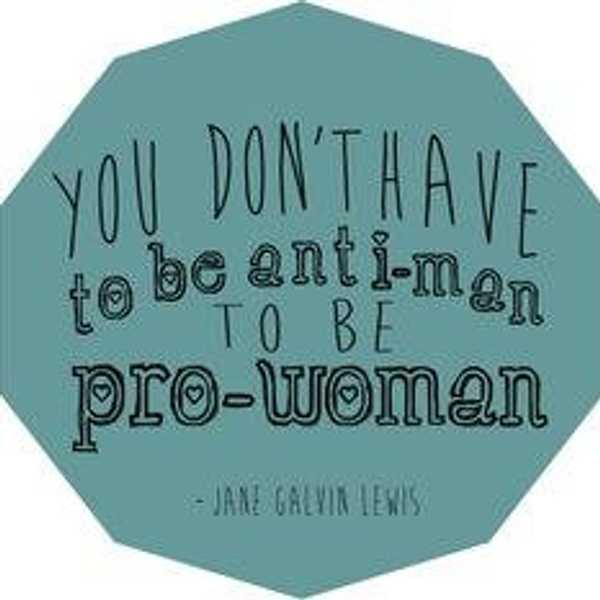
Men play just as great of a role in the fight for gender equality that women do. Equality and respect are both two-way streets. It is exceptionally important to the women's movement in general to recognize that this is not about being anti-men; this is about creating a society that respects women in the same way it does men. Watson made waves when she extended an open invitation for men to join the fight against inequity, last September while speaking at the United Nations Headquarters. She noted that the result of collaboration would be liberating for both genders, stating, “If men don't have to be aggressive in order to be accepted, women won't feel compelled to be submissive. If men don't have to control, women won't have to be controlled. Both men and women should feel free to be sensitive. Both men and women should feel free to be strong … It is time that we all perceive gender on a spectrum, not as two opposing sets of ideals."
Watson's views speak volumes to those who believe that feminism is synonymous with man-hating. The effects of feminist ideals not only assist men and their worth, but also give them the option to stray from the traditional confines of masculinity, without fear of judgment. In encouraging the tenets of the movement, traditional gender roles and expectancies are open to reformation.
There is a typical sociological family model that strictly designates men as breadwinners and women as homemakers. For some reason, those who oppose feminism assume that every feminist ultimately rejects it, when in fact, that is not the case. A primary principle of feminism is personal independence and the ability to make one's own decisions. If a woman wants to be a homemaker, that is her choice, and for that reason it shall be respected. If she wants to be a single, ladder climbing, CEO, feminists would, again, respect her choice. The same respect would be given to men, who have the very same choices to make. For feminism to work, we have to form a mutual partnership among one another that does not pass judgment on our respective conclusions. Just because a woman wants gender equivalence does not mean that she wants to renounce or eliminate the conventional role of the mother; she merely wants the freedom to choose this role for herself and not be forced to conform to it due to societal expectations. In the early phases of the movement, there was an oversimplified idea that women were struggling to emphasize that they were no different from men. We now realize that that is entirely illogical; it is definitely acceptable and undoubtedly necessary to recognize that men and women are different beings. What feminists now battle for is the acknowledgement of their equal importance and worth.
Moving forward, I think it is imperative for all people to acknowledge that there is such a wide variety of types of feminism, and just because you don't whole heartedly accept one, it does not eliminate the entire prospect of potential identification. Proud feminist and strong political leader Carly Fiorina once pointed out, “Our opinions are as diverse as men's…We care about every issue and our talents and our gifts are as diverse as men's. So why would we assume that all women think alike, or that all women should chart the same course, or that all women should agree with each other?" I think that this statement is particularly relevant. Each individual woman or feminist is not going to have the exact same views and it would be impractical to think so. Each activist is only trying to fit gender equality into his or her own set of beliefs and, although there are unquestionably frequent overlaps in values, there are too many opinions in the world for any number of people to have the same one.
In taking each of these factors into consideration, it becomes plain that equality is a fundamental property, which is sooner or later advantageous for us all. Women make up half of the earth's population and, as a result, carry half the potential of the world. By suppressing or degrading women, we are not taking advantage of this untapped capability. Fiorina, again, makes a captivating point when she attests, “The rallying cry should be that we need the potential of every man and every woman and every child to be unlocked—and that's in all of our interests." In enlightening oneself on the principals of feminism, it is clear that it is communally beneficial. It also is not a cookie-cutter movement reserved for one type of woman. A modern feminist is any human being who thinks that it is fair for men and women to be seen as equals.
Works Cited
Crenshaw, Kimberle. “Demarginalizing the Intersection of Race and Sex: A Black Feminist Critique of Antidiscrimination Doctrine, Feminist Theory and Antiracist Politics." The University of Chicago Legal Forum 140 (1989): 139–167. Print.
Dzodan, Flavia. “MY FEMINISM WILL BE INTERSECTIONAL OR IT WILL BE BULLSHIT!" Tiger Beatdown. N.p., 11 Oct. 2011. Web. 5 May 2015.
Greve, Joan E. “17 Famous Women on What Feminism Means to Them." Time. 23 June 2014. Web. 17 Feb. 2015.
O'Brien, Courtney, and Sarah Seman. “Why Everyone Should Be A Feminist." Townhall. 27 Jan. 2015. Web. 26 Apr. 2015.
Rockson, Samia. “Why I Am Not A Feminist." Live Mag UK. 17 Apr. 2015. Web. 20 Apr. 2015.
Smith, Sadie. “There's No Point in Online Feminism If It's an Exclusive, Mean Girls Club." New Statesman . N.p., 21 Mar. 2013. Web. 5 May 2015.
Watson, Emma. “Emma Watson: Gender Equality Is Your Issue Too." HeadQuarters. N.p., n.d. Web. 2 Feb. 2015.