
Chances are you own a piece of clothing that comes from the fast fashion industry. If you own anything from H&M, Forever 21, GAP, Topshop or Zara (and there are many more), then you have participated in the fast fashion movement. But I don’t blame you (I have quite a few items from these stores as well) especially since you can easily buy tank tops for as little as $1.50 or t-shirts for as little as $2. But while these fast fashion items are helping us save money and time due to their high abundance and accessibility, they are hurting other people, including us.
The term “fast fashion” may sound familiar to some, and maybe is a new term for others but regardless of your familiarity with the term, everyone should know the implications and consequences that arise when we consume fast fashion. It’s a concept whose horrible backstory needs to be unveiled so that we become more conscious of our consumer habits toward clothes and what kinds of practices we are unknowingly supporting when we hand over $5 for a dress. Here are the five most important things you need to know about the fast fashion industry:
You will feel out of trend in a week - and the fast fashion industry does this on purpose.
Did you know that stores like Zara and Topshop put out hundreds of new styles every week. Every, single week. High end fashion that you see on the runways operate mainly on two seasons per year: fall/winter and spring/summer. Fast fashion on the other hand, operates on 52 “micro-seasons” per year which results in an output of clothing that is both high in volume and consumerism. This is the goal of fast fashion. So while it may seem great when you find a $10 jacket, you are most likely to buy a few of them because they are so cheap and then maybe $50 next week worth of more fast fashion garments because hundreds of new styles will already be out by then. The fast fashion industry operates on this business model of high volume/ low quality, which leads into the next point.
Cheap Clothes = Cheap Labor.
If a tank top you bought cost you $1, then the price to produce that garment is at least half, meaning that by the time we get to figuring out the amount the worker who made the tank top gets paid, it dwindles down to only a few cents. The fast fashion industry purposely does not want to expose the fact that the workers who make these clothes get paid close to nothing because at the end of the day, all we, the consumer, sees is the $1 price tag.
On top of low pay, the industry also does not want consumers to know that children as young as 5 years old are forced to work at factories that produce these clothes. Children in Bangladesh (a common country where these factories are located) are even forced to leave school and give up their right to an education in order to work in these factories and keep up with the high demand of clothing that needs to be produced each day.
Cheap labor also equates to cheap working conditions. Factories are poorly ventilated which leads to inhalation and exposure to toxic chemicals and fumes if there is dying or sanding (for distress jeans) involved. Workers get few (if any) breaks and are forced to work overtime in order to meet their quotas and are also forced to work in crowded spaces. Due to these poor working conditions, workers are highly susceptible to illnesses and even death.
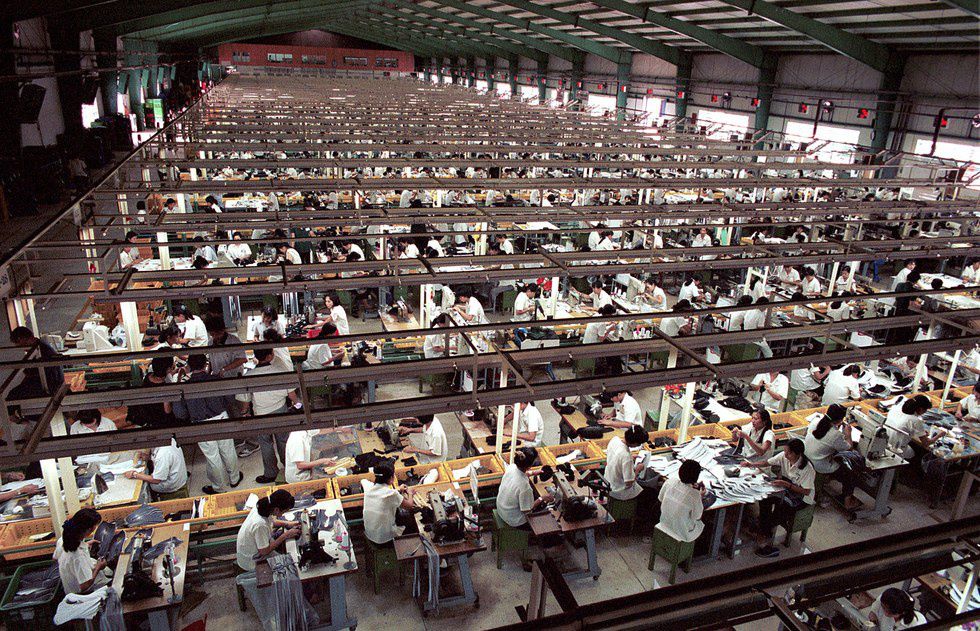
To see a creative and powerful approach that demonstrates this point, check out Rethink Canada’s campaign for the Canadaian Fairtrade Network called “The Long Tag”: http://aplus.com/a/honest-clothing-labels-rethink-...
There are toxic chemicals such as lead in these clothes.
So it turns out, not only are the workers who make fast fashion clothes exposed to toxic chemicals, consumers are too. We become exposed to these chemicals when remnants are left on clothes long after they have left their factories. While many of these fast fashion brands have signed agreements to reduce the amount of heavy metals used to make their clothes, most of them have not followed through and put out clothes as well as purses, shoes and belts that contain well above the legal limit of chemicals such as lead. But lead contamination is not the only chemical that lingers on fast fashion clothes. Lead is only one chemical on a long list which includes pesticides, insecticides, formaldehyde, flame-retardants and other known carcinogens. The effect that these chemicals have on wearers, particularly children, is serious and possibly fatal.
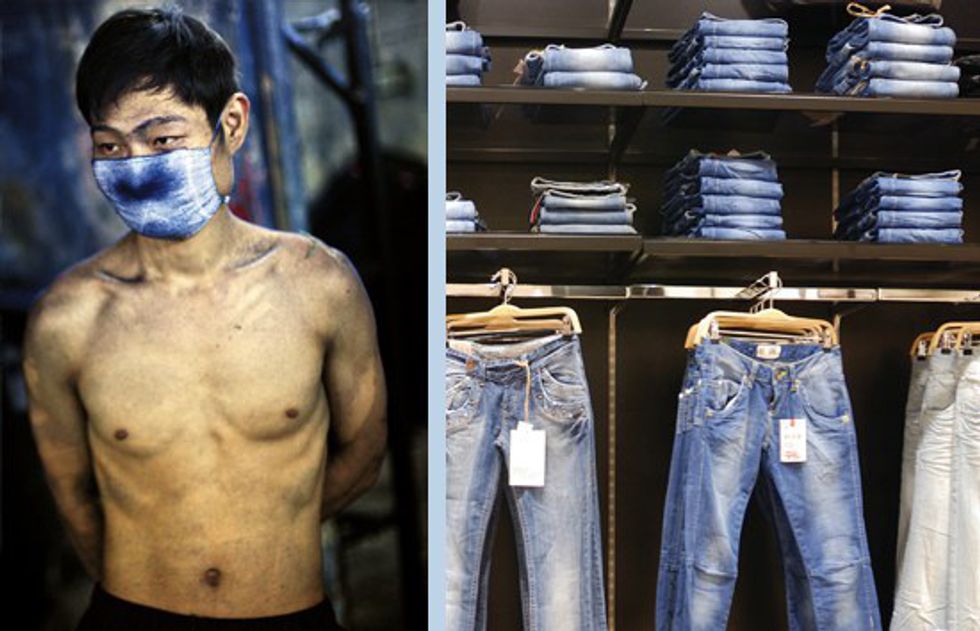
(Above) A worker takes a break from sanding distressed jeans all night at a factory in Guangdong Province, China. The blue dust from the jeans is a heavy irritant to the lungs.
These clothes are designed to fall apart...fast.
Have you ever bought a dress that you really loved and then only after wearing it a few times you noticed it had a giant hole? This is due to the fact that fast fashion clothes are poorly made since they are made in such high quantities. The factories do not carefully oversee the production of these clothes, therefore many defects are passed, shipped and then put on the racks for us to purchase. Additionally, factories use the cheapest methods and materials to produce these clothes. This means using cheap thread that breaks easily, cheap fabric that shrinks and/or stretches significantly when washed and rips or wears easily when worn lightly.
The same applies to the way these clothes are assembled. Designers choose to use the fastest seam finishes, hem finishes and minimal ironing to increase productivity and volume output. This is why clothes fall apart so easily. This is also why patterned items such as stripes on a dress do not match up on the seams. Here’s another sign that your clothes might be fast fashion: have you ever tried on a dress or a shirt and it didn’t fall straight down but instead veered off to the side or was wonky? This is because the garment was not cut properly. Cutting clothes properly factors heavily into a proper fit and drape. Because fast fashion factories cut up to 100 layers of fabric at a time, the chances of some of them being cut awkwardly is likely yet they still move on to be used in the sewing stage.
Quality should trump quantity every time.
A cheap price tag is very tempting - especially in this economy where Americans are constantly trying to find a bang for their buck. But while it is tempting to buy a great outfit for less than $15, or a pair of shoes for $10, remember what it took, or didn’t take, to make them. Investing in quality, well made clothing which are made by people who are treated humanely is a practice we should all adopt. Investing in these well made pieces will cost more initially, but in the long run will last much longer. It’s not about having as many clothes as you can possibly cram into your closet. Instead, it should be about investing in fewer, well made items that together make up a well rounded closet that includes your basics to your more formal pieces. Less is more when it comes to your closet. Take integrity in your clothes and take a stand against the harmful practices of fast fashion.
You can think of fast fashion as the clothing equivalent of fast food: fast, cheap, and not good for you. But don’t feel bad for not knowing about the harmful implications of fast fashion. The fast fashion industry does not want people to know what goes on backstage in order to produce these cheap goods that are tempting to buy.
So what can we, the consumers, do about this poisonous trend? One great place to start is to simply begin by buying less fast fashion. No need to quit cold turkey, but lessening your consumer habits for these clothes can make a difference. Opt for clothes that are made locally or in the United States. Support your local businesses or friends by buying their homemade or locally produced goods.
Rule of thumb: do your research. Do you know where your favorite clothing brand makes their clothes and who makes them? Finding out this information can give you great insight into where your clothes come from and from there you can decide whether or not you want to support their practices. Be a smart consumer, do your research and know where your clothes come from. While you may feel like your effort may seem insignificant compared to the massive power of the fast fashion industry, one step in the right direction is much better than 100 steps in the wrong one.
Find out more about the fast fashion industry by checking out the documentary, “The True Cost”, available on Netflix.