On Feb. 11, 2016, Prof. Maudsley from our very own Stockton University came to talk to us about the Holocaust and how it was dealt with inside the courtroom. Maudsley is a retired trial attorney and has been teaching about law and genocide for over a decade. She graduated from Washington University with a major in political science and has two master's degrees, one of which is in holocaust and genocide studies.
She started the lecture by talking about the holocaust in Hungary, when the war was just about over in 1944. Over 800,000 alien Jews tried to seek refuge from these terrible crimes against humanity. In March 1944, Germany invaded. Adolf Eichmann had just came to Hungary. The Jews of Budapest had a greater chance of survival while Jews that frequented the countryside were killed or executed.
When speaking of the Hungarian Jews during the Holocaust, there is one name that frequently comes up among others, Rezso Kasztner. Rudolf Israel Kastner, also known as Rezső Kasztner, was a Jewish-Hungarian journalist and lawyer who became known for having helped Jews escape occupied Europe during the Holocaust. Kasztner was a rescuer who negotiated with Eichmann and Kurk Becker. By doing this, he saved a large sum of Jews in Budapest.
In order to understand the nature of this case, Maudsley talked about other cases, each uniquely different. One trial she talked briefly about was the Nuremberg Trials. This famous trial was covered by every news organization. Many news reporters referred to this case as the “citadel of boredom”. It was growing rather boring, forcing people to leave the room in disappointment. It was then that the court decided to take a different approach to force people to pay attention. A Nazi camp film was produced and shown to the audience of the courtroom - many wept, and women even fainted at the very sight of it all. Many finally started to understand what this trial was all about. This wasn’t a trial based on waging aggressive war, it was a trial about crimes against humanity. What was revealed during this trial was Kasztner’s negotiations with Eichmann and Becker, and that it was actually looked at as him working in favor of SS officers and not the saving of the Jews.
The situation with Kasztner is one that grows rather intense each and every time this case is looked at. Many see that Kasztner seeking to help Jews was completely one-sided, and that the only reason he did so was to free family and friends. Many who were not close friends to him felt that he had stolen a train seat that meant life or death to others that were involved.
After Kasztner moved to Israel, he got a job. However his story doesn’t end here. A man named Greenwald had found out about his collaborations with the Nazis and said that he only did it to help out his friends and family. Word had it that he knew of the Auschwitz protocols and concealed it from those who had benefited from the information. Greenwald said that because he did this, it didn’t make him a savior, but a bad person, and a collaborator with ulterior motives. Kasztner decided to sue Greenwald, but was unsuccessful. It was said that Judge Benjamin Halevi had told Kasztner that he “made a deal with the devil”. He then became a recluse, where he reportedly said that life was “darker than night, and blacker than hel.”
The Adolf Eichmann trial took place in 1961. This was considered a coup for Israel. They wanted to use the trial to help support Israel in educating about the Holocaust. It was considered to be a world event. Judge Halevi was to be the judge of this case as well, but due to the last case they wanted to make sure that this was a fair trial. So, they opted to have three judges.
Eichmann was tried by a nation and law that didn’t exist and was even kidnapped for trial. As the trial went on, it was what it was intended to be: a show trial. They hardly had any evidence to convict him and his name hardly ever came up in the arguments.
When it comes to Kasznter's conviction, one cannot help but feel bad for the man. But what one fails to realize is that this was one of the darkest times in Jewish history. The idea of choiceless-choices was not even a concept to exist, let alone discuss.
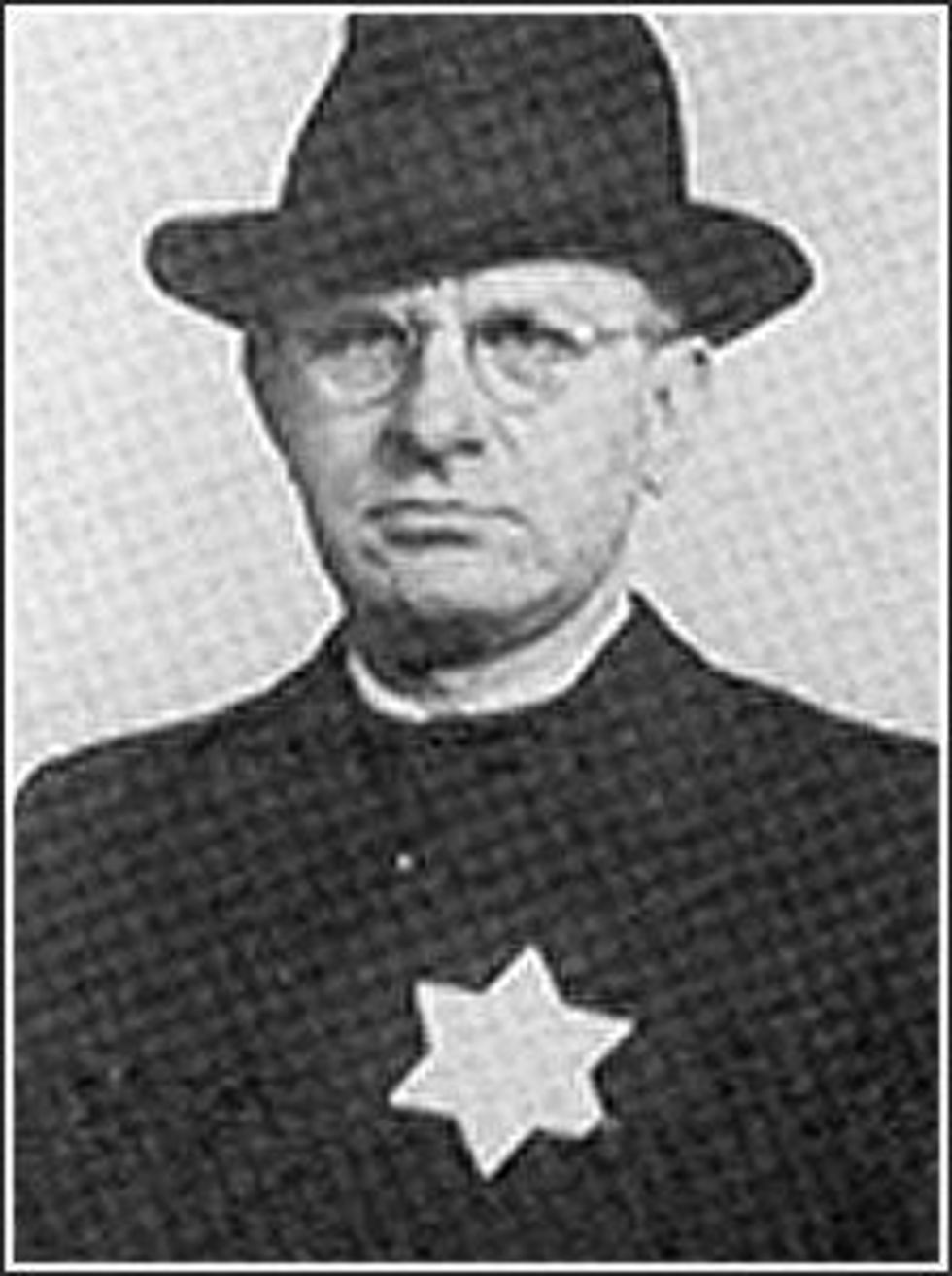
After other trials were discussed, including that of David Irving (the “historian” that tried to prove that the Holocaust never happened by bending history to fit his ideological means), we then jumped to her own research on the case of Rabbi Bela Berend, a rabbi who sold his soul so that the world would one day call him a hero.
Berend was an undistinguished rabbi, having little to no record in any national, communal or Zionist organization. No one really liked him. He then became friends with Bosnyak, who was a Nazi. Berend tried to persuade Bosynak that all Jews would self-deport after the war. He claimed that he was trying to Zionize Bosynak. When appointed to the Jewish Council, he met with negative vibes because of a lack of records and because of his friendship with Bosnyak. Many in the council were met with anxiety and apprehension. They tried to find alternate ways to hide information from him to avoid information spreading to the Nazis.
When you hear or read his side of the story, he believes to have succeeded. He claimed he was trying to help the Budapest Jews. He was still charged with having collaborated with the Nazis. During his trial he was convicted of three out of seven counts for war crime. When he heard that he was sentenced for 10 years in prison, he fainted. Jewish leaders advocated to not carry out his sentence. There was still a lot of anti-Semitism even after the war was over. They un-convicted him and got him out. The Zionist then went to the United States to start a new life.
His story, similar to the case mentioned above earlier, didn’t end here either. Prof. Randolf Braham was a survivor of the camps in the Ukraine. He then came to the U.S. to study political science. He began to write books about history from a political standpoint. In the course of writing, Braham wanted to interview Berend to clear his name in the books. Berend refused, saying that he was exonerated of all charges and that he was clean. He then told Braham that if he published anything having to do with him in the book he would sue him, which is exactly what happened.
Maudley said that she knew two of the jurors in this case who claimed that they “felt sorry for him.” There was nothing liable there to convict Braham since it was indeed a work of history. Berend tried repeatedly to sue Braham and other people who tried to tarnish his name, to show that he had been absolved of all charges and that his actions were justified during the war. He would also die repeatedly suing people to gain redemption for his actions.
The Holocaust and the courtroom is always a recipe for fascination and intrigue, especially with a subject so ingrained into the brains of many today. The courtroom is not designed to make history, but to illuminate it - not to make historical truths.