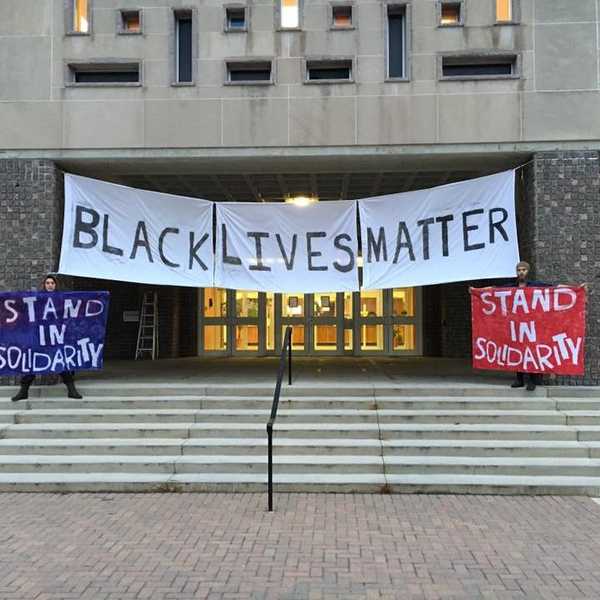
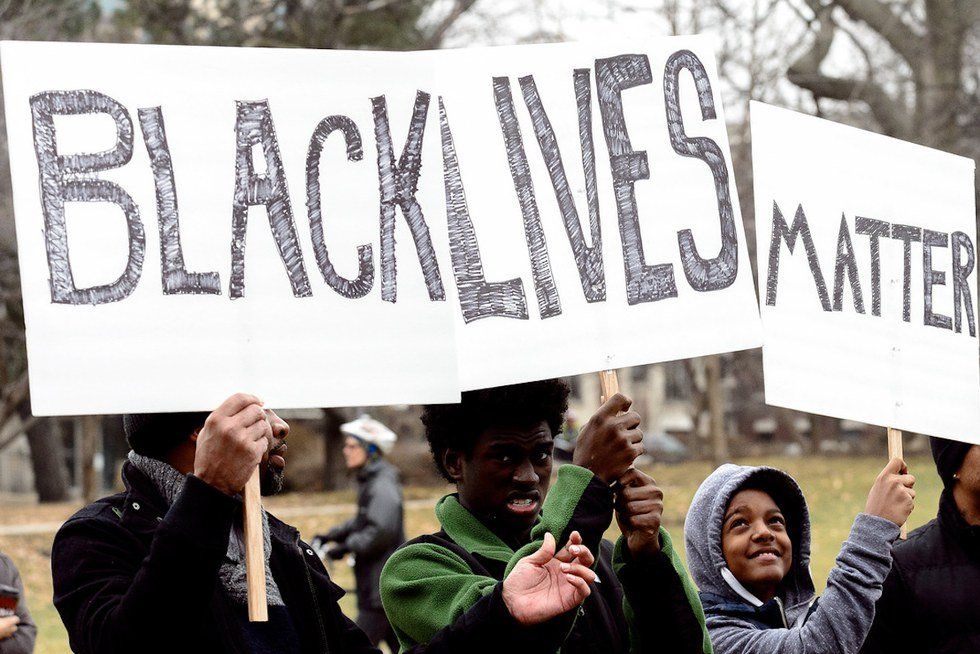
The #BlackLivesMatter movement began in 2013, following the acquittal of George Zimmerman in the shooting of Trayvon Martin. The hashtag started as a desperate attempt to bring attention to the violence and systemic racism facing African-Americans. It was in 2014, after the deaths of Michael Brown and Eric Garner, that the movement truly took off. This was mainly a result of the police involvement in both cases.
Another hashtag started in 2015, #MuslimLivesMatter, after the Chapel Hill shooting of Deah Shaddy Barakat, Yusor Mohammad Abu-Salha and Razan Abu-Salha. This hashtag hasn’t gotten the same recognition as the BLM hashtag but is gaining more momentum now that Trump has introduced his Muslim ban.
When the death of the family in Chapel Hill and the deaths of Michael Brown and Eric Garner were not labeled as hate crimes; rather as a “parking dispute” in the case of Chapel Hill, and of resisting arrest in the cases of Brown and Garner. People protested and rightfully so as police brutality and Islamapobia have become more prevalent in the last year.
#AllLivesMatter was started near the latter half of 2016. During a Democratic Presidential debate in October of 2016. The question was asked, “Do all lives matter or do black lives matter?” The movement picked up, even branching off into #BlueLivesMatter, representing the police officers that die in the line of duty. Many are critical of this movement, as the number of police officers who die in the line of duty has stayed under 200, except for 2001, when the number reached 241. In 2016, an estimated total of 140 officers died, keeping with the general trend. There has been no actual uptick in the number of police officers dying while on duty, some of whom died without any violence at all. Meanwhile, in 2016, police killed more than 250 black people compared to a little more than 100 in 2015.
Bill Maher said, “There are people who say it — the phrase should be ‘All Lives Matter.’ I disagree. That implies that all lives are equally at risk, and they’re not. Black Lives Matter is the right [phrase].”
The new executive order issued on January 27, which suspends “entry into the United States of aliens” from countries in which “a foreign terrorist organization has a significant presence” brings more power to the #MuslimLivesMatter movement. This new order means that immigrants, with visas or green cards, legal residents of the U.S., who were in Iran, Iraq, Libya, Somalia, Sudan, Syria, and Yemen (all predominantly Muslim countries) are now blocked from coming home. However, the people generally screaming that “all lives matter” are suddenly silent.
This is because, to them, ‘all lives’ don’t matter. Only those who fit into a cookie-cutter mold of the model American citizen matter. Any person of color who even lightly resists arrest - perhaps, because they were innocent of any actual wrongdoing — becomes a villain. Refugees, coming from a foreign land that is wracked with war and terrorism, are even farther from the good American citizen. Because all Muslims are responsible for the acts of a few, right?
Why do they not hold Americans to the same standard? In 2016, more toddlers were responsible for shootings than Muslims. Since 9/11, 19 of the 26 attacks labeled as terrorism were carried out by non-Muslims. One of the worst shootings in US history, at Pulse nightclub, was carried out by a born and raised American. Some of the worst shootings in the past 20 years were perpetuated by white men.
All lives will not matter until black lives matter, until refugee lives matter, until all people are truly treated equal by the government and country, and their fellow human.