
The abandoned hospital-turned-nursing-home screamed contradiction the first second I encountered the gaping entrance in the fence, right under a “KEEP OUT” sign. Alexa slipped under the fence gracefully, and I attempted to shove myself through the hole, dirtying my white sandals and staining my knees. Definitely worth it.
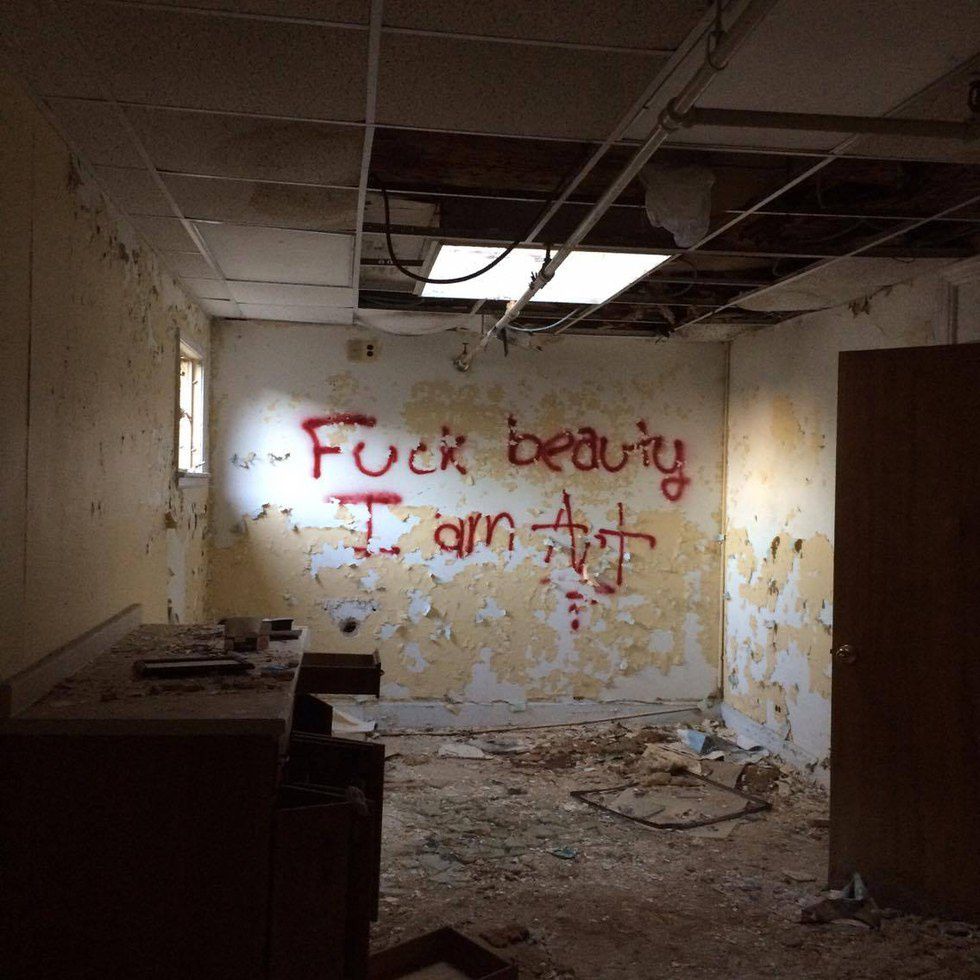
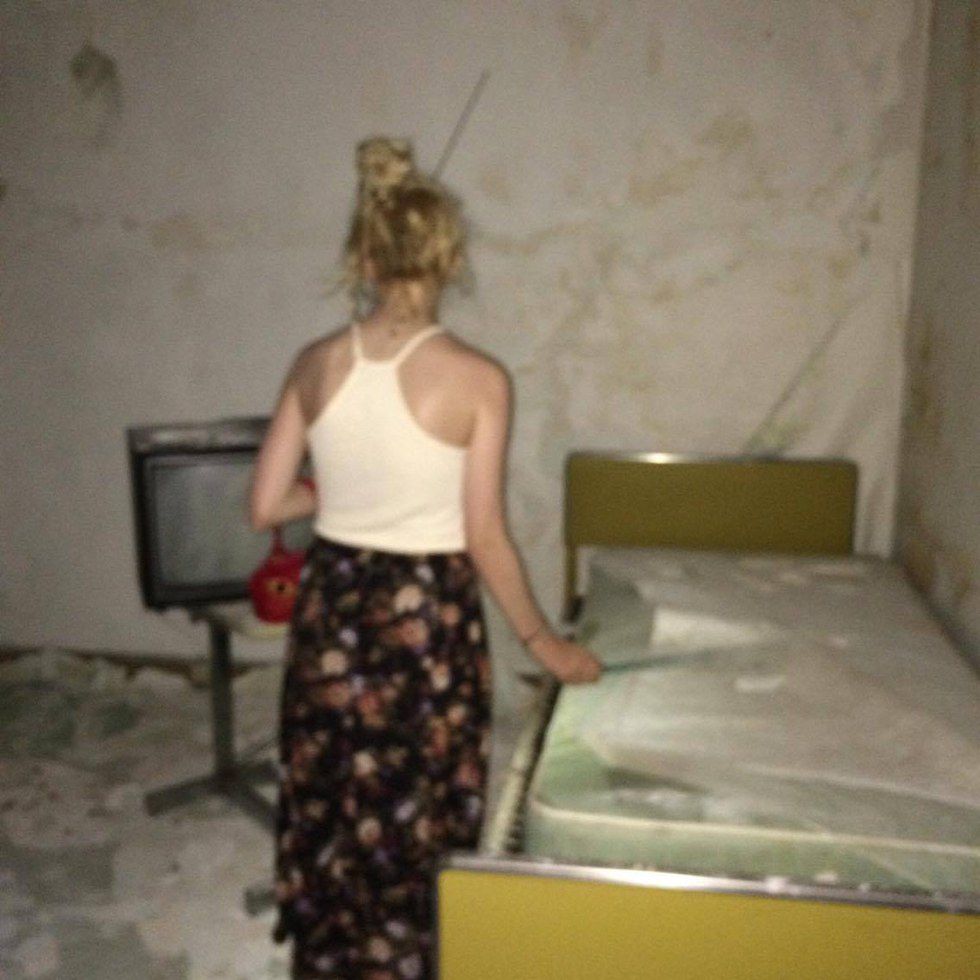
What was once The Cooley Sanatorium (for those living with tuberculosis) and the Villa Maria Home for the Aged is now a site for adolescent exploration, drug use and vandalism. The first thing we saw on the property was a small colony of deer who had made this land their home. Alexa, this being her fourth time at the complex, led me through overgrown bushes into one of the main buildings. My heart slowly dripped down my torso to sit on top of my bladder. Horror movies I had seen flickered through my brain. The long narrow hallways were littered with debris, old religious papers, read-aloud bible records, the occasional soda bottle, and misplaced furniture. Making our way through the asylum-like maze, we stumbled upon an empty wheelchair and destroyed rooms with peeling wallpaper. The place looked like decay.
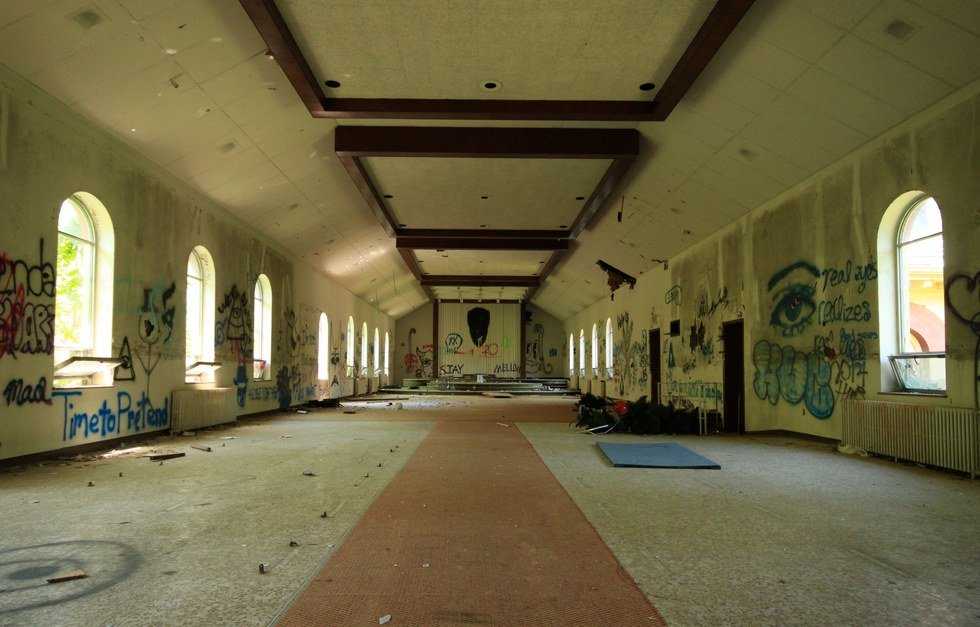
Everything was dark and terrifying until we climbed a staircase (missing a step) into the chapel. This section of the complex was built in 1939, when the sanatorium was sold to the Franciscan Servants of the Holy Child Jesus, a catholic religious order. This is when it was converted to an old age home. The chapel was one of the only spaces we encountered that was exposed to a humane amount of natural light. Beams flooded through smashed windows, illuminating walls and floors completely converged in the writings of past visitors.
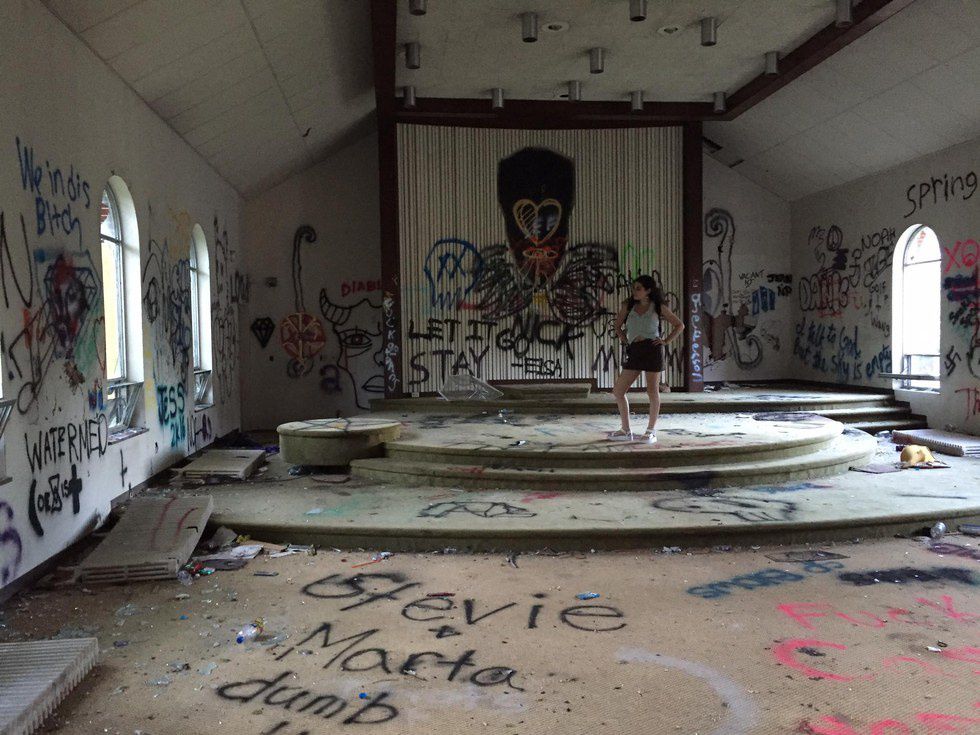
“Die Here” and “Welcome to Briarcliff” (an "American Horror Story" reference, for all the fans out there) were the two scariest phrases I encountered. The rest were playful and surprisingly deep. Drug references, pop-punk lyrics and emotional lines made up the majority of the writings, leading me to think about the meaning of this abandoned complex for the teens visiting it. What is an abandoned nursing home to different people? Why were so many of the writings so similar to each other, and why did I feel such a connection to the people who had been there before me?
Empty places that have once been occupied have this magnetic aura about them. Nostalgia is evoked, curiosity, mystery, fear, anxiety, excitement, smallness. I felt small because I knew that one day the places I live in will start to crumble in upon themselves, and be home to explorers (or the homeless – there have been reported sightings of a strange man in a robe).
What struck me about the graffiti is the fact that it was mostly sentimental. In my ignorance, I always associated trespassing kids and graffiti with rebellion and anger. I also thought that an abandoned nursing home would be exciting, but never expected to feel moved by littered bottles and cigarette butts and vandalism. It felt wrong to speak too loud, out of respect for the ghosts of the people who had once graced its floors, and for the Morrisey-like words scrawled across the many walls.