

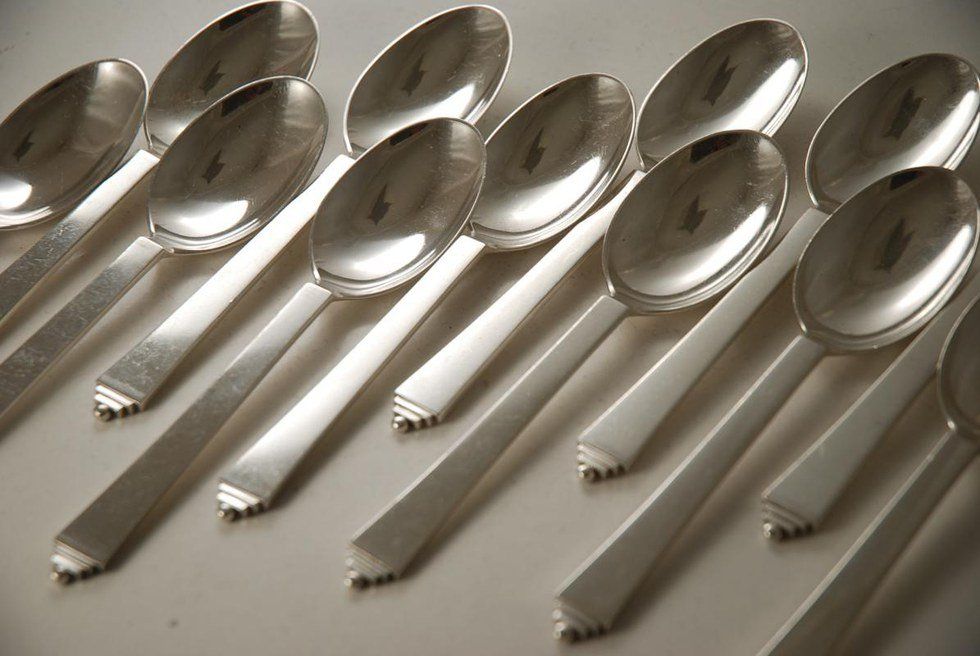
If you have a chronic illness or know much about them at all, you’ve probably heard of Spoon Theory — if not, it’s a highly googleable term. In its simplest terms, it uses spoons as a kind of currency or unit of energy to explain how a person with a chronic illness always has to be strategic in their planning. A healthy person has a high baseline number of “spoons” each day, and therefore, doesn't have to think about how they “spend” each one. Depending on the day, a person with a chronic illness might wake up with only twenty spoons to spend. And then, everything you do takes energy. For example, getting out of bed might take two spoons, taking a shower might take five, going to class might take six, making food and eating might take four. Now, that’s not something to obsess over or even really think about if you start the day with a hundred spoons, but if you’ve only got twenty, that’s about all you’re going to have the energy to do.
This isn’t my favorite analogy, even if it is pretty accurate. It’s a constant strategy game. But, then what happens? If waking up, showering, going to class, and eating are all I’m good for in a day, what happens the rest of the time? Altogether, that’s maybe six hours of doing stuff, and I don’t sleep eighteen hours a day.
The answer is a reiteration: those are going to be the only things I’m good for. There are plenty of things that happen on any particular day that I’m no good for.
There are stories of perseverance that we all know, but they always seem to focus on the still-brilliant mind stuck in a frail body. I’m not sure why people make this distinction so often. Surely this is the case sometimes, but normally…the body and the mind are connected, they affect one another. The brain is part of the body, and if the body is demanding, the mind has to listen. There have been times when I wanted something, when I had an idea or a goal in mind that my body wouldn’t allow, and that sucks. One of the only worse things is not having that idea, that goal in the first place. It stops being a question of how to interact with a world of people who can constantly outpace you, and it becomes a question of how to be a part-time person and still live your life, if you even qualify as a whole person anymore.
Imagine a pyramid, kind of like the food pyramid. On the bottom tier, you’ve got Living. Things like eating, sleeping, health, etc. The next tier up is Safety, which includes feeling a personal security and financial stability. Next tier up is Comfort, where you have ease of living, time to rest a little extra, free time with people you love. The final tier, the top of the pyramid, is Creativity.
You can’t move up the pyramid if the foundation is unstable. Sure, you can jump up and touch Comfort or Creativity for a moment at a time and bypass Living or Safety, but you can’t stay there for a sustained amount of time. With the occasional, costly exception, spoons have to be spent from the bottom up…like making a pyramid out of Lincoln-log-spoons.
When I’ve spent all my spoons, I’m not retreating to my bed to read literature or write a book. I might be on my computer or in my bed, but it’s mostly out of an instinct to “save energy, keep still, just breathe.” It’s a lot less “being a human being” and a lot more “surviving, at least kind of.” Even before I’ve spent my spoons, if I’m in bed gearing myself up to go to class, this is what it feels like a lot of the time.
Comfort and Creativity are how we define ourselves, that’s where we hold our personalities and the things we find worthwhile. Focusing so much time and energy into the base of the pyramid feels like a waste, especially when faced with expectations of a society that values the fruits of Comfort and Creativity more than Living and Safety. I can be as clever as can be about how I use my energy, but it's not as cut and dry as that makes it seem. It's its own economy. I can't forgo using spoons to make and eat food, because if I don't spend those spoons, the rest will just dwindle throughout the day. The spoons I use to go to class might be the only top-tier spoons I get in a day, so the rest will be divided throughout the rest of the pyramid in order to hold up those spoons on top.
The Spoon Theory isn’t wrong, but it always feels incomplete to me. It leaves out what happens when the spoons are gone, and it fails to explain that, even while you can, technically, spend your spoons on anything, certain things are more demanding than others, and neglecting one area will make other things harder. My body's a trade system that even I don't understand all the time — international trade with choppy waters in between and negotiations ongoing. It's a pretty strange trade system, y'know? We're using cutlery as currency.