
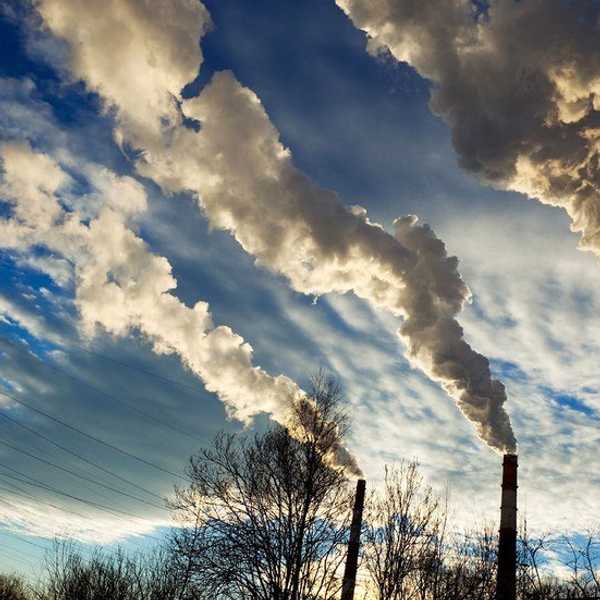
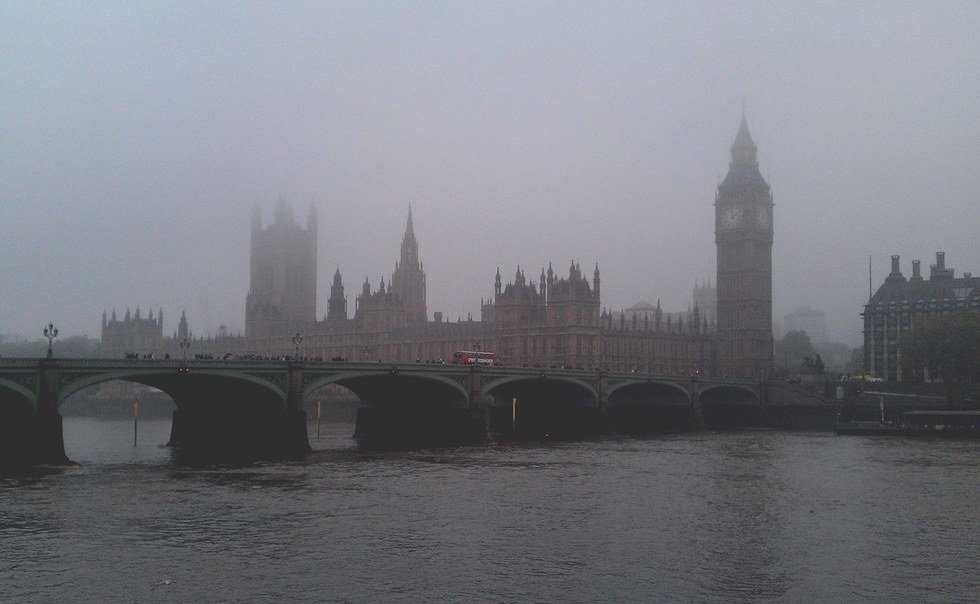
Most people are aware that London has already begun violating pollution restrictions eight days into 2016. Before the Brexit vote became the main topic of conversation, they had already maxed out the E.U.’s air pollution limits. Those limits were put into action in order to decrease the amount of damage being done to surrounding eco-systems and the environment as a whole. There might not be any reason to be concerned based on London's new mayor, Sadiq Khan's, opinions on air pollution.
In other locations, we still have the argument that global warming does not exist from political figures and scientists all over the globe so it would only make sense that some individuals are not taking this with an equal amount of seriousness. No matter the case, the pollution that would be produced is not good for suitable living conditions. Major cities that have lowered the importance of pollution regulations have seen increased lung infections and respiratory illnesses.
The change of these policies does not only bring change to the United Kingdom, but the world as well. We are all being held responsible to live sustainable and environmentally conscientious lives that direct us to move in progressive directions. The choices that one nation or city may decide upon might end up being more consequential than one may hope.
After the Brexit, there was rumor of changing the environmental policies and usually they are changed to benefit the corporations. Especially since Britain needs every economical boost they can get. Issues on land are not the only thing that come into play when considering environmental policies. They have to re-evaluate the fishing guidelines that they have placed on large-scale fisheries. The repercussions of overfishing are detrimental for marine eco-systems.
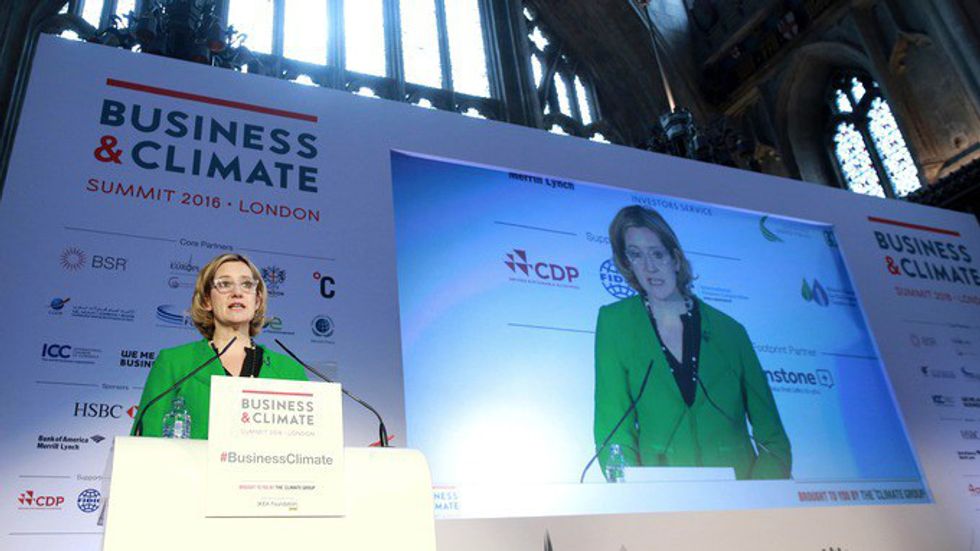
Energy Secretary of the U.K. Amber Rudd spoke at the business and climate summit in London on June 28th-29th. She was reassuring that there were going to be major changes, but that the preservation of the environment were still being held at a high importance and they would "...remain committed to dealing with climate change". Her keynote was made on day two of the summit and during the span of the day they continued to have other speakers’ present information and verify that this is still on the forefront of the U.K's mind.
There was no reassurance on the U.K. remaining in the Paris Agreement after leaving the E.U. even though they signed it independently for the European Union. In the proposal made by Sadiq Khan's he had decided to:
1. "[implement] a £10 Emissions Surcharge (dubbed the ‘T-charge’) on the most polluting vehicles entering central London from 2017. The charge would apply to all vehicles with pre-Euro 4 emission standards (broadly speaking those registered before 2005) and will cost an extra £10 per day on top of the existing Congestion Charge,"
2. "introduce the central London Ultra-Low Emission Zone one year earlier in 2019,"
3. "extending the Ultra-Low Emission Zone (‘ULEZ’) beyond central London from 2020: for motorcycles, cars and vans, to the North and South Circular; and for lorries, buses and coaches London-wide,"
4. "develop a detailed proposal for a national diesel scrappage scheme for Government to implement,"
5. "bring forward the requirement for all double–deck buses to be ULEZ-compliant in central London from 2020 to 2019, and implementing clean bus corridors – tackling the worst pollution hotspots by delivering cleaner buses on the dirtiest routes".
So I think that they might keep their promises.
The Paris Agreement was negotiated by 195 different countries in order to “deal with greenhouse gases emissions mitigation, adaptation and finance [with the intention of] starting in the year 2020". The document was open to signatures as of April 22nd, 2016 and now holds 178 signatures of compliance to the agreement and to begin taking action to reduce climate change contributions.
Now in an argument of greenhouse emissions, the United States is being held responsible for emitting 17.89 percent whereas the United Kingdom and Northern Ireland have only produced 1.55 percent both based on 2013 recordings.
Hopefully the U.K. will keep high expectations and maybe even lead as an example for other countries to follow.