

Have you ever seen that commercial for chronic migraine? It depicts living with the disease as a simple roll of the die. Anyone living with a migraine disorder (migraine with aura, migraine without aura, or chronic migraine just to name a few) knows that daily life is just that, a game of chance. They can happen at the most inconvenient times, like when you have a major project due, when you're on the first day of your new job, or when you're meeting your boyfriend's friends for the first time (sorry...).
Approximately 36 million people in the United States suffer from migraines, according to Excedrin's website. However, there is so much lack of knowledge and understanding as to how much a migraine can affect a person's life. As a migraine sufferer myself, or a "migraineur," I honestly never understood what a migraine was until I was a sophomore in high school. I was formally diagnosed around age 10, and I even took daily medicine to prevent migraines. But I didn't know that my migraines were different from my friends' headaches until I began comparing symptoms.
"I can't see straight when I'm in pain."
"It hurts so bad, it feels like my skull is splitting in half."
"I threw up all last night because my head hurt, I won't be in school today."
Statements like these made my friends' eyes grow wide. My sophomore year of high school I had a migraine every day. I finally saw a neurologist and was able to understand what stood out about my diagnosis, and finally began taking steps to keep my migraines under control.
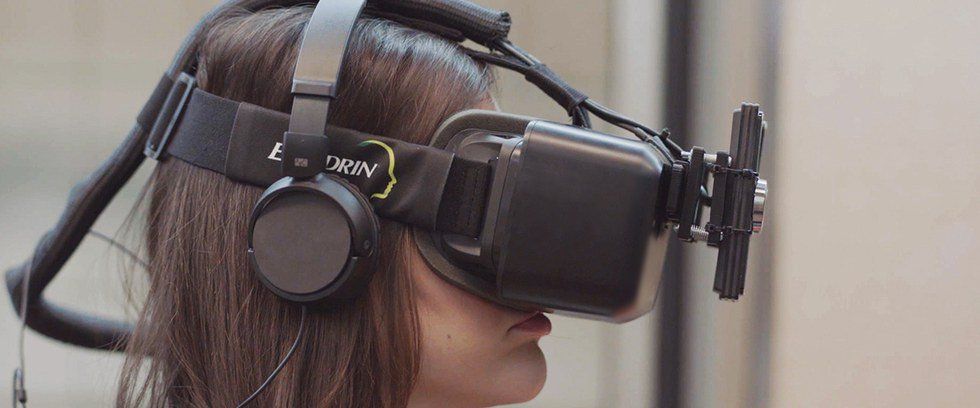
The lack of understanding migraines most likely comes from the fact that those who have never had a migraine simply do not know what it feels like. Excedrin, a common headache and migraine relief medicine company, recently set out on a "Migraine Experience" in hopes to bring awareness to migraine disorders. Volunteer pairs, someone with migraines and someone without, worked together with Excedrin to make this experiment happen. Those without migraines wore visual reality simulators that would make them experience common visual symptoms, known as auras, that a migraineur would have. These included blurry vision, floating spots and rings, and extremely bright lights. These symptoms also caused a sense of dizziness and instability, making it hard for them to even walk around a room.
At the end of the experiment, every person who opted to go through the Migraine Experience found a new appreciation for their migraine-suffering loved one. "I don't know how you function!", one woman exasperatingly remarked to her friend. Excedrin certainly was able to create a new window of awareness into migraine disorders. Progress is being made. After watching the videos on Excedrin's site, I was honestly a little teary-eyed. In my opinion, Excedrin did a great job in raising awareness and understanding about migraines. Interestingly, however, while reading other articles about Excedrin's Migraine Experience, I found many negative comments. People seemed angry that Excedrin only virtually created a small handful of symptoms. And this is true. There was no pain, nausea, hearing impairments, vomiting, or weakness forced onto the volunteers. But let's be real for a minute. It would be extremely unethical to subject anyone to the kind of pain and other physical symptoms a migraine can cause.
Would you go through the Migraine Experience for someone you love? If you know someone who suffers from migraines, please be kind and supportive. Many migraineurs are able to get through their day even when in a world of hurt. This experiment helped to prove that a migraine is not just a headache.