

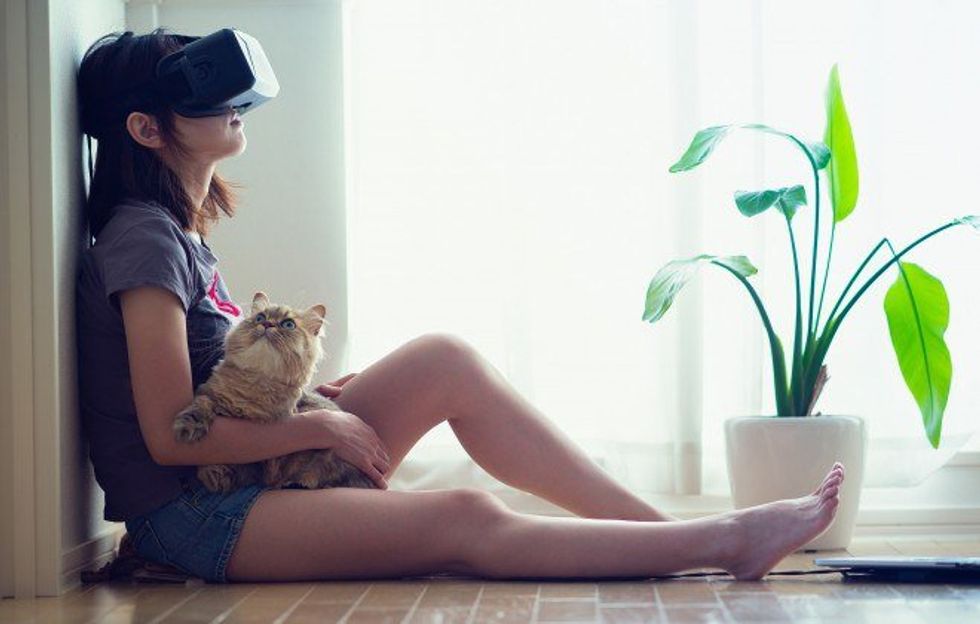
Admit it, sometimes reality is a bummer. It's too stressful, too boring, too whatever else people think. Sometimes we need an escape from it all, and immersing yourself in a virtual reality is one way to break free. Through virtual-gaming consoles such as the Oculus Rift, a visor is worn over your face, which allows you to feel as though you are in an alternate virtual reality. You can explore a fantasy land where there are no boundaries, or you can go on a "vacation" to take a relaxing break from everyday life if it is not practical to go on a real vacation. For example, a peaceful scene which could be simulated is a seaside with soothing sounds of gentle waves and seagulls, and for a while you can tune out the noises of everyday life. There are other simulations that face people with their fears in an attempt to help them overcome their fear. The benefits are boundless; it is just important that you aren't completely separated from reality -- you still need to eat, drink, and sleep.
Fantasy games are the best at providing an outlet for people. These are my favorite games to play. The reason I love playing these other-worldly video games is that they are so imaginative. For example, in "Metroid," I am a bounty hunter in space protecting the galaxy from total destruction. In "Zelda," I am a warrior exploring exciting environments to rescue a princess and stop the spread of evil through a made-up land, running into some whimsical and some terrifying creatures on the way. Not only are these games interesting, fun, and exciting, but they can also give the player a sense of accomplishment. Real-life accomplishment is important, obviously, but sometimes you get caught in a rut. In times like these, it is refreshing to have a responsibility in a world totally distinct from our natural world. They are also so beautifully crafted that sometimes I wish I could live in these worlds, or at least visit. Now, with virtual reality, that is possible -- to an extent.
In addition to being a fun and exciting other-worldly experience and escape, virtual worlds have very effective medical benefits as well. There are some virtual realities that simulate a relaxing or peaceful environment to help people with anxiety disorders. The book "Advances in Virtual Reality and Anxiety Disorders" describes how virtual realities can help people overcome their fears. For example, in scenarios where people have arachnophobia, the patient could go into a virtual reality where they would be faced with a virtual spider. The spider can even crawl onto the person in the simulated scenario. The technology is so advanced that people feel like the spider is really there with them. This would help them to eventually overcome their fear. There are some very startling virtual realities out there. Below is a sample of one.
Virtual reality has also been used to help war veterans who suffer from post-traumatic stress disorder recover. The PTSD patient would be placed into a peaceful, animated world with pleasant images. This helps them replace their terrible, horrific memories and flashbacks with happy and nice things. In this way, they aren't being consumed by their memories of suffering.
A similar effect of virtual reality can be experienced even if you don't have this fancy and pricey technology. Just going into your imagination and making up your own world is one way. Reading or watching movies and getting totally involved in a story is another. Whatever you prefer, virtual realities are an amazingly fun experience, and I definitely recommend giving it a shot.