
The Singularity Syndrome
a self-imposed mentality that limits our ability to imagine ourselves in the context of a local, national, or global community; the state of mind where we see ourselves as an individual in our own singular world with the exclusive population of one person, our self.
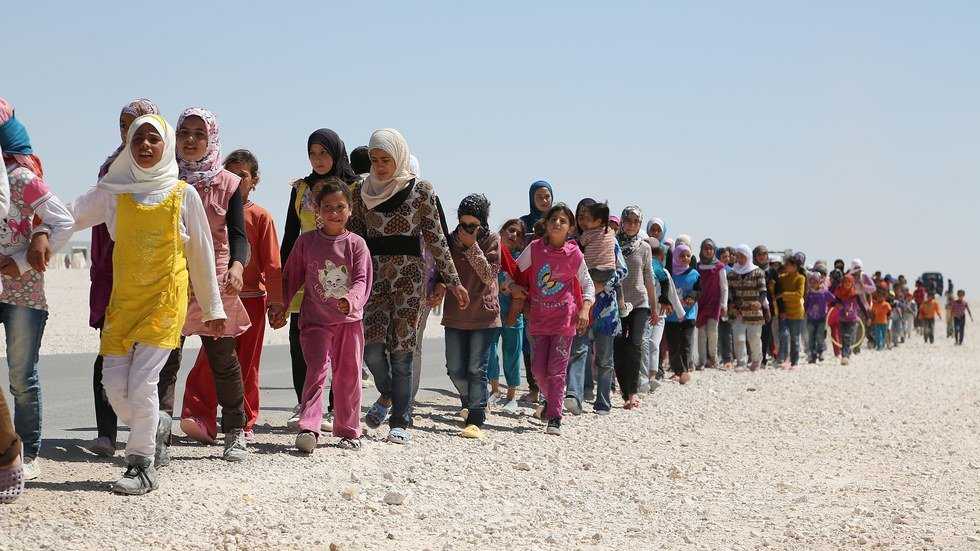
In the month of August, I saw a documentary film on Netflix titled "Salam Neighbor" with my sister. In essence, the documentary followed two men who for a period of time lived in a Syrian refugee camp; they interacted with the people there and filmed it as they went. It would be an understatement to say that the documentary just "moved me" emotionally. In reality, it challenged me. I was emotionally and mentally challenged not only as a teenage girl who lived in a country of immense privilege, but I was also being challenged as a human being.
And after watching an episode of "The Flash" where the word singularity was used, its definition stuck with me: the state, fact, quality, or condition of being singular. The words resonated within me and I realized perhaps the word singularity wasn't just something that could be used to describe science in the world of comic books, it could be used now to describe our realistic world.
Prior to watching this documentary I only had a basic notion of the conflicts in Syria, just barely gathering enough information on the subject from the bits of news I saw here and there. Sure, I heard of the war, the deaths, the refugees, but it was all so distant. I had the Singularity Syndrome; I was focused on my own world, my own problems, my own life, mine, mine, mine.
It was easy, it was so so easy to live life in that singular bubble. The world was far less complex and evil if I just focused on myself. That's how I lived for many years; I lived with the mentality that I just had to worry about me and let the rest of the world fix itself. I was more than happy to keep living as a singular person until I watched "Salam Neighbor." Watching that documentary was the first time where I began to visualize myself in the context of an entire world.
I was no longer this one person living in California, I was one in billions of people living on this earth. I wasn't just a citizen of the United States, I was a citizen of the earth. That new identity was a drastic change for me. By allowing myself to move past that "Singularity Syndrome" I had been lugging around for years, I opened myself up to an entire world.
In the context of my personal story, I embraced my global identity.
It's definitely a scary thing to move yourself past that Singularity Syndrome. After all, that's how a majority of us have been living for a great part of our lives. We live for ourselves.
We’ve become creatures who live in absolute bliss, hardly ever questioning what half way around the world goes amiss. We are humans without humanity, the irony of the century. If only we could wake up from this self imposed trance, then maybe, just maybe, we could change our world’s circumstance.
It's something that makes sense. If you identify yourself with others besides just your own person, you gather a sense of responsibility towards them. If you find yourself sharing an identity, you also find yourself caring for and acting in the name of said people. The Syrian Refugee crisis is only one of thousands of injustices that occur in our world today. These devastating times are present yet because we so often choose to ignore what's going on, they go unnoticed.
We're all one people, there is no such thing as being your singular self. It may be something you've been practicing your entire life, sheltering yourself in your own bubble, but the truth is that the whole is immensely big and we are its citizens. We are all neighbors.
As cheesy as it sounds, we all are part of a bigger picture. Accepting that identity is the first step to ridding ourselves of this plague that is the singularity syndrome. Don't think it means that you must completely change your entire lifestyle. You don't have to sell all your possessions and give the revenue to charity, you don't have to devout yourself to a cause of servitude for the rest of your days. It's nothing like that.
All we can really ask of each other is that we become willing to imagine ourselves in the context of the world. We must be willing to accept that we are not individuals in this world, we're part of a greater collective. That's the very first step. Step number two? Well, it's to say hello to the world: salam neighbor.