
When you think about it, elections are a beautiful thing. At their essence, elections are the peaceful transition of power within a country, but they're also a sign of respect from the leaders of the country. Elected officials are telling their constituents that their voice matters and they will follow their decision. Now we are in an election season where one of the candidates seems to not understand this unspoken and vital respect between the voter and elected officials.
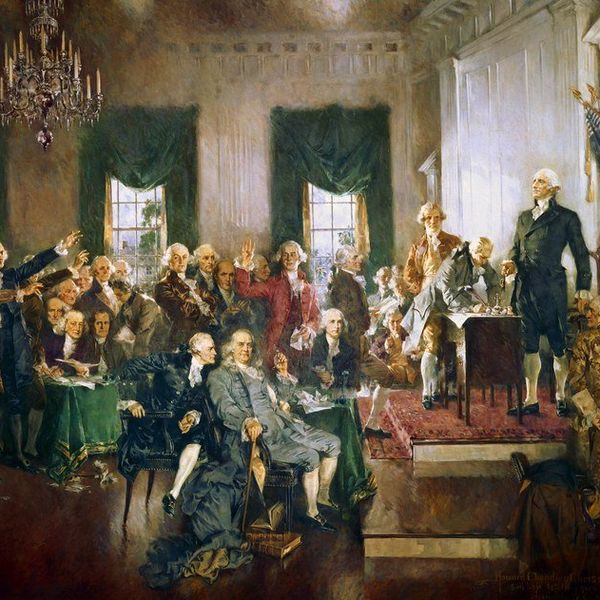
How exactly has this process become accepted? Well to start, after the Revolutionary War the founding fathers wanted to ensure the people had a voice and the tyranny of a monarch was never inflicted upon the thirteen colonies, now states, again. At least that was the story we got in fifth-grade social studies. As we got older, we were taught about the disputes over leadership and the process of determining leadership took years to iron out. Philosophers from the Age of Enlightenment and governing methods from Ancient Greece and Rome were cobbled together to create the system of government we know today. Sort of.
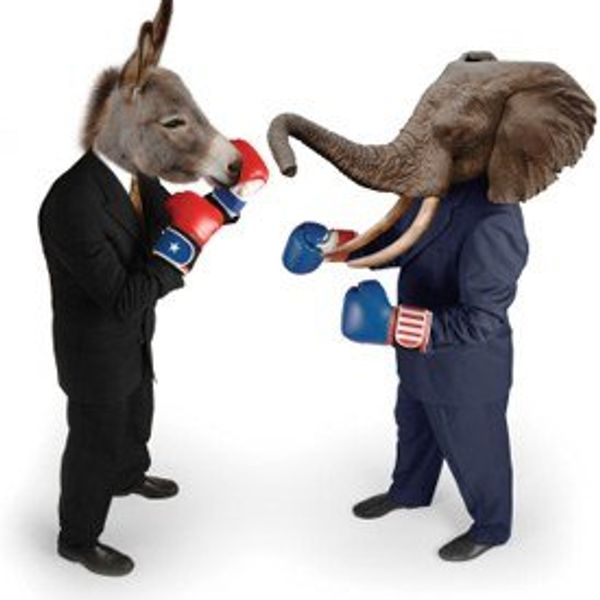
There are some differences, for example, thanks to the seventeenth amendment the state legislature no longer elects U.S. Senators, that choice is left with us. Thanks to the 15th, 19th, and 24th amendments, the voting population expanded to include the citizens initially left out, and to guarantee no institution could prohibit any class of people from voting. A substantial difference is the emergence of political parties. In fact, George Washington warned the country of the issues political parties would cause in his farewell address. Well, Mr. President, you were right. Political parties are interesting because they've become a part of one of the most mystifying parts of our electoral process....the electoral college.
Despite the optimism of the founding fathers, they did not trust the common man to select the right President. To solve the issue, the electoral college was founded. There are 435 members of the House of Representatives and 100 members of the Senate, their combined numbers plus another three for Washington D.C., make up the 538 members of the Electoral College. In order to win a Presidential election, a candidate needs a majority which is 270. The delegations (number of representatives in Congress) from each state plus their two senators determine their number of electoral college votes. Most electors for each candidate are selected by the political parties.
Many people complain that the popular vote (our votes) is not heard because of the electoral college, which is understandable, but the electoral college can not technically cast their votes until their state has voted for a candidate. The electoral college doesn't actually vote for President and Vice President (they're voted on separately, 12th Amendment) until December and the Vice President announces the results of the election. The electors get their directives to vote from a certificate announcing the winner. Forty-eight of the fifty states are 'winner takes all' meaning the winner receives every elector vote; Nebraska and Maine have a proportional system of electoral voting.
The system may be convoluted, but it is a remarkable one. This system has survived over two hundred years, and countless conflicts both external and internal. The election is less than a week away. This election is historic; we hear that phrase constantly, and it is one hundred percent true. Do not let your voice be silenced. Be a part of a process that will determine who we will be as a nation, and how we will behave in a modern world. Make sure you vote on November 8th!