If you've been paying attention to the news and the presidential political race, like almost everyone else in the world, you’ve heard about what's been happening in Flint, Michigan. And in case you haven’t, here’s the lowdown.
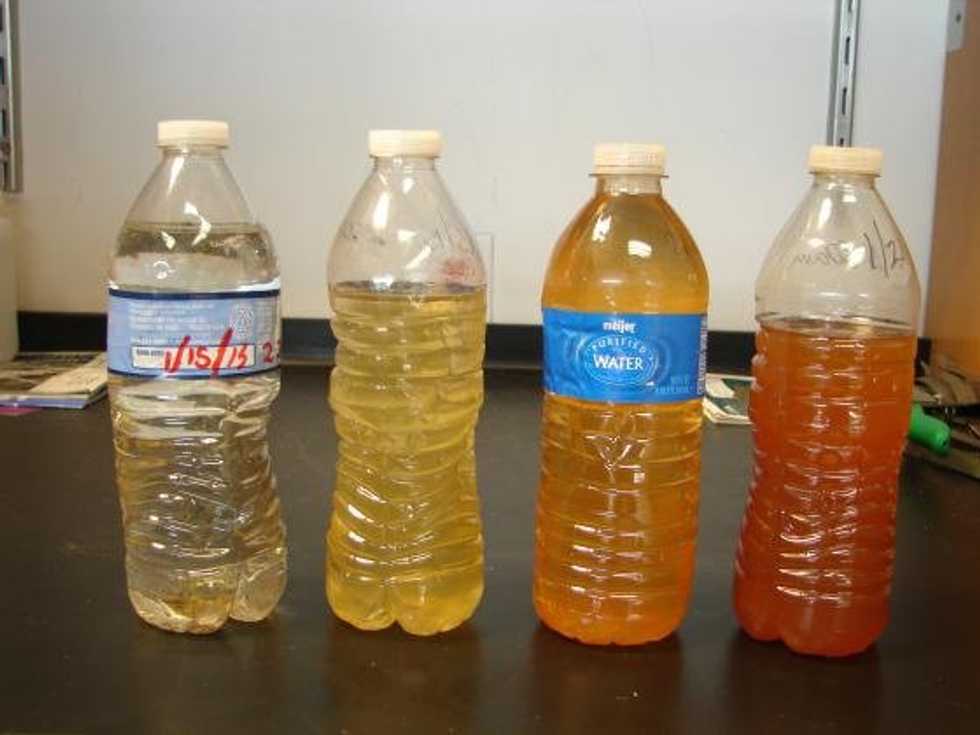
In March 2014, Flint, Michigan decided to stop using the Detroit line of water supply as part of a cost-cutting initiative, and chose to supply its residents with water from the Flint River. The problem? The water from the Flint River is so highly contaminated with lead, researchers from Virginia Tech have classified it as toxic waste.
What does this mean?
This means that in October 2015, General Motors stopped using water from the Flint River because it was corroding the car parts that they were using. This means that the government officials put chlorine in the water to try and disinfect it to make it clean enough to drink. Not only that, but there were dead bodies found in the river, and it was still used as a water source.
Despite the fact that Flint reconnected to the Detroit water system in October 2015, the water pipes all throughout Flint have been corroded by this high lead content. Dangerously high readings of lead are still leaching into the water system, and people are still getting sick.
Residents who have ingested the contaminated water now have to live with irreversible levels of lead in their bodies. This includes children, pregnant women, and domestic animals. And to top it all off, the residents of Flint paid the most money for their water bills than anywhere else in the United States.
Nearly 40% of Flint’s population lives below the poverty line, and about 50% of its residents are black, making this crisis a form of environmental racism.
Environmental racism is “when low-income communities usually consisting of minorities, live around areas of hazardous places with concerns such as pollution, decay, or lead in their water, for example” says Rachel Sawyer, a resident assistant at Eastern Connecticut State University. It’s not new--it’s systemic oppression.
How is it acceptable to be forcing families who are drinking poisoned water to pay the highest rates of water bills in the United States? And how was it possible that the rest of the United States didn't know about this until recently? This was covered up, and well, by Flint’s government.
But now something has to be done.
The water crisis in Flint has become a federal state of emergency, and they need the rest of the country’s help to be able to keep their residents drinking safe water. Sawyer and her friend Quanece Williams created #FreshWaterFlint at Eastern Connecticut State University, in an effort to help the residents of Flint, as much as they possibly could.
“We teach privilege at Eastern in a way of having race privilege, but privileges go beyond race. We have the privilege of turning on our showers, sinks, brushing our teeth, doing our laundry, or even having leisure of drinking water,” said Sawyer, when asked about why she began this program. She believes that our school can make a difference by educating themselves and participating in the program.
So what can you do to help?
The goal of the program is to get one case of water from each dorm room across campus to donate to Flint, in an effort to help them in any way possible. Each residence hall on campus will have a drop-off area in the lobby for the water, and commuters have the opportunity to drop off their donations in the Intercultural Center or the Women’s Center. Acceptable forms of donation are full cases of packaged water in any brand, but no loose bottles! Please do NOT donate canned water, containers with open or broken seals, carbonated water, flavored water, or water past its expiration date.
“We may not be able to fix this crisis in the long run, but […] our school can make a difference if we are able to spread the word,” Sawyer says. Together as a university, we can help the residents of Flint, Michigan, who have been living without clean, safe water for almost two years.
And as the flyer for #FreshWaterFlint says: Be the change you want to see in the world.