

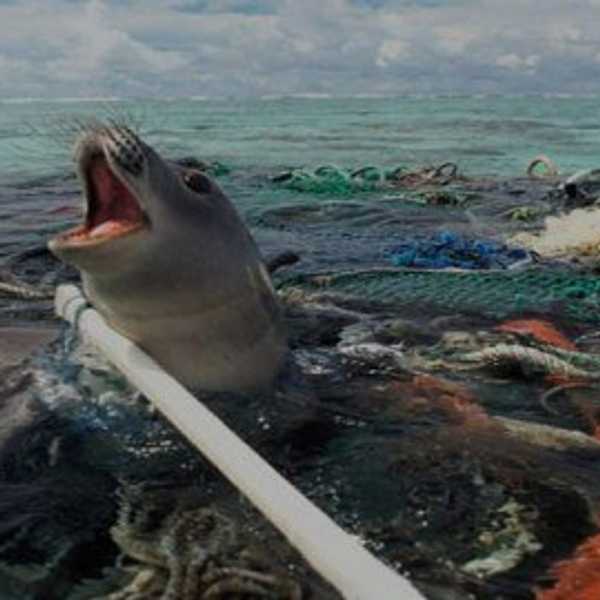
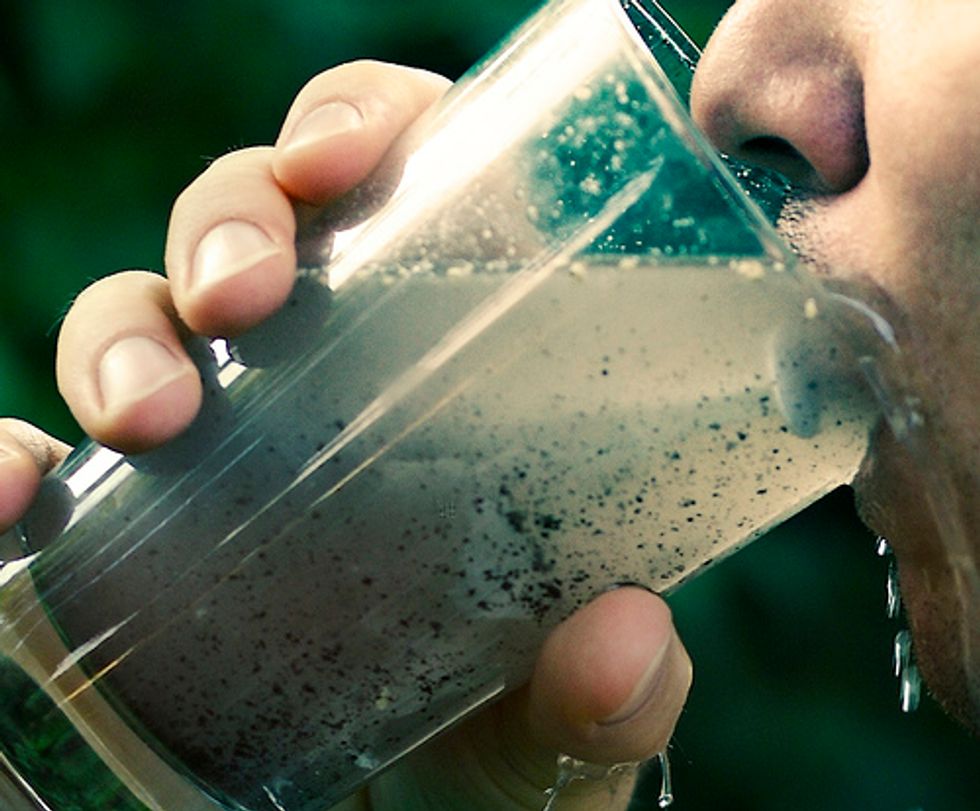
I’m sure everyone has seen the sad pictures of the polar bears on melting ice. I’m sure a lot of people have donated pennies in elementary school to save the rain forest. I’m sure everyone has watched politicians on the news fall on one side or the other on the environment. I’m sure everyone’s been exposed to the ensuing environmental crisis but what I’m not sure of, is why they aren’t doing anything about it.
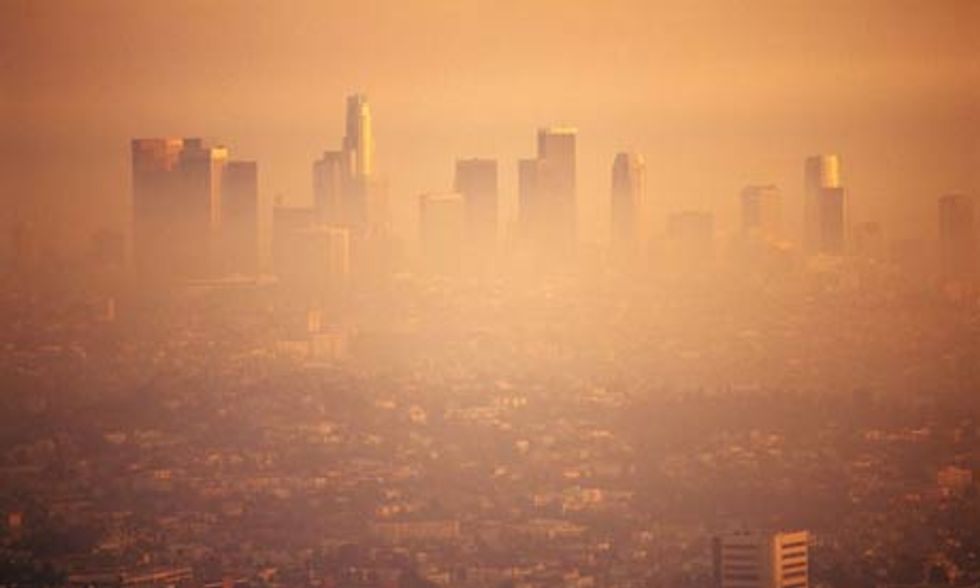
I mean, sure, not all scientists agree humans affect climate change, but it seems the vast majority of people much smarter than myself seem to agree that climate change is a real problem and it is caused by humans. That’s pretty consistent considering one of the most widely followed “institutional imperatives” of science is the concept of constant skepticism. Even if you’re still a skeptic, did you really think burning billions of tons of coal a year would have no impact at all on our atmosphere? Let's not forget the Chinese artist vacuumed the Beijing air for a month and used the particles gathered to make a brick of pollutant particles. The evidence of atmospheric pollution is pretty obvious when you catch Los Angeles on a bad day:
OK, so maybe climate change might still be a hot button issue but can we as humans deny colors? I remember growing up swimming in streams on hot summer days. In high school, I learned that city people really can’t do that. That’s because that by the time the stream water I swam in makes it to big cities in rivers, it’s so polluted that falling in calls for a tetanus booster (and possibly a fire extinguisher).
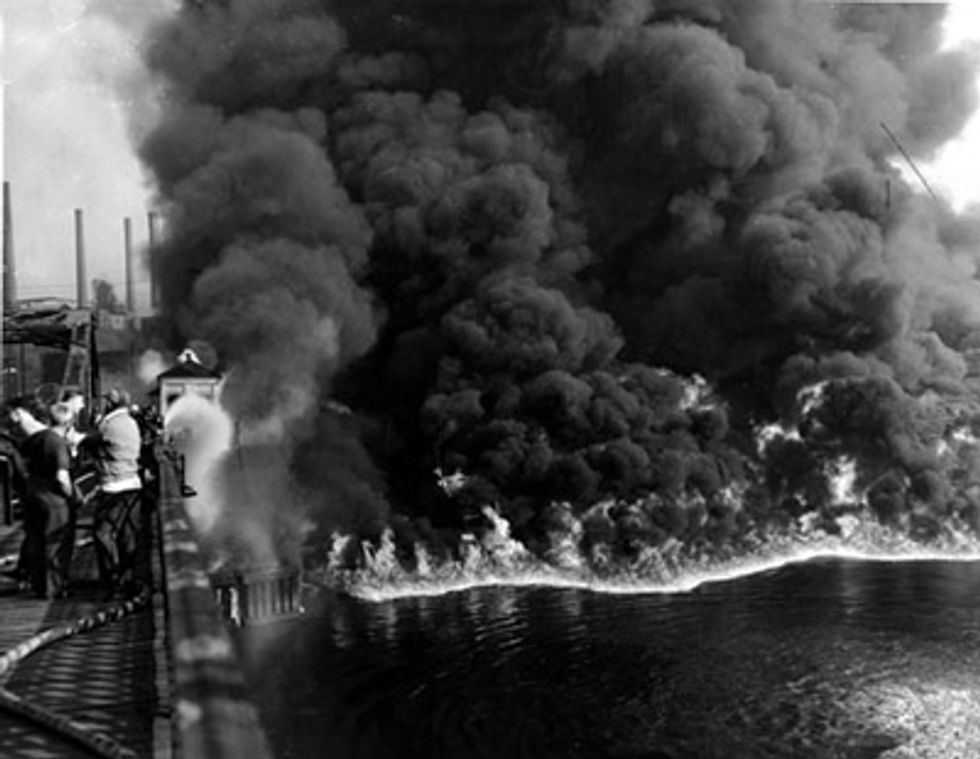
(Cuyahoga River 1952)
The real danger is that it's so easy to pollute streams and rivers. Farmers plow fields and the topsoil can easily erode into the water. Changing the oil in a car then dumping the oil on the ground is a great way to kill all the trout in your local stream. Now, I understand the need for industrialization, progress can’t be slowed every time a frog doesn’t like the water temperature. But don’t we owe it to our children and our children’s children to try and clean up our mess? What’s the point in living in the greatest nation in the world if we have to look at it from a distance to avoid infection?
Still on the fence? Let me try to put a face to the issue.

Ever seen a bald eagle before? Well, 40 years ago you would have been hard pressed to spot one of these in the wild. That's because in the 1960s and 1970s we had no idea the damage chemical pesticides had on the environment and ourselves. The use and overuse of DDT led to the near extinction of America's symbol as well as many other birds of prey. It was years before we discovered our over-spraying of DDT was to blame for health issues in humans and animals, thanks in no small part to Rachel Carson's "Silent Spring." The bald eagle dodged a bullet, but it was a bullet we inadvertently fired from a gun we made. Shouldn't we take steps to make sure we aren't using live ammunition anymore?
Let's take a step back. No one is blaming anyone for the state of the environment. While bitter environmentalists will cite recent a Republican administration as a particular environmental offender, they forget one of the most eco-friendly presidents was Richard Nixon. Again, we're all responsible for the state of our world. We can't keep hiding behind ignorance and general inaction. It's time we call our representatives and tell them we're ready to clean up our mess.
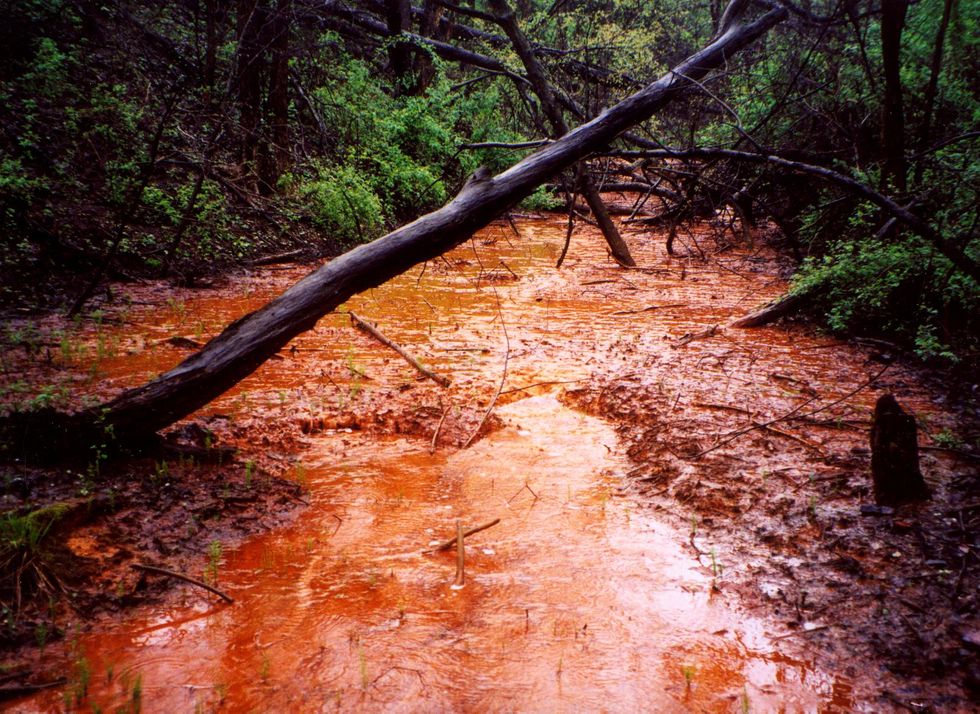
(Trout fishing can be difficult while the water has a pH of 2)
Let's also remember the snowball effect our actions have on the environment. Just look at America's favorite camp ground, Yellowstone. Yellowstone National Park has always had the reputation as one of the most beautiful areas on the continent. Yet in the middle years of the 20th Century the park was visibly troubled. Biologists later discovered that a simple reintroduction of the wolf completely revitalized the park. Beaver, elk and rabbit populations wouldn't have declined in the first place if we hadn't wiped out all the wolves in the park decades earlier. It's a lesson that every animal has a significant impact on the environment, even if we don't realize it.
The Ogallala Aquifer waters millions of acres in the United States and helps American farmers feed the world. The Ganges River provides millions of people with necessary fresh water. The air we breathe, the water we drink, the seasons we grow our corn in; all of it can be affected by humans. And a lot of it has been seriously damaged. It's time we stopped hurting Mother Nature and start nursing her back to health.

















