
“Frnied. Frined. Firned.” The same jumbles of nonsense words kept dancing around the screen, but still, none of them meant anything to me.
Victor Widell, an internet developer, recently created a confusing and frustrating web page that is going viral—and for a good reason.
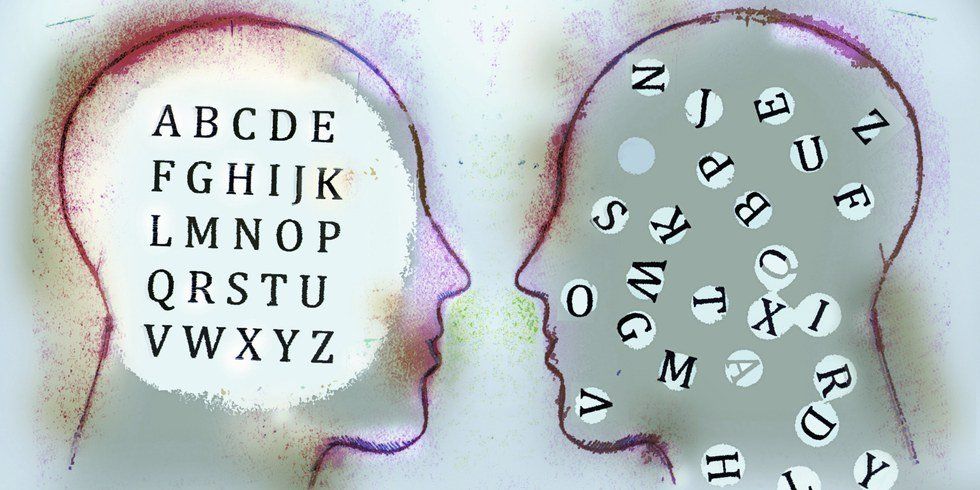
Widell was inspired to take on this project after conversing with a friend who suffers from Dyslexia, a condition that causes complications in reading, writing, spelling, and oral communication. She told him about the way that dyslexics can still read, but must concentrate especially hard and work slowly, as the “letters seem to ‘jump around.’”
Though many people all over the world suffer from dyslexia, it is a condition that can be difficult to understand unless you have experienced it yourself. Widell hopes that his new web page will help with just that, allowing non-dyslexics to get a taste of how difficult and frustrating the condition can be.
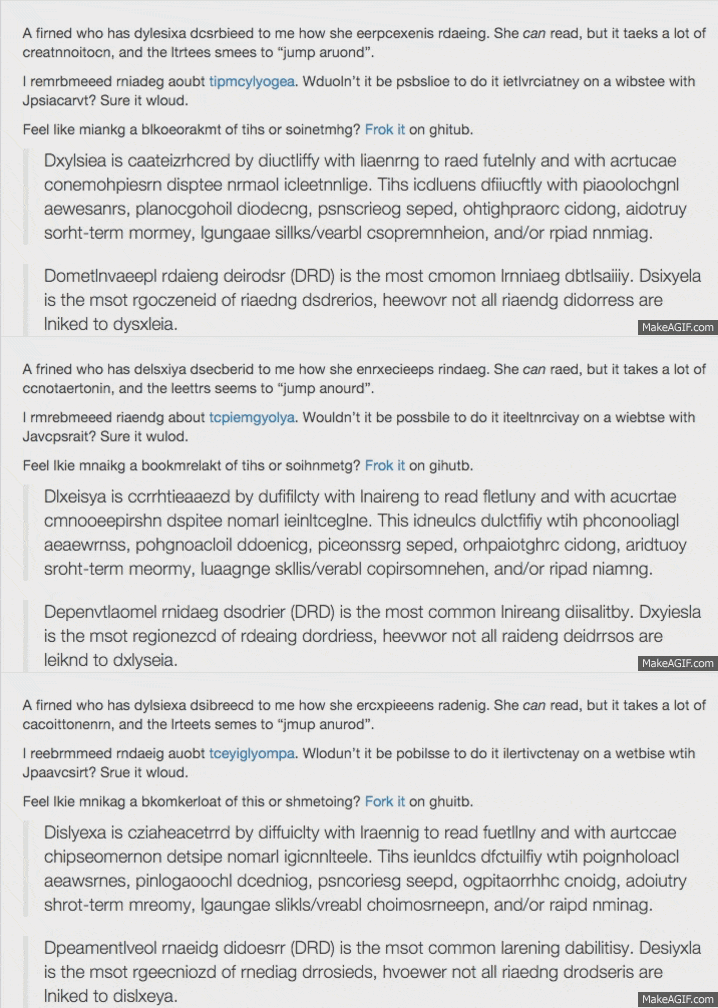
Widell used JavaScript to program the page, which has numerous lines of text that continuously move and shuffle around, with only the first and last letters of most words remaining stable. It did not take very long for me to become frustrated while trying to read the page; just when I felt I knew how to unscramble a word, it jumbled around into a completely different arrangement, leaving me to start again from the beginning. I had particular difficulty with more uncommon scientific terms, such as “typoglycemia” and “neuropsychological.” Because I am less familiar with these words, I didn’t consider them as possibilities in my unscrambling. This made reading some terms completely impossible for me; I gave up on them and moved on to the next scrambled word.
The script that Widell used to create this page is available for download as a “dyslexia bookmarklet.” By simply dragging this bookmarklet into your browser bar, you can instantly turn any web page into the same jumbled confusion as Widell’s original page. This bookmarklet’s transferability goes to show that dyslexia is not something you can just minimize or exit out of on your computer screen; for those that suffer with the condition, the frustration involved in deciphering scrambled letters is constant and unavoidable. To try out the bookmarklet, click here.
Because dyslexia differs in form from person to person, people have provided mixed reviews of Widell’s new page. Some dyslexics say that his page is much harder than their experiences have been. Others say that the stable first and last letters make unscrambling the moving words too easy—the principle of “typoglycemia,” first popularized in this meme, sometimes make it possible to understand scrambled words. I personally found Widell’s site to be much more difficult to understand than the original typoglycemia memes were, mostly because the words on Widell’s site move around quickly and constantly.
Though the viral JavaScript graphic may not ring perfectly true to every dyslexic’s experiences, it is an important step towards raising awareness for the condition. It is not only possible, but quite common, for a dyslexic individual to have perfectly normal (or remarkably high) intelligence levels; the neuropsychological deficits that usually cause dyslexia do not render a person incapable of reading, spelling, speaking, or writing by any means. The dyslexic individual must work remarkably hard every day to fight this battle. Taking a peek at Widell’s site will undoubtedly help expose you to the struggles and great levels of concentration required just to read—a task that those of us without dyslexia too frequently take for granted.
To view Widell's full web page, click here.