

Visit the George Washington University's Gelman Library at any time of day, and you will find college students intently studying for an exam, scrambling to finish a last minute paper, and even managing to read three chapters of a book in one night. In addition to maintaining good grades, these young adults might also be balancing their part-time jobs, internships, and social lives. With this in mind, there is no dispute that college can be an incredibly stressful experience.
Students are constantly bombarded with pressures to perform to the best of their abilities in all aspects of their lives. With so much on their plates, it seems futile to spend one's valuable time on trivial pursuits. So why do college students bother worrying so much about how much they weigh?
Answers to this question vary. There is some validity in the commonly held belief that the media creates unrealistic expectations. These expectations were evident in 2014, when Victoria's Secret revealed a controversial underwear line entitled “The Perfect Body," and advertised it using models of one specific body type. Similarly, on a more personal level, people simply enjoy feeling good in their own skin. I know I am not the only one who feels an instant confidence boost when an old pair of jeans fits just right again. Lastly, for some, the ability to control your appearance can help you to feel centered. Simply put, those who spend an unreasonable amount of time focusing on their weights have their reasons.

Although these reasons are valid, we certainly place an extraordinarily large emphasis on physical appearance. Stress can come in many forms, but it does not have to be caused by the desire to be slimmer. Just how much of a priority is it that you are slim? Is it more important than maintaining worthwhile friendships with those who care about you? Is it more critical than achieving good grades to send you to your dream job or graduate school? Is it worth the countless times you have spent feeling inadequate? Instead of searching for ways to shift the number on the scale, we should accept that we are our own worst critics. By viewing our bodies in negative lights, we are enabling ourselves to call attention to our perceived, physical flaws. The problem will never be your body, but your perception of it.
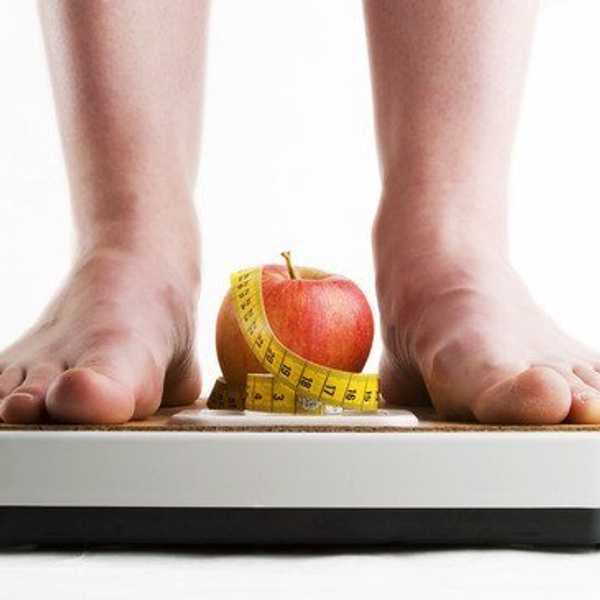
Three years ago, I weighed 100 hundred pounds at 5'8. I accredit this to burning a lot of calories in ballet classes each day, as well as to having the metabolism of a sixteen-year-old, strict eating habits, and a nutritionist for a mother. Each time I stepped on the scale, what exactly was I measuring? To me, my weight was more than a mere number, described in pounds. Today, I am ashamed to say that those one hundred pounds measured a great deal of my self-worth. Consequently, when that number shot up, by my freshman year of college, my confidence level dwindled.
I will not blatantly disclose my current weight, but I will give you a hint. Over the last few years, I have coincidentally gained the weight of the average human leg. On a side note, I have not developed a third leg. Instead, I simply became larger in body size. Despite this, my life did not crash and burn.
If you gain the freshman fifteen, or even the freshman fifty, it is not the end of the world. The addition of a measly few pounds will not make you any less of a person. In my opinion, weight gain can mentally strengthen you. With a drastically altered mindset, I now understand it is impossible to properly measure oneself in pounds or kilograms.
A number on the scale only reads how much you weigh, not who you are. Weighing 85 pounds, you could be a wonderful person. Conversely, at 200 pounds, you will still be that same individual. No number of pounds exists that is capable of determining who you are on the inside. Furthermore, your friends will teach you that their acceptance of you is unconditional. They love you for you, not your pants size. More importantly, true friendships are built off of attraction to inner qualities, not what appears on the surface.
I hope that if this article resonates with even one person, it will help him or her see that a person's worth extends beyond the number on the scale. As long as you feel you are doing what is best for your health, your weight has little quantitative value over who you are as an individual. Stop causing yourself unnecessary stress, and accept your body for everything it is.