
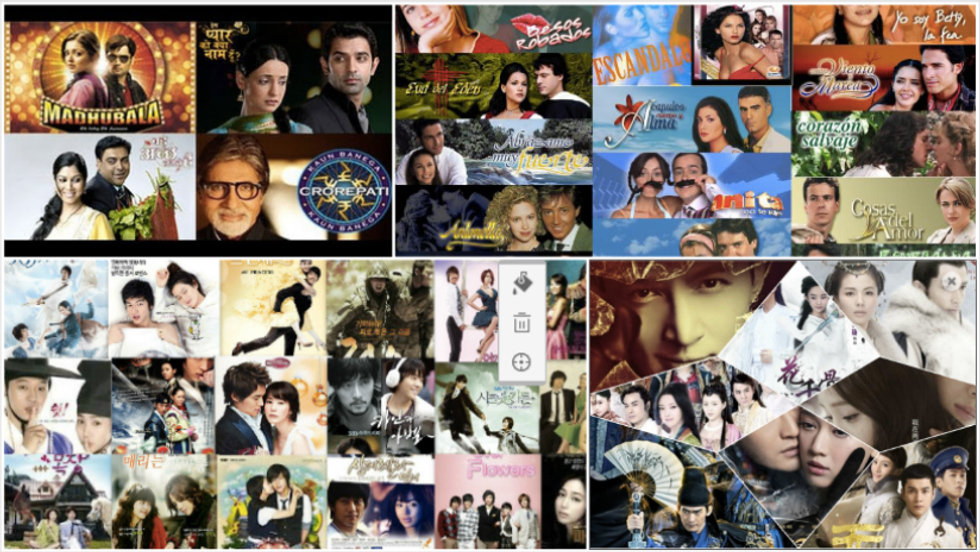
Ever since the advent of the radio and television, drama series have become ubiquitously popular worldwide and they continue to grow. And for a good reason indeed: dramas are intended to evoke all emotions to nearly dangerous extremes: on the edge of our seats, we sit with heavily swelled hearts one second, streaming ugly, snotty tears the next, and within another, shaking our fists with the kind of angst so seething and potent you want to personally find and yell at the producer for killing off your favorite character or not fulfilling your ship. It’s almost like they’re precisely calculated and designed to seed immovable addictions and life-ruining, binge-watching behaviors. Dramas in all different regions all have their own distinct flavors shaped by national historical events, inspired by distinct cultural values, and cultivated by particular societal ideals of captivating and moving stories. Interestingly enough, these tastes aren’t just limited to the regions of their origin. As evidenced especially by the recent Korean hallyu wave, dramas from all corners of the world garner great attention thousands of miles away for both their unique characteristics and the common excellence of storytelling that exposes us all to different cultures and provides an unlikely unifying force for diversity.
For this article, I interviewed some of my friends of various ethnicities and obtained their thoughts on dramas of their nationalities!
Korean 드라마 (deurama)

“In Korean dramas, everyone is dating. Even if it’s set in a hospital, in a police office, in hotels, all they focus is on the romance! There’s class differences, hard-core parenting, workplace romances, second lead syndrome, destined couples, etc. Korean dramas are just kind of magical, in a way: like if a girl slips on a puddle, the guy will magically catch her and they’ll be whisked away into a fateful romance. Because it’s only one season with sixteen hour-long episodes, it’s easy to binge watch in very few sittings. Historical dramas, called sageuks usually occurring during the Joseon Dynasty, feature everyone in traditional hanboks. Sageuks often actually aren’t very historically accurate, however. Usually, most of the time, they’re surrounded on romance, except for those few historical or action dramas. When you watch Korean dramas, there are absolutely no advertisements, so you can really keep concentrating the entire time, they also occur very regularly on a weekly schedule.”
Classics: My Love From Another Star, Secret Garden, Boys Over Flowers, The Heirs
Recently popular: Descendants of the Sun
Bonus: My personal favorites- Master's Sun, Healer, I Can Hear Your Voice, Pinocchio, High Kick 3, Reply 1998
Indian धारावाहिक (dhaaraavaahik)
)
“There’s always a lot of romance stories, focused on arranged marriages and love lines. Sometimes the stories lead up to a divorce and there’s always tension between the mother-in-law and daughter-in-law. And there's a ton of over-the-top dramatic scenes. Like if they just turn their head, they’ll zoom in at all different angles and replay it at least three times. I don't know if this helps, but to illustrate how dramatic it is, in one episode there was this one girl thought she was helping her husband by cleaning his laptop of viruses by actually cleaning his laptop with soap and water his laptop with soap and water and proceeded to hang it up on a clothesline!"
Classics: Ramayan, Mahabharata, Hum Log
Recently popular: Naagin
Bonus: the viral wheelchair telenovela
Chinese 连续剧 (liánxùjù)

“The more popular ones take place in historical periods, usually the Qin Dynasty. They have a lot of kungfu because it’s a traditional Chinese sport, and sometimes include some mystical fantasy elements. The male protagonist is usually a hero who possesses magical powers with a mission to save the world. The leading lady is a concubine who faces fighting with the other wives about how far they go with the man. On the other hand, Chinese romantic comedy dramas tend to emulate Korean dramas, like the basic love story and daily life. Usually there is a difference in classes, usually the girl is the rich one and the guy is poor.”
Classics: Bu Bu Jing Xin, Zhen Huan Zhuan
Recently popular: Lang Ya Bang, My Amazing Boyfriend
Latin American telenovelas
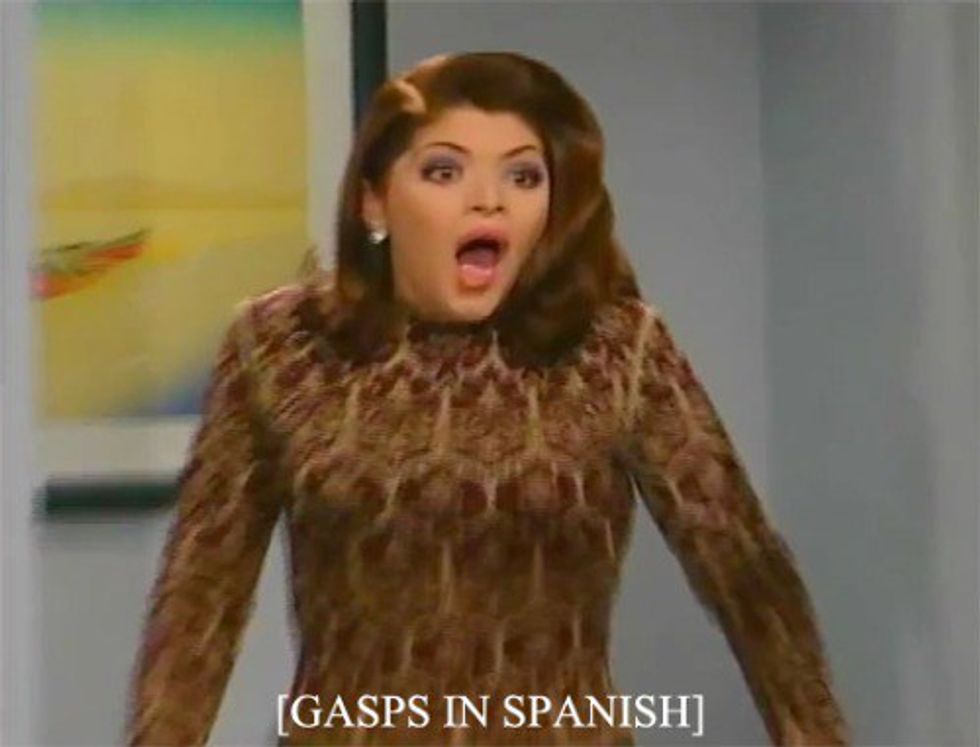
“They’re very dramatic, and I’m pretty sure it’s due to the culture. We Hispanics are very loud: more open and very dramatic people. As a result, it shows in telenovelas as they are full of overreactions, drama, and of course chaos and loudness. Everyone dies, I’m not too sure if American dramas are like this, but in telenovelas pretty much everyone dies. There’s always some sort of bad blooded conflict. And everything’s accentuated by suspenseful music. I think it’s a feature of the language for everything to sound very direct and verbose.”
Classics: La Fea Más Bella, La Reina Del Sur, El Zorro: La Espada y La Rosa
Recently popular: Pasión y Poder