
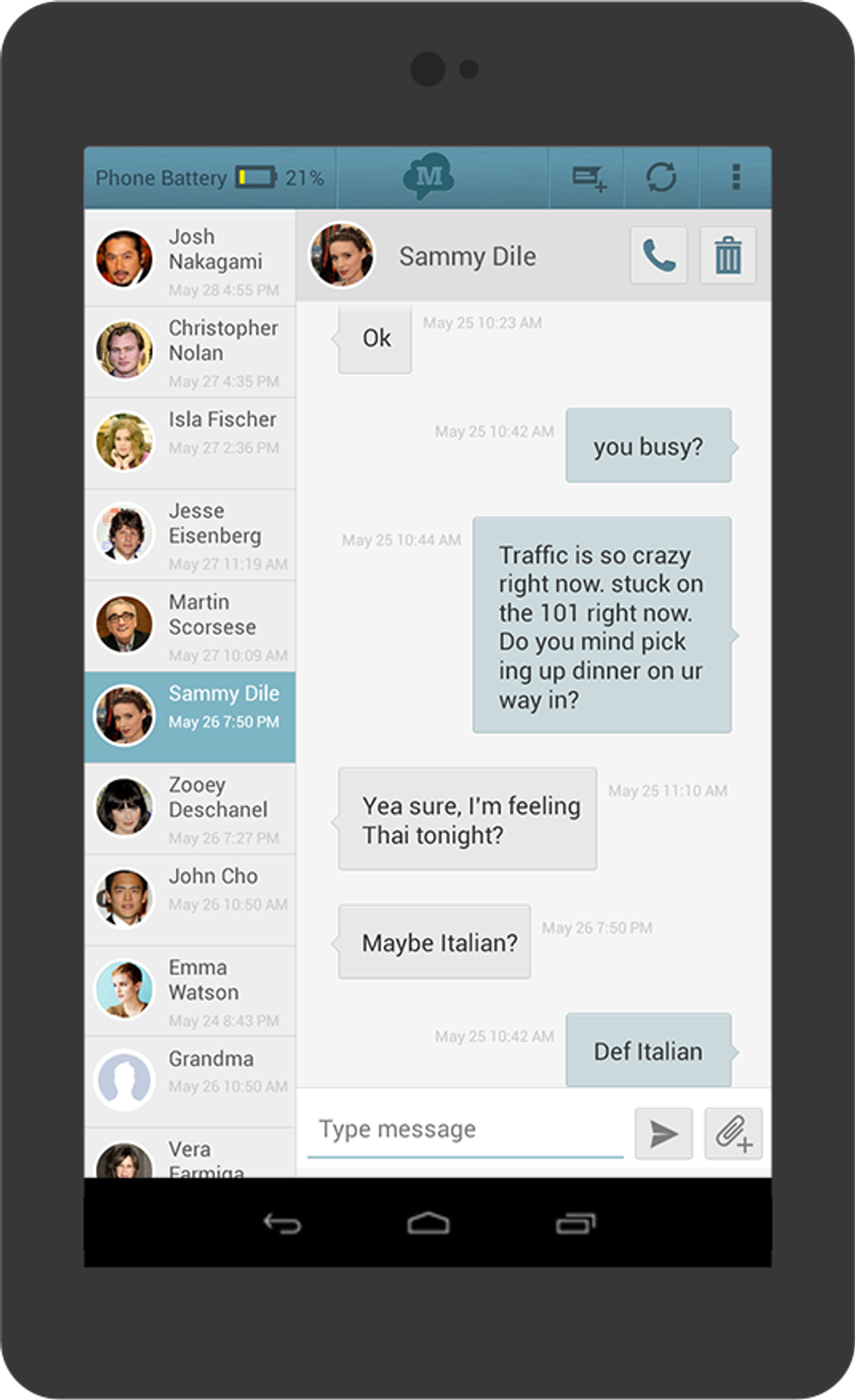
One of the great debates of our generation (the one against Donald Trump notwithstanding), is the answer to the question: Who should text first? The answer is not immediately apparent and neither is the situation. It could be a crush you want to text, or just a friend; but either way, indecision can grip you and then you end up not texting at all, sitting alone in your dorm room with Netflix and a bag of stale Cheetos. I may or may not be speaking from experience here, but I’ll leave that up to wiser minds to decide. Texting is a common form of communication and often preferred to all others: email is too formal, phone calls are too personal. Texting is the perfect format to get do-overs, mulligans, and to say things you don’t necessarily mean, but that you can fake well enough.
In a world where any form of permanence takes a backseat to our generational preference for things to be temporary, texting is a way to communicate without seeming too serious. We can send paragraph long text messages or we can send those damnable emojis (am I allowed to swear in these articles? I never asked that before) that symbolize what we are trying to say without us having to actually say it. It isn’t that millennials don’t want to commit: it is that we are afraid to.
You can blame it on 9/11, the Great Recession, the fast progress of technology—for instance, six years ago, “drone” was a word used only in reference to the military—but whatever you believe to be the cause, we just can’t bring ourselves to make too many lasting connections. We value the few we have, but we are hesitant to make more. Texting allows us to navigate a “safe space” in our need to communicate: we can choose what we want to say and we don’t have to see or feel the other individual’s reaction.
With texting, it is a lot harder for others to tell if we are putting up a front or not. It is easier to communicate because it removes the human element from the conversation. There are, obviously, people who would disagree with me, but that’s my perspective—it says so in the title.
So by now you are probably asking “Well, that’s all well and good, Mr. Corn-whatever, but why don’t you text first?” And I am about to tell you: I don’t want to bother anyone. You see, I have fallen so far into this trap of keeping myself objectively distant from my peers that I feel like I would seem either desperate or I would annoy the receiver of my texts. And for whatever reason, seeking attention has been painted as “desperation” and that is not something that we want to be seen as.
We have been led to believe—and I hold Hallmark movies accountable—that our lives should be these relatively perfect, if somewhat complicated, happy endings. We were led to believe we’d meet someone that would complete us, not being taught that being complete ourselves would help in making connections. So we are left with a generation of young men and women who aren’t only fractured but disillusioned with human connection. It is rarely what we were led to believe it would be.
I don’t text first because I believe that if you wanted to talk to me, you would. And since you have not talked to me, you don’t want to. What I fail to realize is that you may very well want to speak with me, whether through text, over coffee, or whatever, but that you believe the same thing that I do. That if I wanted to text you, I would. And that, because I haven’t, you believe I don’t want to. And therefore, we both end up in separate places, with separate bags of stale Cheetos, watching the same Netflix shows ("Master of None" is brilliant, by the way).
So now you know. If you want to text someone, just do it. Screw that idea that you’re desperate, or whatever is stopping you. Even as I write this, I’m using my exceptional millennial skill-set to write a text on my phone. Don’t ghost. Nike that shit. Send the text. Who cares. Then say something stupid, regret it, and go back to your Netflix. "House of Cards" has new episodes.