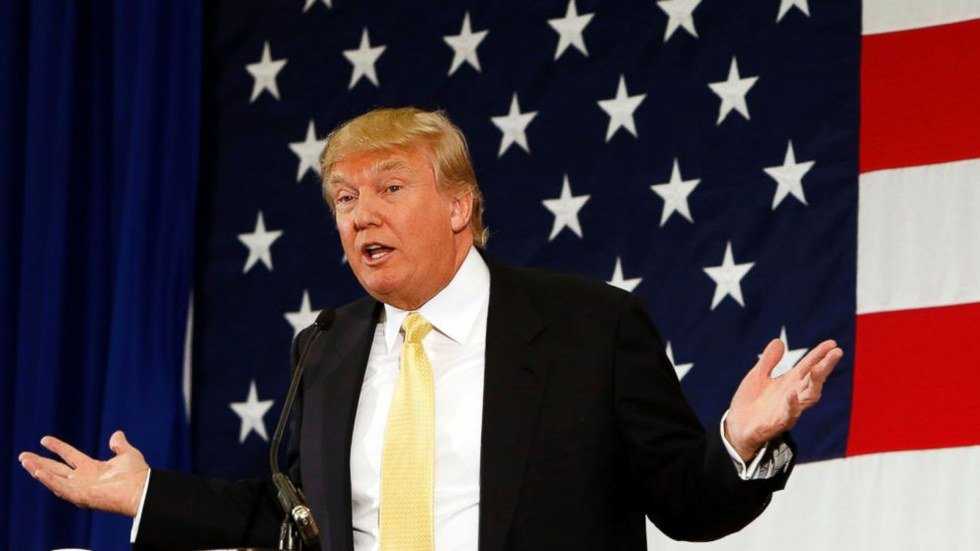
In case you somehow haven’t heard, within the last few weeks presidential candidate and orange Troll Doll look-a-like Donald Trump has catapulted himself to the number one spot in the Republican primaries.
Trump accomplished this by doing the exact opposite of what every other successful candidate in the history of the United States has done, a strategy that involves a constant spouting of bellicose, ignorant, racially-charged rhetoric. Of course, the unprecedented nature of his candidacy has driven both the GOP establishment and political commentators alike totally batshit crazy.
Though the party establishment and low-brow pundits can do little more than wring their hands and express disbelief, it should be obvious to anyone watching closely enough that Trump’s strategy (which is basically about drawing as much positive and/or negative attention to himself as he can, regardless of consequences) owes its success almost entirely to the press’s disproportionate coverage of him.
Indeed, sometimes it seems as though all of this might just be some performance art piece — like something Andy Kaufman or Shia Lebouf would pull just to make a point. But in the umpteenth years since this spray-tanned megalomaniac began corrupting the public at large with his celebrity,Trump has proven that everything he does only exists to either (a) increase his own fame and wealth or (b) make sure everyone knows just how famous and wealthy he really is. His campaign for the presidency of the United States is no different.
However, while the intent of “The Donald”’s run for the highest office in the land should shock no one, its effects on the dynamics of party politics and the press’s coverage thereof is pretty remarkable, perhaps even game-changing. NBC reporter Perry Bacon Jr. writes:
“The rise of Trump has created a great debate within the media on how to cover him. In the competition for the viewers and web traffic that help media outlets make money, Trump coverage makes sense. And by a number of measures, the public is deeply interested in Trump. … [For example,] Trump, in a period from June 14 to July 12, received more coverage than the combined total of Bush, Wisconsin Gov. Scott Walker and Florida Sen. Marco Rubio, generally considered the three leading GOP candidates, according to Google.”
Implicit in this statistic is the unfortunate truth that Trump has proven himself so skilled at generating controversy that the more profit-focused news corporations would gladly shower Trump with millions in free publicity in exchange for increased reader/viewership.
On the other side of this “great debate” sits the likes of the Huffington Post, who announced last week that they would refuse to report on the Trump campaign as a part of their political coverage. Instead, they now feature it as a part of their entertainment section.
“Our reason is simple,” HuffPost’s top editors wrote. “Trump's campaign is a sideshow. We won't take the bait. If you are interested in what The Donald has to say, you'll find it next to our stories on the Kardashians and 'The Bachelorette.'"
This begs a few questions. Has Trump inadvertently broken the system? Has the celebrity-obsessed, tabloid-like world of political news finally been revealed for the low-grade profit-making machine that it really is? Has it finally found a story too rich to digest?
Though nearly every analyst would agree that Trump has little to no chance of winning the GOP primary or the general election, his campaign has already sparked a much-needed conversation within the media on how politics ought to be covered. And I think that the closer we get to election season, the more obvious this conversation will become to the average citizen. I never thought I’d say it, but without knowing it, Donald Trump has indeed made America a better place.