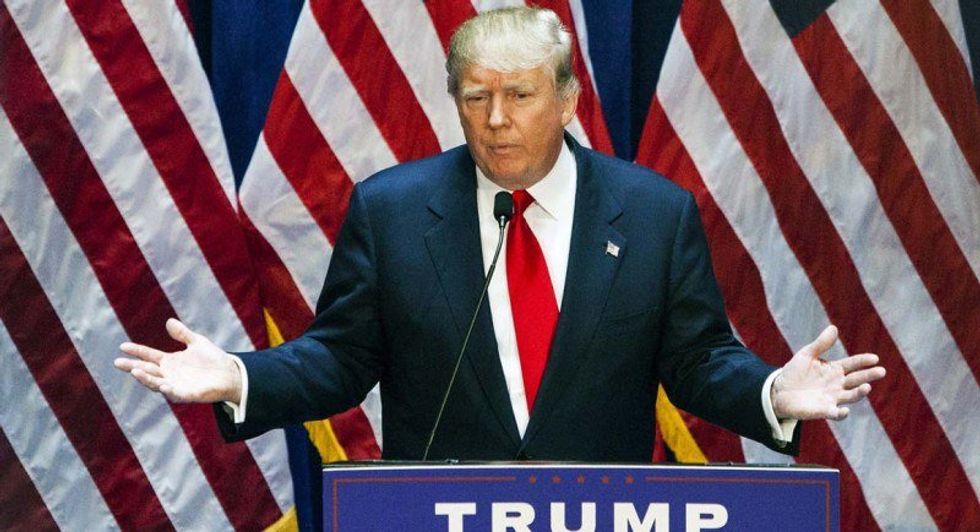
Election season is arriving soon, and it’s more evident than ever, with the Republican primary race in full swing. As of now, 17 candidates have caused enough of an impact to have their name listed in national opinion polls. Familiar names dot the polls; Rick Santorum, Rick Perry and Mike Huckabee have all ran in previous elections, and Jeb Bush, Chris Christie, Ted Cruz, Marco Rubio and Rand Paul are all prominent political figures. However, one name seems a bit out of place. Donald Trump considered running for the nomination in 2012, but quickly changed his mind. Two months ago he officially announced his candidacy, and now he is at the top of the polls, consistently beating out all of the aforementioned hopefuls since mid-July. But why, and how is Trump managing to do this?
Trump has minimal political experience at best; while being open and aggressive about his beliefs, he has never held any political office, and his business-savvy image lies in comparison with his not-so-savvy history: Trump has had to file corporate bankruptcy four times, most recently in 2009.
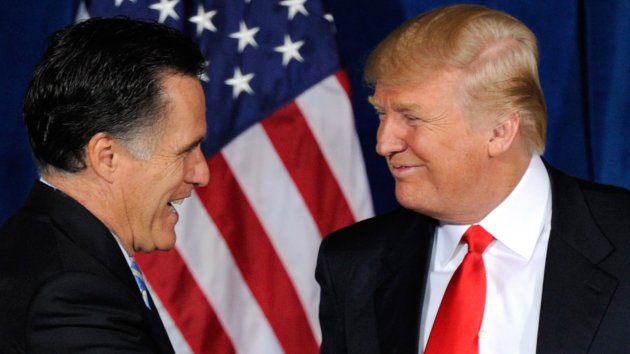
Polls taken in 2012 during the brief period that Trump considered running revealed a strong positive reaction towards it. In retrospect, the race without him seems devoid of the wild card character that he brings, and the drama he is apparently immune to is only shadowed in other candidates. For example, Herman Cain’s campaign surged in popularity in late 2011, thanks to conservative media noting his strong showing in the debates. For the month of October, he was neck and neck in the polls with Mitt Romney, the eventual winner of the nomination. But a sexual harassment scandal derailed his campaign, and his support visibly dropped. Cain abruptly ended his campaign in December.
Last month, a court deposition from nearly 30 years ago has been dug up in which Ivana Trump, Donald’s first ex-wife, allegedly accused him of rape. Ivana herself quickly told CNN, “The story is totally without merit,” explaining that the statements came at a point of “high tension” between her and Donald. It would have been a bullet dodged for Mr. Trump, if his lawyer, Michael Cohen, hadn’t further clarified the incident in a rant to the media, and said “by the very definition, you can’t rape your spouse,” which is completely false. At this point, Trump was on a three-week leading streak in the polls. In the days following the story, Trump’s lead briefly weakened to 19%, then surged back up to its previous commanding 25%, and remained there.
Clearly, a scandal in his personal life cannot singlehandedly take Trump down, like it has with Herman Cain, or other political hopefuls. Neither can a gaffe from a member of his camp. So, what makes Trump so impervious to harm?

Trump’s attitude is unlike any of his competitors. He simply does not care, and refuses to filter himself. By adopting this style, he doesn’t have to conform to the usual rules of campaigning where gaffes require backtracking, or at worst, an apology. Trump defends himself, like after his CNN interview in early July, in which he characterized Mexican immigrants as rapists: “Well, somebody's doing the raping, Don. I mean, you know, somebody's doing it. Who's doing the raping? How can you say such a thing?" If he finds his position indefensible, he’ll make light of the situation. In a Fox News-hosted Republican debate in early August, moderator Megyn Kelly accused Trump of calling women “fat pigs, dogs, slobs, and disgusting animals,” to which Trump disarmingly replied, “Only Rosie O’ Donnell.”
In Trump’s world, a gaffe is not a gaffe, but simply a side effect of his “I’m-just-being-honest” rhetoric. At a point where the President’s approval ratings have been sub-50 percent for over two years, and a historically low sub-20-percent approval rating of Congress, Trump’s stubborn refusal to play by the rules is a refreshing change, regardless of his inflammatory and ill-advised comments.
A closer look at the timeline of the 2012 Republican primary polls reveals Trump’s deviation from the norm. At one point during the race, Rick Perry, Herman Cain, Newt Gingrich, and Rick Santorum held leads over the general favorite, Mitt Romney. As each of them eventually fizzled out, Romney always remained to regain the top spot. Trump isn’t fizzling out. He has managed to sustain his meteoric rise for over two months, and is the first candidate to break the 20 percent approval threshold. For now, Trump is the leader, and will continue to be for as long as his persona remains fresh in the minds of the American citizen.