People possess a tenderness for what they can identify with. It gives them a sense of belonging, a sense of worth, a sense of mutual understanding and agreement.
In the field of politics, however, forming such a bond with the people can prove onerous and difficult. Political figures attempt to disguise themselves as the “every man,” but rarely is the public completely duped by the ill-fitting mask.
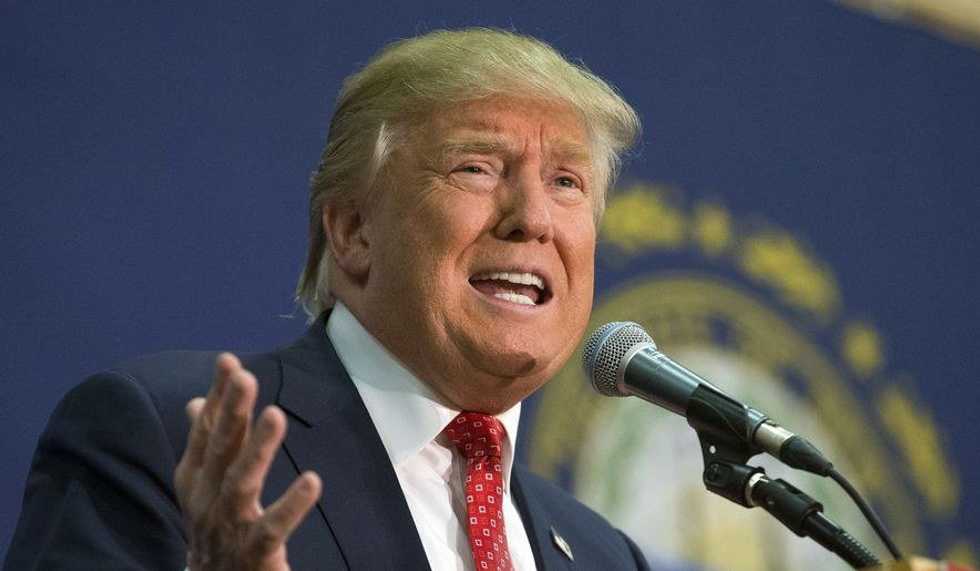
However, in the case of Donald Trump, the American people have been taken in by such trickery. Perhaps it’s because of the distraction put forth by his artificial hair piece; perhaps it’s the mouth hole of his mask being so large, people can’t look beyond it, or perhaps, Trump in in fact, actually genuine.
Whatever the case, Trump has forged an inclusive identity with the American people, and his greatest weapon in that battle is also the one that generates the most angst and outrage from his adversaries—his tongue.

Through all of his accusatory language, sordid epithets and misplaced verbal judgement, Trump has captured an aura of genuineness and relatedness among the public as a candid politician who has shucked aside the political double speak and elusive rhetoric so commonplace in his peers. Despite his monologues reflecting little in the way of human decency or even plausibility, they do fall in line with the frustrations of the American people and explain those frustrations in the most elementary means possible.
While the agenda of Trump’s unfiltered dialogue may lie primarily as a method of generating a rapport with the people built on frank honesty, it also serves as a shield, blocking the public from his flawed and vague overall policy.
Trump’s health care plan is an addled puzzle of questions and conundrums with little information as to the specifics of what all coverage it entails, how prices of insurance companies will be controlled and what restrictions the plan possesses; we just know it will do away with those pesky state lines. His tax plan, meanwhile, is more defined, but it hasn’t exactly checked out as a gold standard of policy making according to economists.

According to thestreet.com, the nonpartisan tax research group the Tax Foundation calculates that while Trump’s $11.98 trillion reduction in taxes over the next decade would lead to an 11 percent growth in the GDP, it would reduce tax revenues by $10.14 trillion even after accounting for the effect of the economic growth. The decrease in revenues amounts to nearly a quarter of the United States’ budget, insinuating Trump would have to make considerable cuts to federal spending in order to form a balanced budget.
No such balancing act has reached the public sphere, and it likely doesn’t exist except in Trump’s most congenial fantasies. He boastfully claims when he eliminates the “waste, fraud and abuse” within federal spending it will atone for a hefty portion of the deficit from his tax cuts. However, as in most of Trump’s assertions, it borders on lunacy.
Take Social Security, for example, a program Trump said he would maintain without modifying. The annual bill on Social Security benefits checks in at $823 billion, but according to Trump, it’s the 1,546 deceased persons still receiving benefits that produce the waste and fraud which ails the U.S. economy. Well, the Fiscal Times estimates those fraudulent benefits total $30.9 million, a substantial sum on its face, but a miniscule total when compared to the $823 billion spent overall. This is reflective of the relative marginal gains to be had from absolving the “waste, fraud and abuse” of federal spending; it simply doesn’t add up.
Oh, and then there is the lifeblood of Trump’s policy outline—his immigration plan. The street.com estimates Trump’s overzealous ideas of deportation would cost the federal government from $400 to $600 billion, shrink the labor force by 11 million workers, reduce the real GDP by $1.6 trillion and take 20 years to complete. Accomplishing such a goal while simultaneously cutting out a quarter of the federal budget may not quite be feasible. But then again, what doesn’t seem feasible to Trump, who scoffs at the timetable of 20 years, claiming he could complete the task in 18 months.
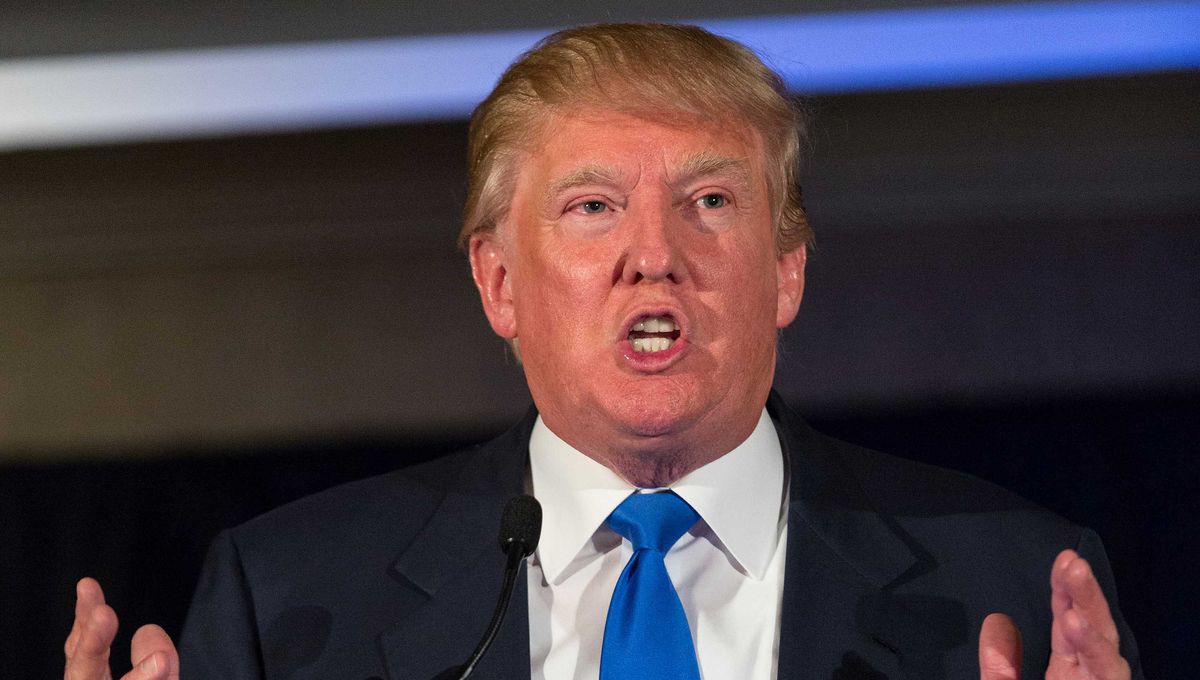
Although the shortcomings of his policy seem detrimental, it is also the factor whereby Trump displays his true savvy as a politician. For not only has he managed to consistently distract the American people from his policy through his tongue lashings, but the media as well. His lobbing of enflamed junior-high-level insults has tempted media conglomerates into playing a game of fetch. Each invective statement diverts the media’s attention away from his poorly-constructed policy as it chases coverage of his overbearing opinion, which he dismisses or elaborates as he sees fit. In essence, Trump exerts control of the media’s coverage as if it were nothing more than a pawn used to fortify his defenses against digging into defined policy specifics.
And although each outlandish Trump quote creates more ammunition for his opposition, his supporters are clearly unfazed by the accumulated artillery. At this point in the election cycle, any remaining Trump backers must possess a fondness for his brash commentary. But a more detailed analysis of his policy may cause followers to leap from his bandwagon because policy has far less to do with one’s stance on political correctness and political phrasing; it is far more tangible. Policy incites a more structured and complete form of analysis, a study of cause-and-effect methodology as it relates to the global marketplace of ideals; it’s demand for concreteness is one of the few fights Trump seems unable to win.
So, as Trump continues his campaign for the presidency, he’ll willfully engage in verbal skirmishes if it means avoiding the battle that could cost him the war. And while his barricades may, at some point, begin to show holes as the forces of Rubio, Cruz, Sanders and Clinton bombard them, his defenses don’t need to hold up forever, just long enough for him to reach his impenetrable pearly white fortress in Washington.