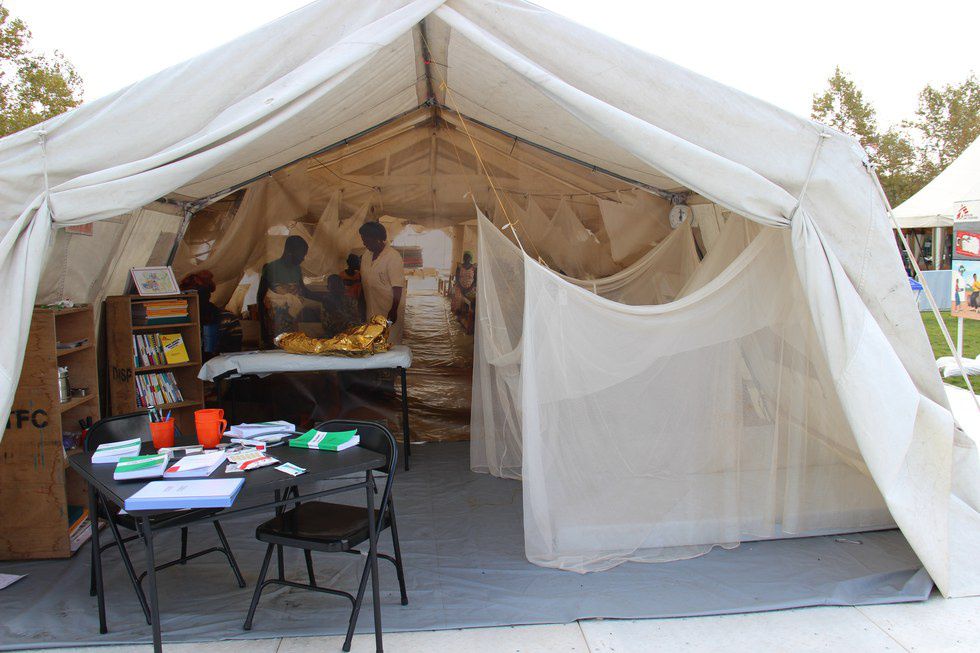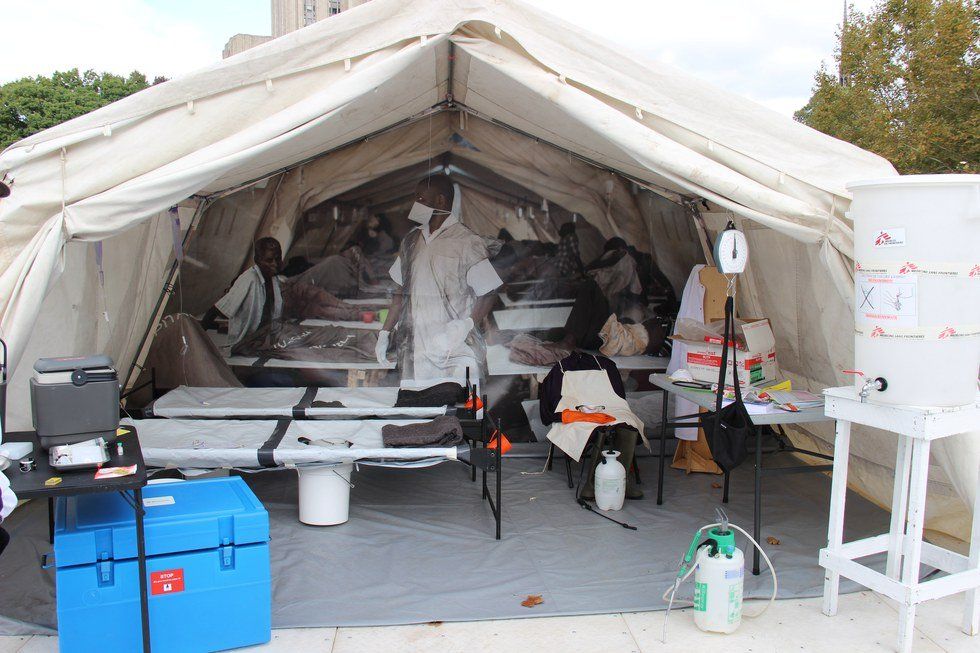
The last weekend of October, several tents popped up in Schenley Plaza, Pittsburgh. The reason? Medecins Sans Frontiers (MSF) or Doctors Without Borders had come to Pittsburgh — their second to last stop — as part of a small tour, off the east coast. The exhibit of this tour, “Forced From Home”, visited cities such as D.C., Boston, and New York. According to their press release, MSF is, "an international, independent, medical humanitarian organization that delivers emergency aid to people affected by armed conflict, epidemics, natural disasters, and exclusion from healthcare.” In 2015 alone, MSF saw 446 projects in 69 countries. The tour will finish in Philadelphia this November.
This traveling exhibit is open free to the public. It includes a panel discussion with some doctors and workers from the organization. In Pittsburgh, this was held at Carnegie Mellon Library, main campus.
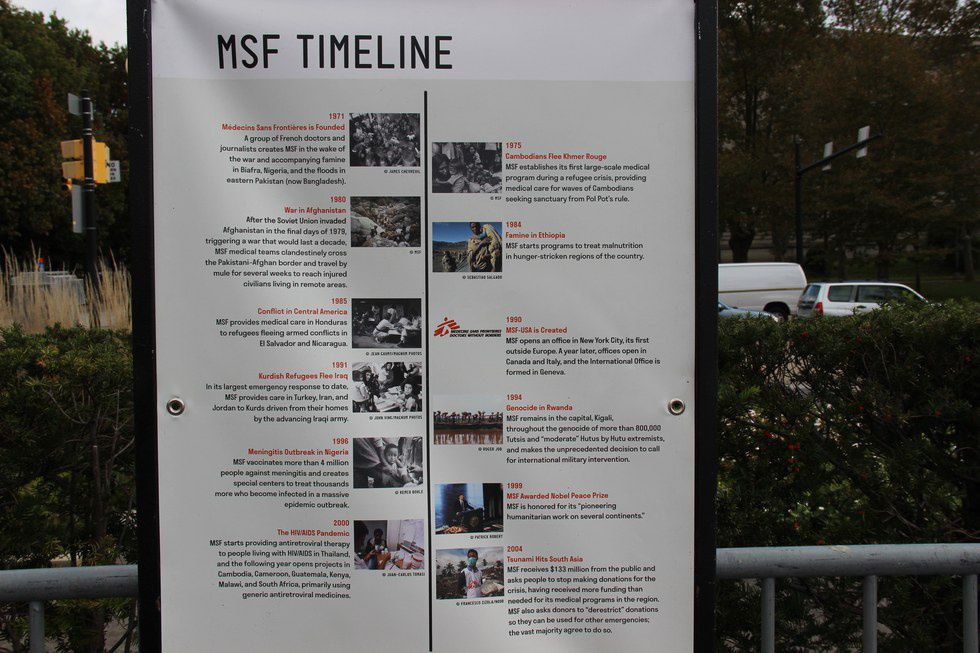
MSF workers are composed of medical personnel such as doctors, surgeons, nurses, and logistic workers - who focus on material acquisition and financial restructuring in a region or camp. Aid workers are encouraged to be fluent or conversational in either Spanish, French, or Arabic. This is because these three languages are most common in the countries MSF workers are active in. The typical field mission is anywhere from 6-12 months, but doctors and surgeons typically are required 2 months at a time - due to the more demanding hours.
The exhibit “Forced From Home” is an outdoor, educational, and interactive exhibit. It is designed to promote public awareness and understanding of the realities refugees, migrants, and internally displaced persons (IDPs) face. The tour, which lasts approximately 45 minutes, is guided by an MSF aid worker. According to their press release, "it takes the visitor through images, stories, and materials gathered from refugee camps, rescue missions, and emergency medical projects.” There is also a pre-tour short and virtual reality documentary from individuals native to the countries Afghanistan, Syria, Central America, South Sudan, and Burundi.
As conflicts such as the war in Syria become more internationally prominent, there has already been a discussion about the movement of Syrians in Europe and other parts of the world. Unfortunately, there has been backlash against the Syrian citizens in their escape from the war. This has fueled much xenophobia and racism which is unfounded and dehumanizing to those who are seeking help.
Jason Cone, executive director of MSF-USA said, “Our objective is to provide a sense of what people experience as they cross treacherous seas, travel through dangerous migratory routes and arrive at refugee camps. People fleeing for their lives are too often reduced to numbers and statistics. Through this exhibit, we put a human face on those staggering numbers to show the public what it looks like, feels like and what it means, to be forced from home.”
One of the key factors that the exhibit attempts to articulate is the key differences between a refugee, migrant, asylum seeker, and internally displaced person (IDP). According to MSF, a refugee is “an individual who has been forced to flee their country due to persecution, war or violence.” These people are unable to return home or afraid to return home due to the previous reasons. Many times, the war and persecution in their home countries are due to religious, cultural, or ethnic persecution. The MSF reports that there are currently 21.3 million refugees worldwide. In 2015, fifty percent of the refugee population was under the age of 18.
The 1951 Refugee Convention - a UN multilateral treaty - defines and guarantees the rights of refugees in countries that signed the agreement. However, sometimes a country may sponsor and support refugees according to the rules of the convention without having signed it.
According to the tour guides for the exhibit, in Lebanon, refugee camps have been set up in the country in response to the Syrian civil war. Lebanon has not signed the treaty, yet respects its outlines to hopefully aid those in need. A migrant, on the other hand, is defined by an individual who is willing and capable of leaving their home country to live in another country of their choosing. In most cases, this individual is not fleeing anytime of persecution and is able to return at any time of their choosing.
One of the major misconceptions that MSF is trying to teach and promote is the wrongful use of the word ‘migrant’ to describe refugees who are fleeing their home due to persecution and war. By calling refugees migrants, one absolves the people of a host country the responsibility to take them in. As a migrant, an individual can be imprisoned and/or deported back to their home country. This gives the individual fewer rights and dismisses the trauma of war from that person’s experience. The word ‘migrant’ has become a very politically charged word in recent months to discourage resettlement of Syrian and other refugees throughout Europe and the United States.
An asylum seeker, on the other hand, is one who flees their own country to seek sanctuary in another. These individuals can obtain asylum in other countries and “receive the right to be recognized as a refugee and receive legal protection and material assistance.” When asylum or refugee status is underway, a person cannot be punished if they arrive unexpectedly and without documentation, because it is implied they left quickly. The MSF reports that there are currently 3.2 million asylum seekers worldwide.
An IDP is defined as a person who flees their home for the same reason as a refugee but does not leave the borders of their country. Unfortunately, because these individuals do not leave their country, they are not protected by international law. The MSF reports that there approximately 40.8 million IDPs worldwide.
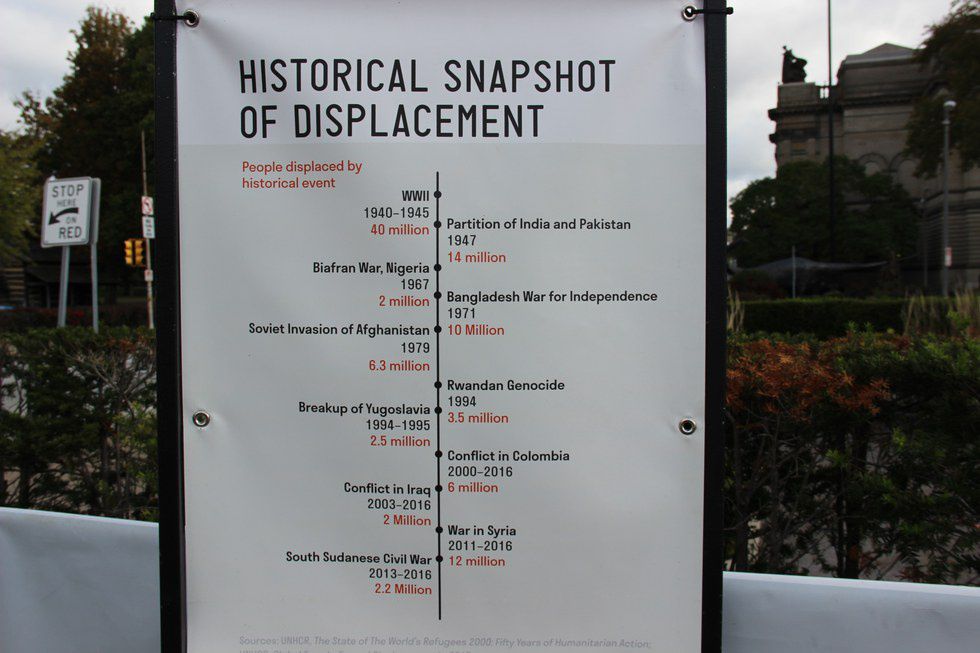
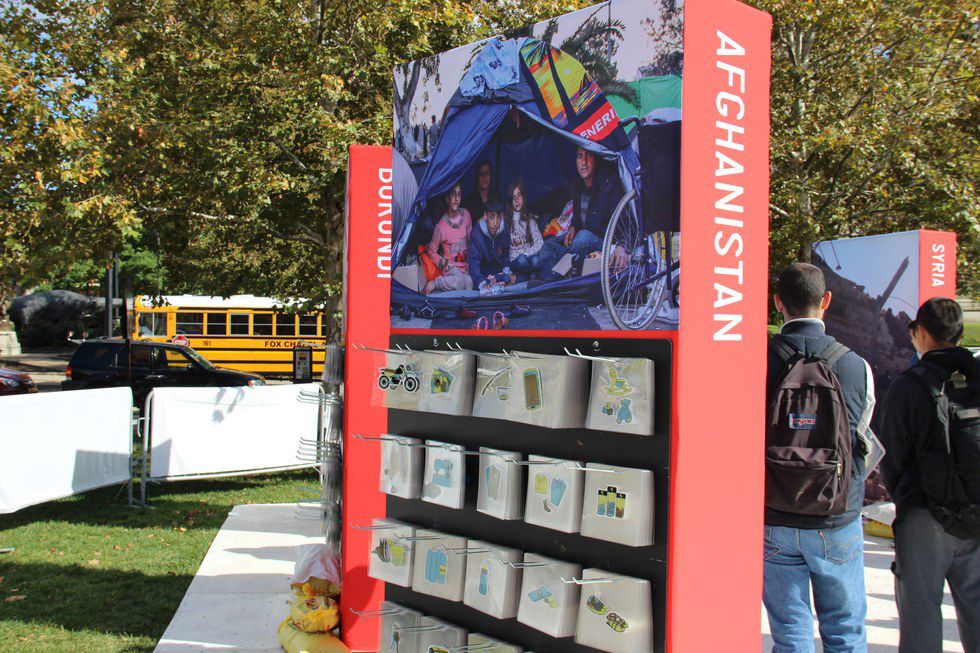
The exhibit itself is divided into nine different stations. The first is a 360° dome that projects a video documentary of the places and camps that people are living and trying to survive in. The second station is an interactive station which discusses push factors or issues that cause people to flee their homes. Here, people were instructed to stand at one of five columns and told to choose 3-5 items from a list to take with them. The activity was timed and the visitors were given less than 30 seconds to choose—simulating the time constraint and stress many refugees are placed under when fleeing. The point of the exercise was to choose the most valuable items they would take with them if they were to flee their homes. Items included clothes, food, family photos, documentation, religious paraphernalia and more.
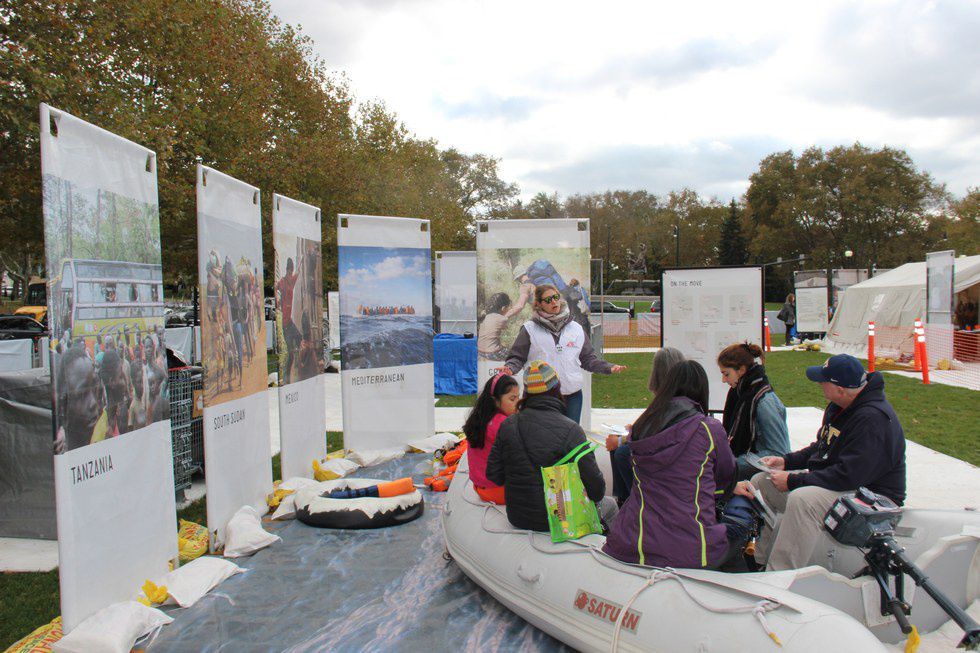
The third station called “On the Move," is a station that talked about the realities of fleeing one’s home and distances traveled. For example Afghanistan to Berlin, Germany is approximately 4100 miles whereas Aleppo, Syria is more than 3000 miles from Greece. At this station, visitors were asked to sit in an emergency boat - a replica of those used by refugees - to simulate the conditions people traveling across seas and oceans to safety. Often, these boats are inflatable and can be easily sunken by sharp objects or rough waves. However, the most common mode of travel when fleeing one’s country is by foot. This station addresses the dangers and vulnerabilities refugees face when “on the move.”
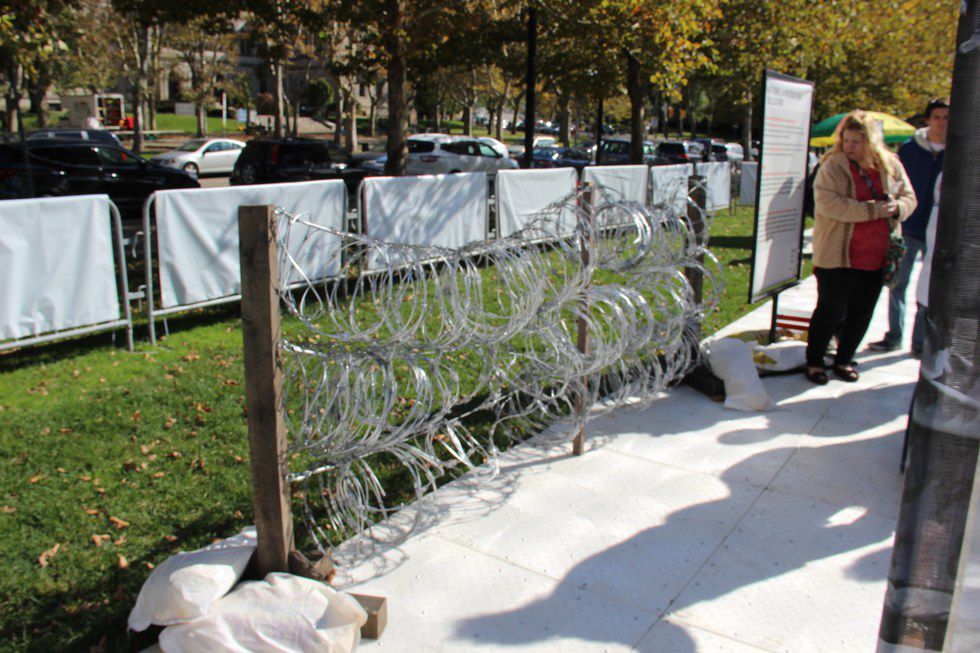
The fourth station addresses the legal issues that many refugees, asylum seekers, and IDPs face after they reach their desired destination. This station discusses the legal rights of individual as well as the obligations required by the host countries. This is where the legal battle to define a person as a refugee, asylum seeker, or migrant comes into play. It can often disregard the dangers one seeks to escape from. Their struggle becomes highly politicized.
The fifth station discusses the basic needs of a person to survive day to day. According to the MSF, a person needs at least two gallons of water a day to survive - one for cooking, drinking, and showering. The MSF has thus created portable water filters to bring clean water to areas without access as well as latrines and incinerators to provide a more hygienic form of human waste removal. Food, clean water, shelter, and access to medicine are all things the MSF helps to provide to refugees, asylum seekers, and IDPs.
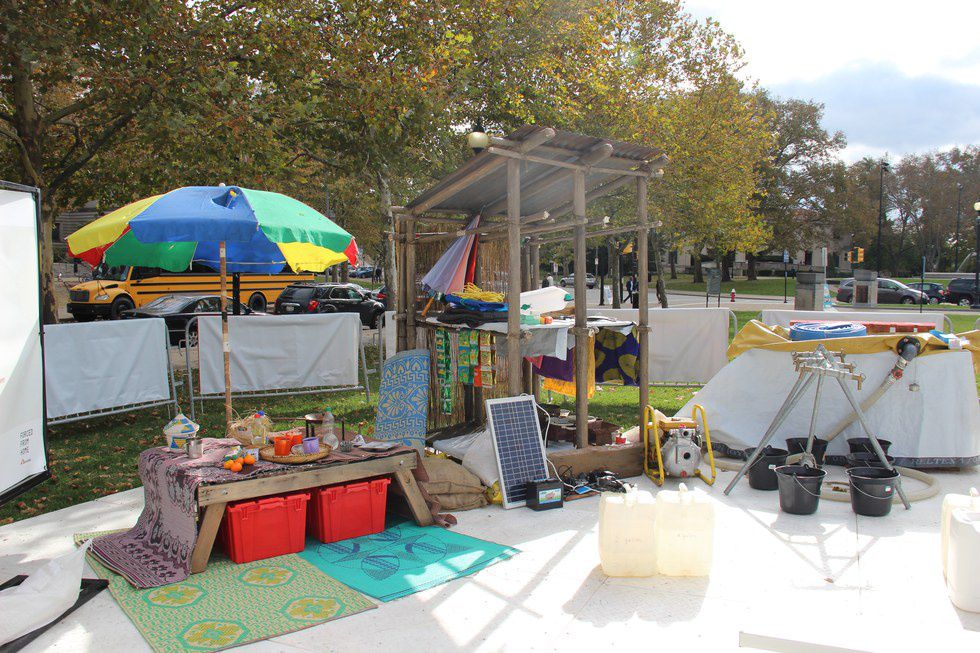
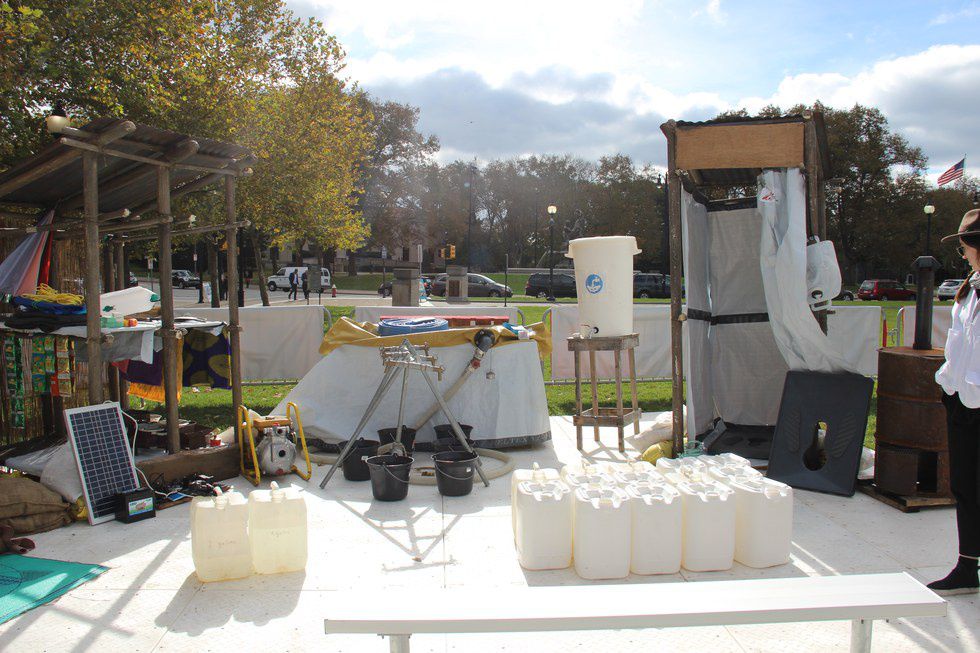
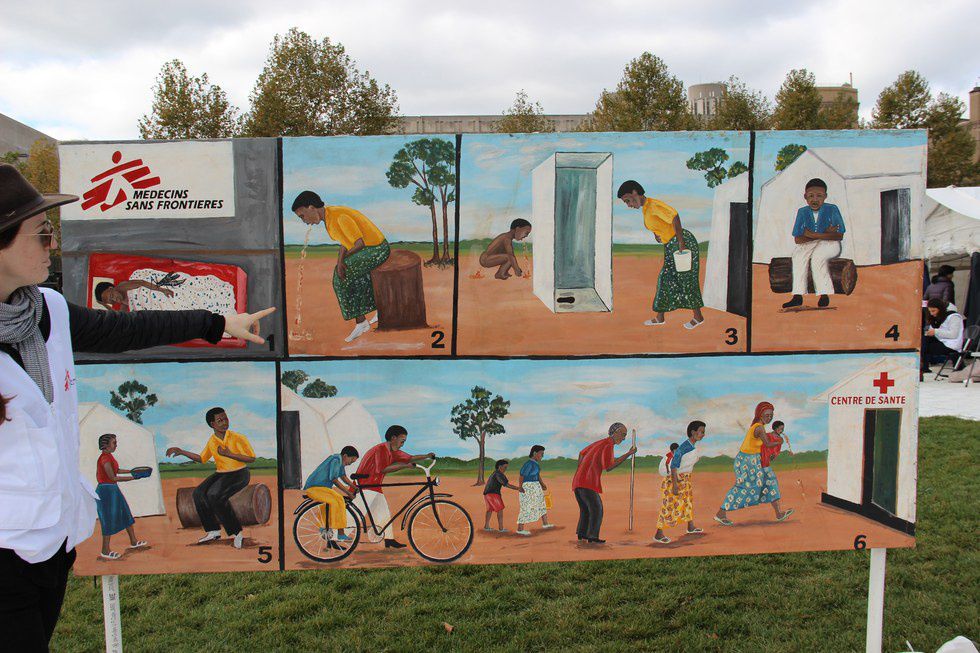
The sixth station addresses the medical needs in a particular area. Many times, camps are susceptible to preventable deadly diseases such as cholera or diarrhea. This station shows the challenges in providing health care as well as the methods undergone to address these challenges (as seen in the cover photo). One of the big challenges that I personally thought was brilliant was the issue of illiteracy and lack of basic medical knowledge in many areas. The MSF has thus created “visual boards” which are pictorial representations of symptoms of illness and a step-by-step instruction of what to do such as burying fecal matter or seeking out medical help if symptoms such as shakes, vomiting, or diarrhea are experienced.
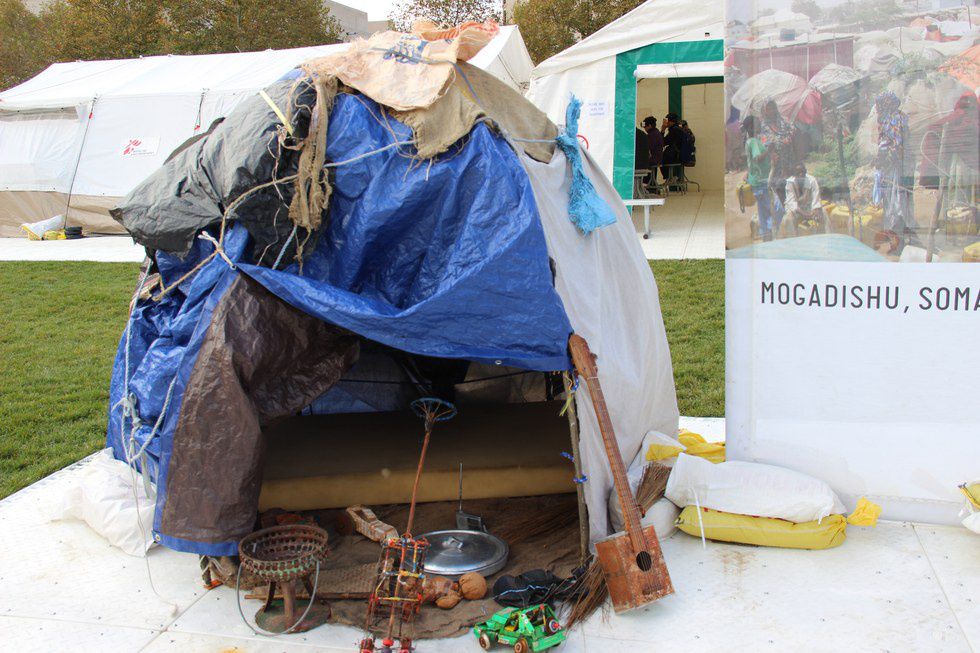
The seventh station discusses the destinations of refugees, asylum seekers, and IDPs. In many cases, even when a person reaches safety in another country and gains refugee status, they are not resettled. Instead, individuals can live years in small tents often shared by multiple families. Some camps, such as in Calais, France, are temporary and often destroyed. On the other hand, others have existed for decades such as the famous camp in eastern Sudan, Shagarab and Wad Sharifey, which host around 66,000 refugees - the first which arrived in 1968.
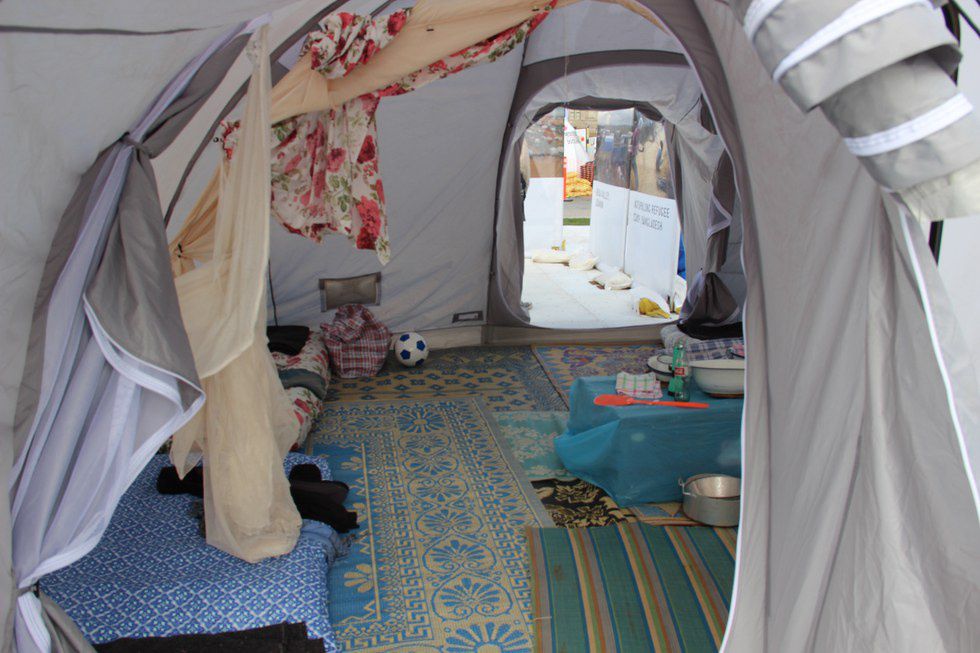
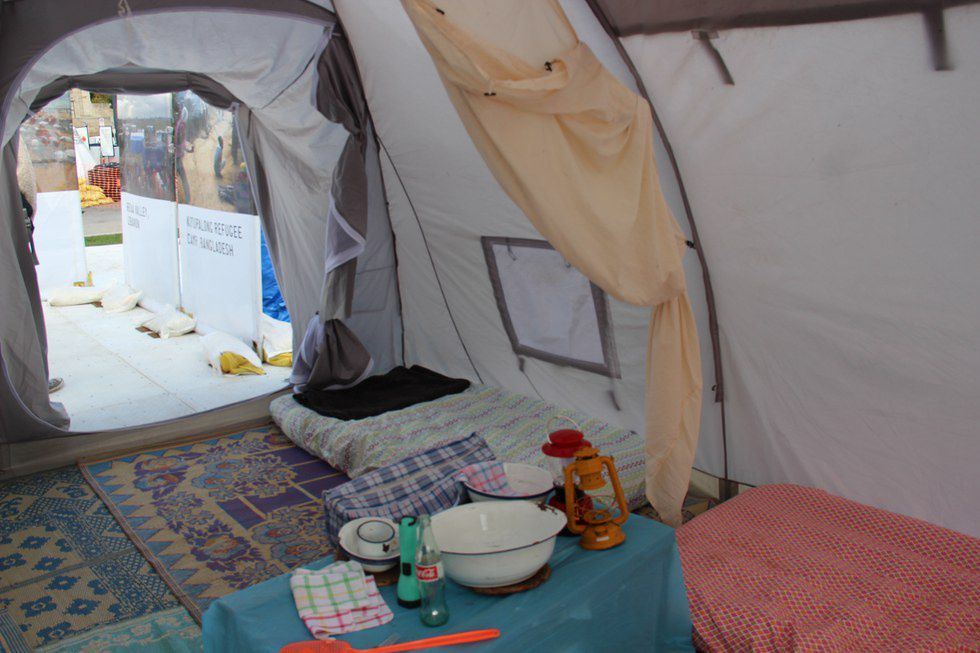
The eighth station is a virtual experience station where visitors can put virtual reality headsets on and experience one of three documentaries. The documentaries feature personal stories from Mexico, Syria, and Iraq. These videos are also available on their website.
The ninth and final station is a tent filled with information on how to help or get involved with MSF. This station also has postcards that visitors can fill out which get sent to field workers for the holiday season.
For many of those fleeing their country, PTSD is normal. The majority of refugees have the desire to return home but are unable to due to the violence and trauma in their homeland. It is important to recognize the problems occurring around the world and by sympathetic to their needs and problems which are out of their control.
“Forced From Home” is an interactive exhibit which hopes to educate the public on the issues of refugees, asylum seekers, and IDPs in order to create dialogue: to give a voice to the voiceless.For more information on MSF and the work they do, you can visit their website at http://www.msf.org/ or http://www.doctorswithoutborders.org/ .