


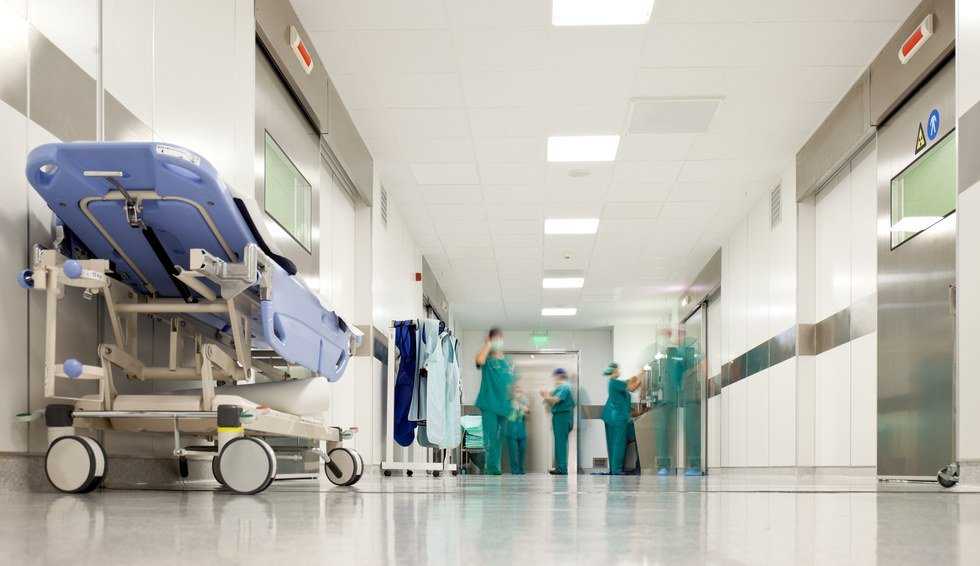
When you're in a hospital, you're there for a reason. You are either a doctor, nurse, administrative assistant, or a patient. For most of the people listed above, being in a hospital is not a positive experience. If you are a doctor, you are dealing with the plethora of tired, stressed, and sometimes even terrified patients coming through the revolving doors of the hospital. You are responsible day in and day out for their lives and you have to carry the weight of that responsibility and that honor with you wherever you go. If you are a nurse, then you have to deal directly with your patients every hour of every shift that you take. You are the one to help them go to the bathroom, reach the TV remote, call their parents, confide their fears to, and the one that they look towards when they don't understand what the doctor is saying and need a friend to translate their words into more comforting terms. If you are a hospital administrative assistant, you are responsible for keeping both the patients and the employees satisfied. It is up to you to ensure that the hospital is prepared for any and all possible occurrences, up to date on the latest technology and medicine, and to make sure that your employees are operating to the best of their abilities. If your hospital is hit with a lawsuit, it is up to you to negotiate with the patients and employees involved and to make sure that the entire hospital can recover from this huge blow to its own confidence and to the patient's trust.
But if you are a patient, the hospital takes on an entirely different meaning.
If you are walking into a hospital and feeling unwell, fear wracks your mind. All you can think is "Will I be ok?" and "What's going to happen now?" The doctor rapidly running down the hallway, the nurse smiling at you to take a seat, every person and their actions becomes important. The expressions on their faces even more so. You can feel the tension permeating off of the doctor's coat as he whips by and runs into the room down the hall. You can sense the nurse's frustration deep below her smile as she works her next overnight shift and hasn't been able to sit down to eat in 12 hours.
Every location in the hospital becomes important and emotional. The cafeteria is full of families, exhausted yet content to be eating, sitting together, sometimes in joy and sometimes in grief. The smiles of the cafeteria workers become a beacon of hope that everything will be ok in the end and that the world is still running. Doctors and families sit side-by-side, enjoying a small break and becoming reenergized from the presence of a lighter environment. The hospital gift shop becomes a place of relaxation and love. Gifts are bought for loved ones, coffee and snacks are rapidly devoured, and people are again brought together. Doctors, nurses, families, and even patients enjoy spending time with all of the little trinkets and food items because it feels safe and normal.
A hospital has so many different sides to so many different people, it is defined by the experiences within it and by the people who operate it. It is interesting because no other building or environment in the world can inspire so many different reactions and situations and yet most hospitals manage to find a way to operate through the chaos and to continue to fight to make sure that everyone within their doors, employee or patient, is taken care of to the best ability possible.
















