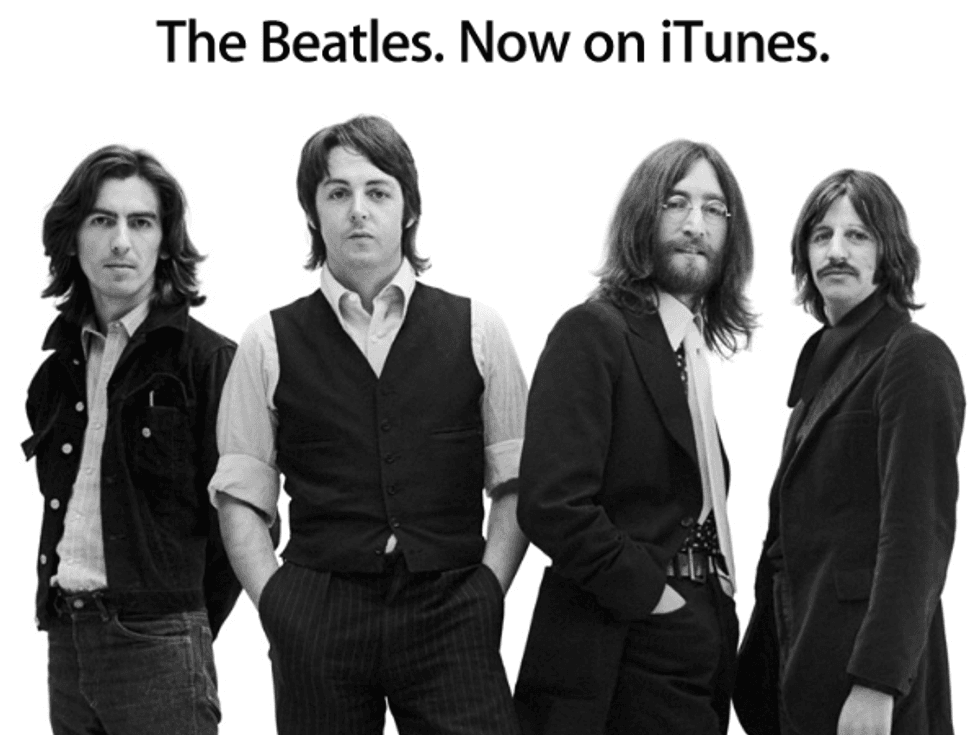

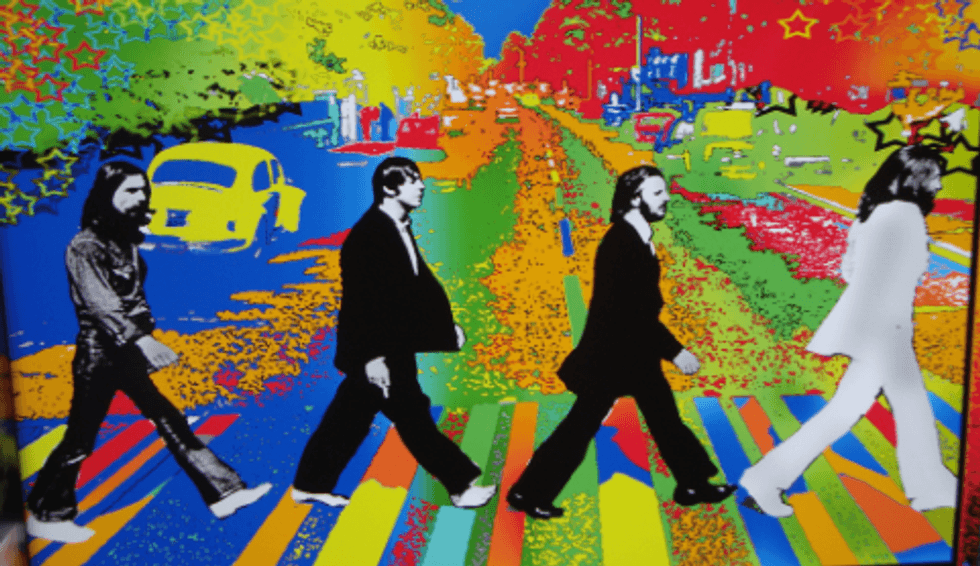
Scrolling through a music-appreciation group on Facebook, you will find quite a few users who take it upon themselves to lead the crusade in defending arguably the greatest band of all-time, The Beatles. However, these users are seemingly always shot down and are outweighed in numbers by selectively taught millennials. Members of the iTunes generation, who, up until recently, did not know a world where The Beatles' music was available for online streaming.
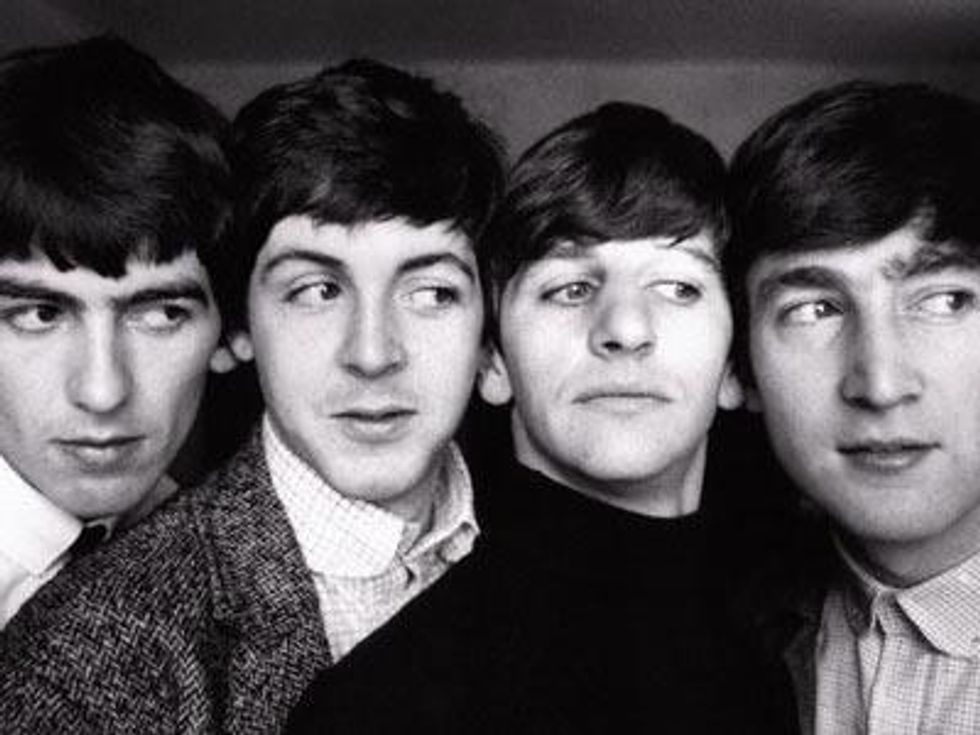
The anti-heroes, or, for lack of a better term, “Facebook Brats” in question, showcase their “trolling” abilities and initiate conflict by simply commenting on the post of a Beatles advocate. Even the more generous commenters tick me off to no end. They will say something to the tune of, “I get what The Beatles did for music, and I respect all of that, but they’re alright at best. Very overhyped.” The moderately vicious users will categorize The Beatles as “dad rock.” The extreme trolls will just cast an ignorant and unintelligent, verbal assault on The Beatles, probably for an absurd reason, like hating their history teachers, who taught them about The British Invasion and the early 60s Beatles, for giving them a C.
It is one thing to genuinely express whether or not you like or dislike an artist’s work. Everyone has the right to offer mature judgment and critique in this, the free society in which we live. But to call the Beatles “overhyped” is an outright travesty, and really implies the act of overlooking and skimming through material more than anything.
When defenders like me storm in, our rebuttals are usually thrown right back in our faces, when our opponent confidently makes a very unfortunate declaration.
“I guess a few of their songs are good, but they’re really nothing special. They just sang love songs in equal harmony with one another that made teenage girls go crazy. One Direction does that, too. So what’s the big deal?”
When I read this, someone better take my laptop away from me, because at this point, I am about ready to punch a hole through my screen.
A while back, I surveyed various acquaintances of mine, ages 15-25, and asked them their brief opinions and perceptions about The Beatles. A few said The Beatles were “pioneers.” A bit more believed The Beatles were “outdated.” Finally, the majority of the persons I interviewed claimed The Beatles were “the original boy band.”
So in this, semi-research study of mine, not only had I learned people associated Beatles with boy bands (cringe), but the most adamant fellow I surveyed had agreed with The Common Facebook Brat, in that The Beatles were just a 1960s version of the contemporary pop-singing boy band One Direction. Blasphemy.
This popular misconception about The Beatles comes from how we as a society have been taught about The Beatles entrance into America as one of the integral forces leading the “British Invasion.” Educators condense material for their students, allowing them to mnemonically index and associate integral dates in history with culturally-impacting events or persons.
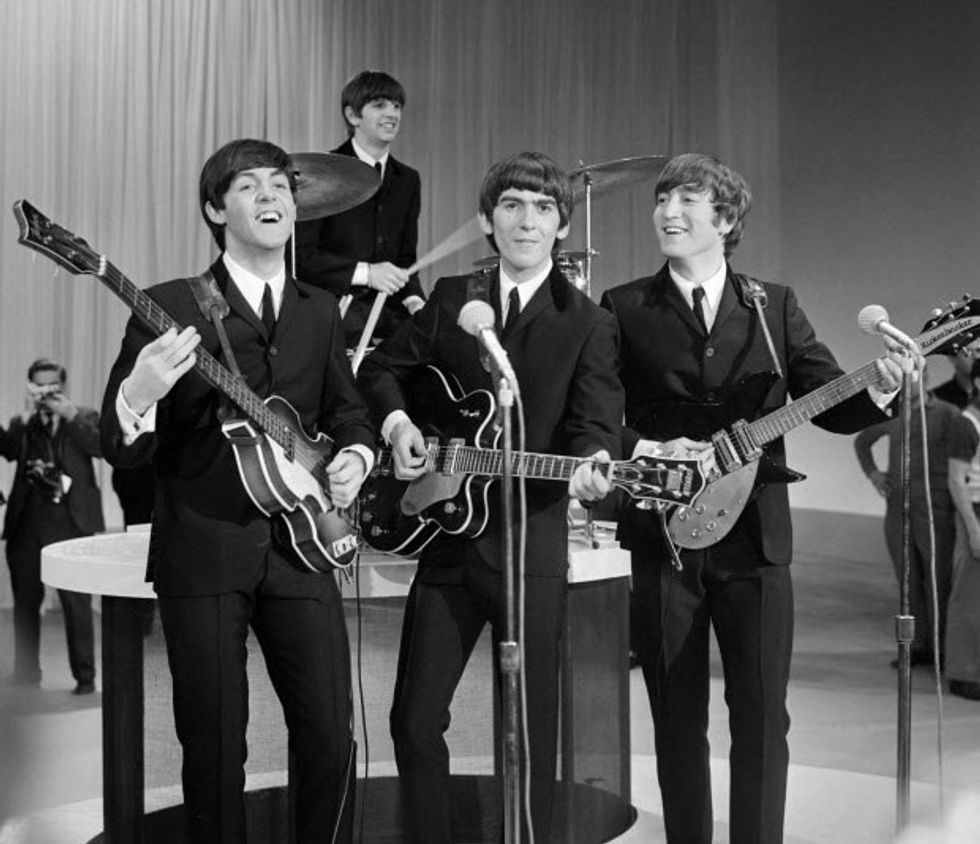
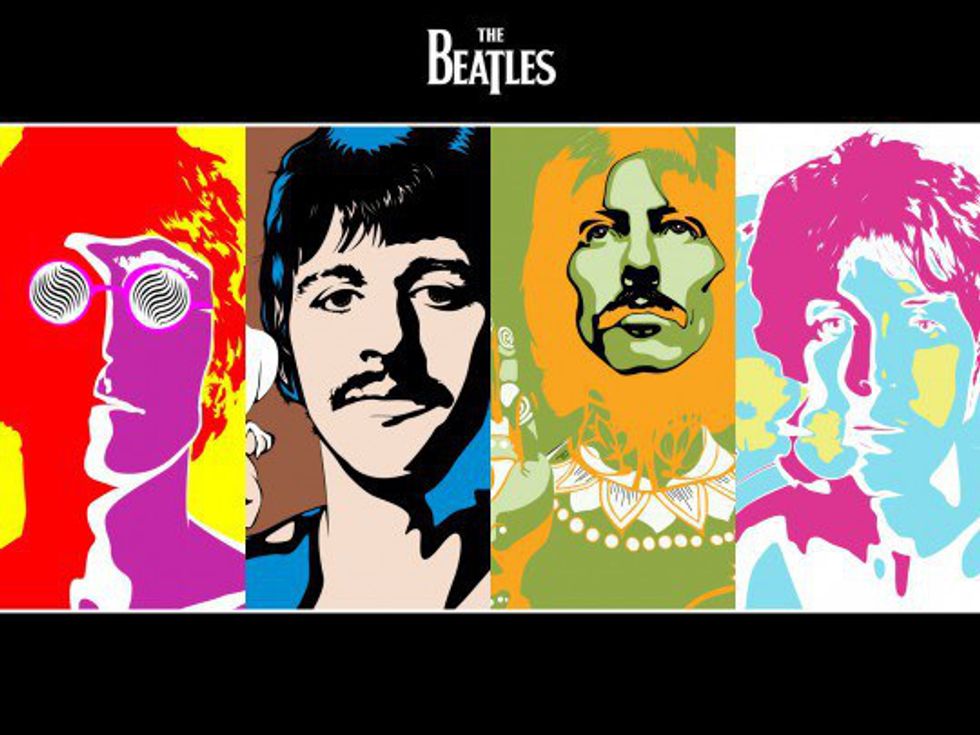
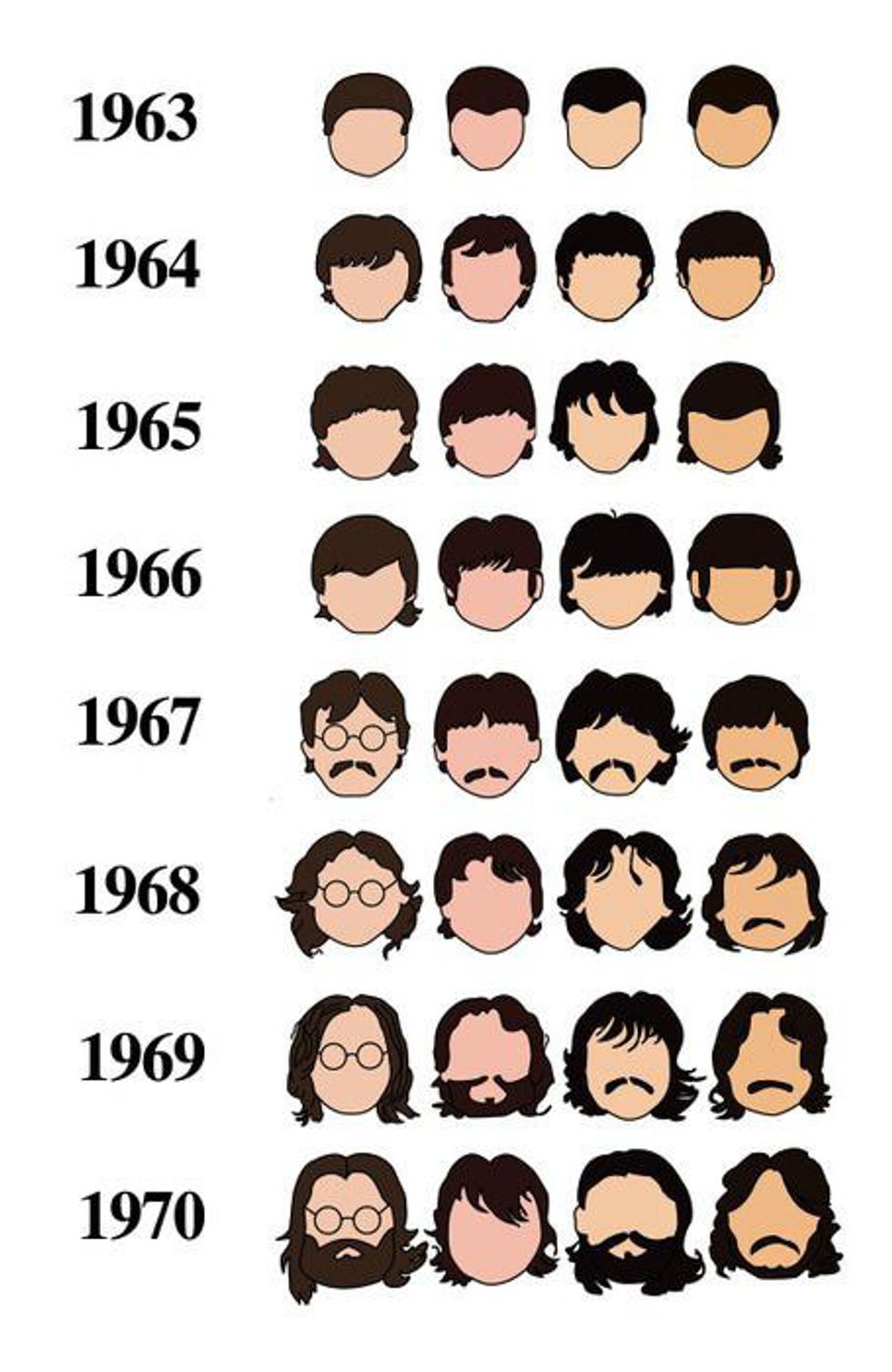
For The Beatles, there is one day that comes to mind fitting this model. A day that altered the entire fabric of rock and roll music moving forward. On Feb. 9 (My birthday, ironically enough), 1964, The Beatles performed in America for the first time on the legendary CBS television program, “The Ed Sullivan Show.” It was there, where the phenomenon known widely as “Beatlemania” was formed. They were four Brits in their early twenties, all dressed nicely in suit and ties, while simultaneously introducing a new type of rebellious hairstyle known as a “mop top.” The Beatles became trendsetters in a 1960s society already on the cusp of figuratively (and literally) welcoming in a colorized age of media.
When American citizens take history or music history courses, this date will obviously be drilled into their minds as a crucial date for Rock and Roll music. Now, the non-Beatle fan music listener under the age of 30, who likely either loathes, or remains neutral about 1960s musical acts, will logically mold their perception about The Beatles based on what they were taught, and what has already been filed as memory to recall in the future.
But The Beatles are regarded as the most influential, and arguably the greatest band in music history, based on a much grander scope than simply just one day in history. The Beatles played for six more years together after their American debut. Six years, filled with peace activism, spiritually awakening trips to India, groundbreaking instrumental experimentation, drug-induced enlightenment, and permanent implementation documentation into the field of music and the arts.
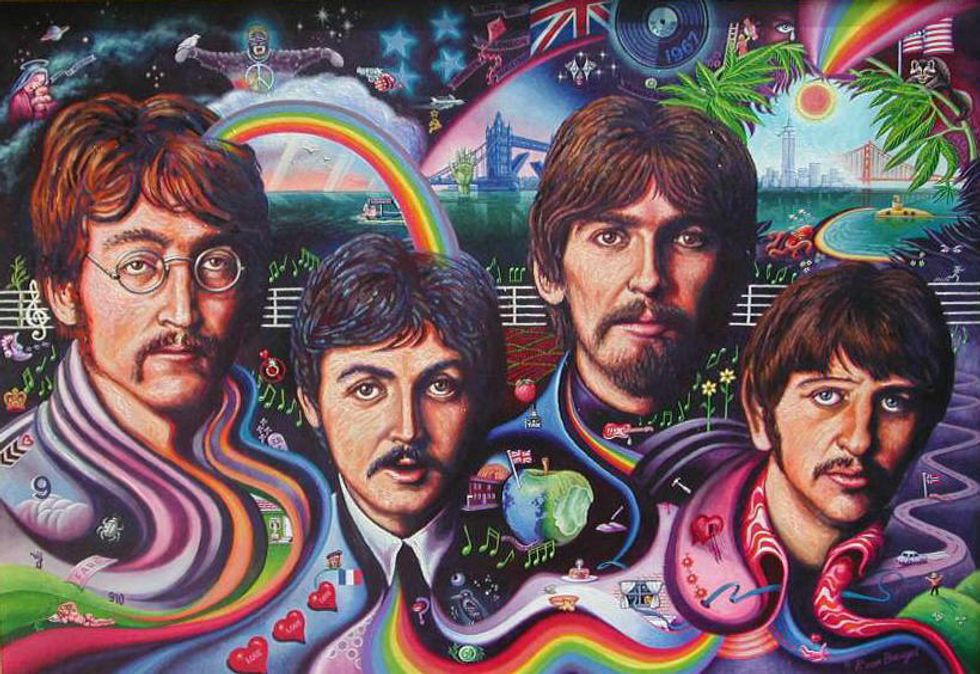
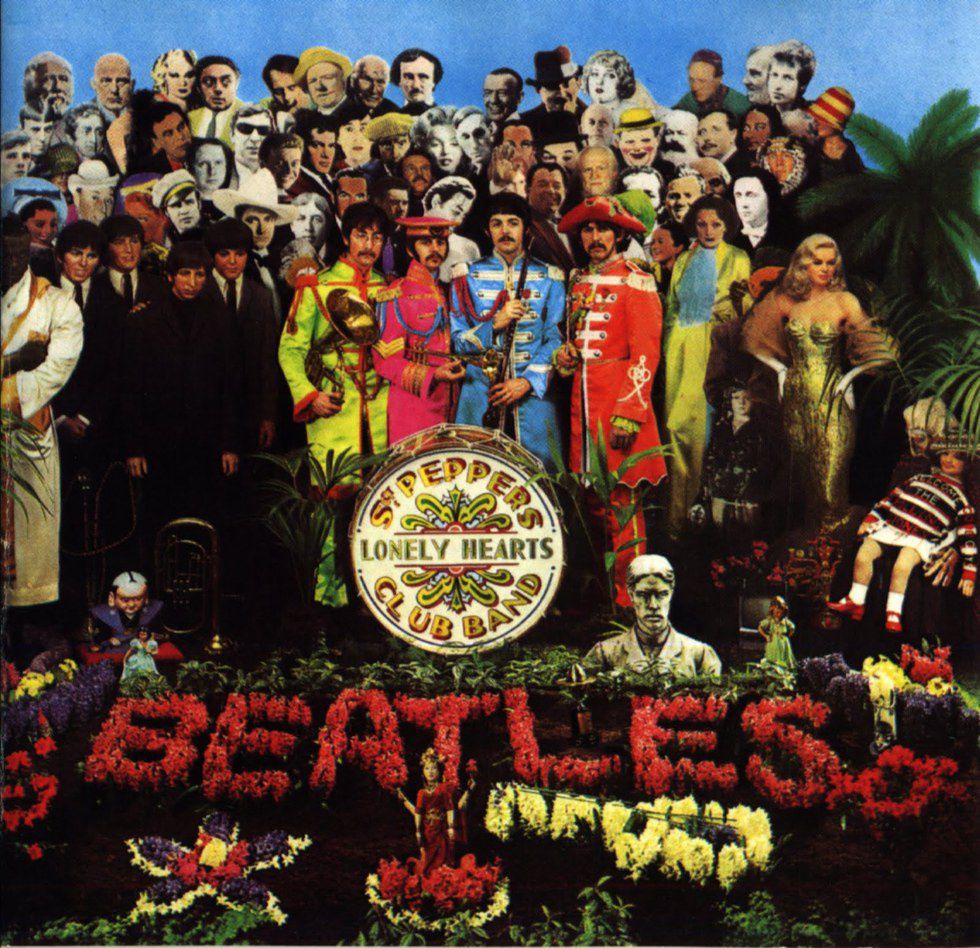
In 1966, the lyrically and musically matured Beatles decided to stop touring indefinitely. It was then, where The Beatles, after releasing the stylish “Rubber Soul” and “Revolver” albums, had begun their full transition from Pop boys, to Rock men. One year later, the album “Sgt. Pepper’s Lonely Hearts Club Band” was released. Sgt. Pepper’s was later ranked as the # 1 album of all-time on Rolling Stone’s 500 Greatest Albums list, released in 2004. An album with cover-art depicting The Beatles dressed in bland colored uniforms, surrounded by parrots and several historical figures. It was just the beginning of an era where The Beatles social impact was reaching its absolute apex.
The late 60s saw The Beatles growing their hair even longer, as they became self-proclaimed “studio rats.” Lead guitarist George Harrison frequented The Grateful Dead shows in San Francisco as the hippie movement was materializing and then returned to Liverpool to introduce Psychedelic music to the band. He also began further crafting his expertise on the “Sitar,” an Indian instrument which he played on a few Beatles records. Around this time, The Beatles also started exploring the art of “backmasking.” Backmasking is when a Vinyl record is played backwards. The Beatles are notorious for allegedly including subliminal messages in their song lyrics, which are only detectable when played backwards. This activity has long been used to support a number of fan-perpetuated theories siting The Beatles as “clue-droppers.” As a result, perhaps the most famous of all entertainment-related conspiracy theories was born, that Paul McCartney had actually died in 1966. The theory suggests The Beatles covered up the death of bassist/vocalist Paul McCartney in 1966 by hosting a look-alike contest, and then revealing the band member’s death through strategically placed images hidden in album artwork, and hauntingly audible, back-masked phrases.
The Beatles were not the founders of psychedelic rock, but they certainly popularized it. Without The Beatles, generations of musical acts that followed would not have been nearly as inspired to make their own stamp on the industry. The most famous songwriting duo in history, John Lennon and Paul McCartney, were responsible for spearheading a four-headed monster that sadly only played music together as a group for a decade. Modern “boy bands,” who generally do not necessitate instruments to accompany their music, will have one, maybe two standouts, who go on to pursue successful careers as solo artists, whereas The Beatles had four. They were four men, who had aged a lifetime by the time they reached their mid-to-late twenties when their breakup was occurring, both publicly and privately. The quadruple ego collision of epic proportions evident in the final years of The Beatles’ rein together was unprecedented, and will likely never be seen again. Nor will there ever again be a band with four brilliant leading men, just as strong and talented as the guy to his left. A band that somehow found a way to ‘come together,’ and lift one another up to, as John Lennon once controversially stated, “Bigger than Jesus” status.