"For too many of us, it’s become safer to retreat into our own bubbles, whether in our neighborhoods or college campuses or places of worship or our social media feeds, surrounded by people who look like us and share the same political outlook and never challenge our assumptions. The rise of naked partisanship, increasing economic and regional stratification, the splintering of our media into a channel for every taste – all this makes this great sorting seem natural, even inevitable. And increasingly, we become so secure in our bubbles that we accept only information, whether true or not, that fits our opinions, instead of basing our opinions on the evidence that’s out there."
- Former-President Barack Obama, Farewell Address, January 10, 2016
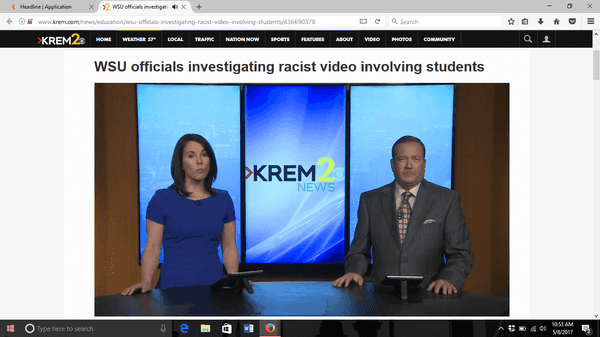
Have you heard of Frank Somerville? For me, he's been the face of my local TV news for a long time, or, the guy who passes it over to Mark Ibanez and sports at 10:45. He recently posted about John Lewis's statement about finding now-President Trump "illegitimate," and didn't agree with how Sen. Lewis's statement seemed to undermine the office of the President. I didn't necessarily agree with him, but read the post and moved on down my news feed to laugh at another meme. Over the weekend, he posted again about how disappointed he was that he lost nearly 1500 followers after that post and that while he respected Sen. Lewis, he didn't happen to agree with Lewis's sentiment. I could empathize, as I have been unfriended and blocked by people because I was either too conservative or too liberal for them. And it SUCKS. Even if it's someone who you only tangentially know, it doesn't exactly inspire confidence in yourself when you lose Facebook friends.
But this weekend also brought forth the inauguration of a new president and the biggest resistance to a president in a generation. And with that, I've seen a lot of friends talk about unfriending or blocking the racist, sexist, etc. friends on their feed. I understand the urge to avoid seeing uncomfortable comments on your social justice-tinged post or link, and I especially get the desire to block hateful rhetoric, especially when one has the capability to, compared to, say, fifty years ago. My fear, however, is that we take it too far, and go to the point that President Obama (and my 2016 retrospective, I might add) described.
I honestly don't think that's the biggest issue, though. I think when you have something like Facebook, you're naturally gonna add friends as you go, and those friends will inevitably have different viewpoints than you, and you have the ability to read their posts or not, just as you have the right to do that with these articles. I'm worried that the physical, real human beings in our own lives are being screened just as closely as our news feeds, worried that if our friends say ONE "problematic" statement or think differently than us, we block them out of our lives and brand them as "-ists," ableist, racist, or what have you. But people are more complex than that. I'm not saying to stay friends with white supremacists or with your cousin's sister's brother who's a proud member of the Westboro Baptist Church. But allow space for people to mess up, learn, and think differently than you. Walling yourself off completely from perspectives that differ is only going to continue to increase the divisiveness.
There's an episode of Black Mirror, this amazing Twilight Zone-y anthology show about technology, where the main character finds himself blocked by his fiancé in real life. Whenever he looks at her, all he sees is a blurred out face, and when he tries talking to her, all she can hear is a blurred nothingness. Sure, there are some battles that aren't worth fighting on the Internet. But please keep open some lines of communication to the people in your life who don't agree with you on everything - which, spoiler alert, is everyone.
"If you’re tired of arguing with strangers on the Internet, try to talk with one in real life." - our 44th President