
This week, for the first time in my life, I have met someone who is completely deaf. Two people, actually. While serving proudly in my second year as a camp counselor at my college, I was approached by some of the staff and they informed me that two of our visitors would be “hearing impaired.” Naturally as the person in charge of their well-being, I was nervous. I had never been around someone who had a significant impairment before and I was wondering if I should alter some of my usual camp sessions for them. I wasn’t sure how they would be able to participate fully and I didn’t want them to feel excluded.
They were the last two to arrive, along with their translator and teacher. As someone who doesn’t know the first thing about sign language, I was in awe watching her fingers move. Not just move, but communicate.
After dinner, we had our usual introductions where each camper stands and tells the group something about themselves. I watched each camper stand and tell their interesting fact, and as they stood, the translator would move closer to the person that was talking and relay the information to her students. When it finally got to them, the first one stood up. She looked at us and talked with her fingers while her translator narrated behind her.
I was born in Guatemala. My favorite color is blue. I was born deaf but they didn’t have the technology to figure out for sure until I was three-years-old. We go by the term “deaf,” not hearing impaired. Does anyone speak sign language?
Not surprisingly, we all looked around and no one raised their hands.
She signed, I guess that makes you all signing impaired.
We laughed as a group and she continued to go on and explain deaf culture and its complexity, and also how it does not really hinder her life. She can drive, watch TV, and text: she just can’t hear. It is not an impairment, just a medical fact. English is not my first language, sign language is.
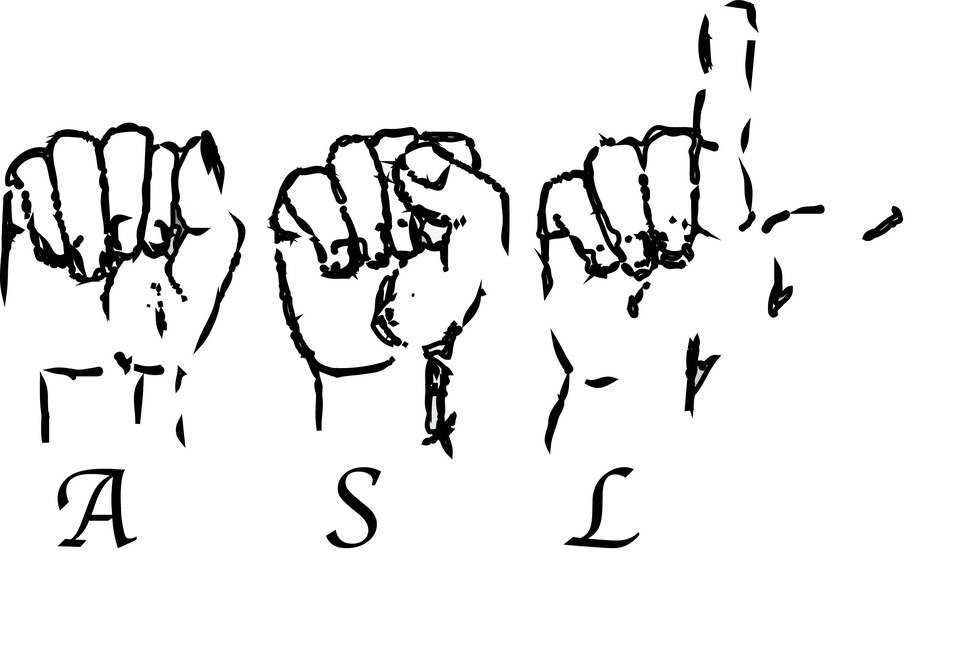
As a counselor, I made sure each student had my personal cell phone number in case of emergencies, and that’s primarily how I communicated with both students. They were exceptionally bright and fast learners, and if they needed anything at all they would send me text messages. After the first day, I worked hard to try to learn some of the basics of American Sign Langue (ASL) to try to communicate with them easier. Even the easy things seemed difficult, and it was frustrating. It was baffling to me how they could do it so fast and be able to see it and immediately understand it. When I would talk to them, I would end up watching my own words fall off of the translator’s fingers. It was so unusual to see myself talking that it was almost distracting, like trying to talk when you hear an echo of yourself.
I realized that these students have done something that I could hardly even comprehend -- they learned a completely visual language and used it to fluently communicate. That’s how they will always communicate, and I can hardly remember how to sign good morning. These students are not impaired, they are empowered. Being near them and watching their progress makes me wonder how I could ever have thought they could be any less than two average high school kids.
We are deaf, not hearing impaired. Being deaf is not an impairment. I do not want to be called hearing impaired just like you would not want to be called signing impaired.
I am proud to have been able to meet them, because it made me realize that people that society can label as “impaired” or “disabled” may be capable of more than I could have thought, and I know that these two students will both go as far in life as any other child that society deems “normal”. Today is the day that my definition of “normal” has changed. Today is the day that I reevaluate social stigmas of “normality”. Today, I believe that these students will face as much hardship as any other student, but them being deaf will not silence their achievements.