I’ve lived right outside New York City my entire life, but didn’t start going regularly until recently. This summer I got a job as a field technician at an Environmental company near Times Square. Traveling five days out of the week to Manhattan has left me confronting a problem that we all try our hardest to ignore- the large number of homeless people residing in New York City.
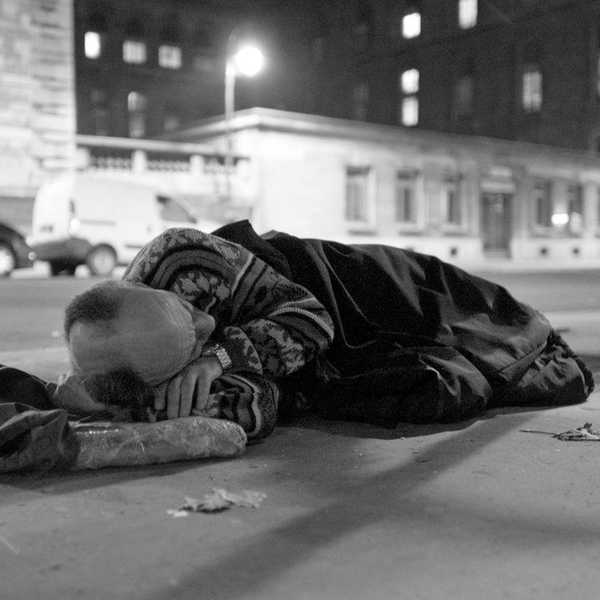
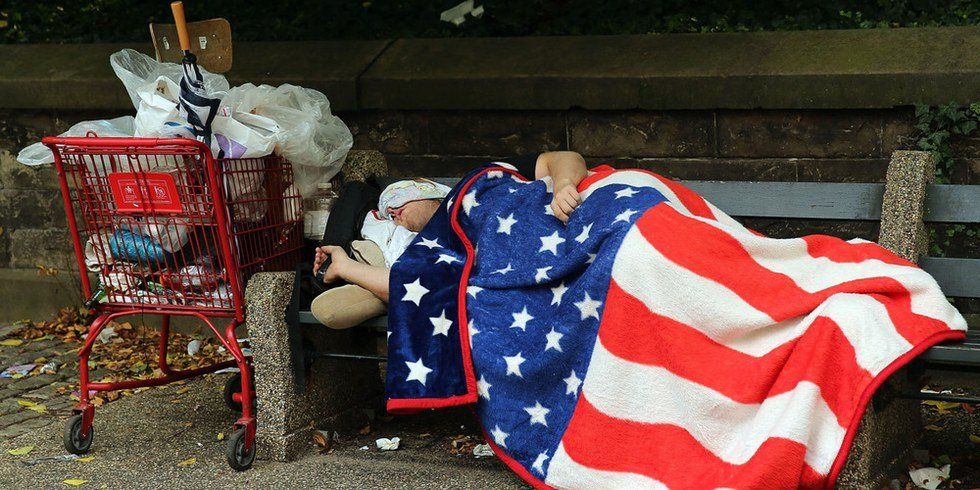
As heartless as it may seem, passing these people has started to become part of my routine; they are as much fixtures in the street as the buildings around them. I know which of them will frequent which corners and at what time I will pass them by. I know the “pregnant and homeless” woman will be sitting outside Penn Station when I pass in the morning, and the guy who stands outside Starbucks on West 35th and 7th will hold the door open for me smiling. There’s the couple that sits a block from Grand Central, and the girl is always sadly hiding her face. Or the man who sits near Madame Tussaude’s museum whose sign reads “Can you spare 25 cents for food?” Although the descriptions I’m giving may seem cruel, seeing these people every day in the same areas makes them more human to me. I realize that this is their lives, and begging is as much their job as a field technician is mine. I know this isn’t a job they want or deserve, but it makes it seem like they are on the daily grind like the rest of us, even if I don’t always realize they are fighting much harder to survive. It also makes me wonder if they start to recognize us commuters too.
Even if we have become a familiar face to them, that doesn’t stop most of them from begging for money, food or a smile (as I see written on many signs). As I walk by these people trying as hard as I can not to make eye contact or read their sign, curiosity always gets the better of me and I glance to the side with my shaded sunglasses on, dying to see what kind of message they are projecting to the rest of the world.
I didn’t realize that I had subconsciously started comparing their signs for effective marketing strategies, and attempting to gauge how successful their message seems to be. For example, the guy in Times Square with a “give me $1 or I’ll vote for Trump” sign always seemed to be pretty popular. But I still have to wonder, how much money does a person who is begging make on average daily? Clearly not enough to be reaching a quality standard of living, but yet they are back out there day after day, just like the rest of us, making their living as best they can.
This is not to say that people who are homeless have a choice in the matter, or have been dealt fair cards in life; they are just as human as the rest of us and deserve to be treated as so. How is it that it can become normal for me to walk past these people barely surviving day after day and not even flinch anymore? But rather to be staring at them as if they are an exhibit in a museum? But how can I change this behavior, or even anything about their lives?
I’ve seen many social experiment type videos on Facebook and other websites that explore the topic of homelessness. In many of them, someone will fake homelessness by dressing poorly and looking unclean. They then compare the treatment of the subject to when they are dressed in cleaner clothes with a more well-kept appearance. Not surprisingly, they are treated a lot nicer when they look the latter, and I am forced to wonder- what are these videos trying to prove? I don’t feel that it is new knowledge that people regard the homeless with greater caution and sometimes even outright ignorance. It’s not a shock to see that people treat the homeless poorly on the street, which is not to say that this behavior is okay.
In the end, I feel the most important thing to remember is that the homeless are just people like you and me-we are all humans with emotions, fears and hopes and dreams. And as I walk to my track in Grand Central Terminal at the end of the day I pass one final woman, sitting in her wheelchair outside of the ticket station. “Can you spare any change?”, she calls as I pass by, and attempts to look into my eyes. As I walk by staring at the ground she turns her attention to the person behind me and then the person behind them: “spare any change…spare any change…” and her message echoes deep in my head long after I’m out of earshot.