


There are two facts that are completely relevant to the “Cuba debate.” Firstly, Cuba has a terrible human rights record. Secondly, so do many of the other countries the U.S. has normalized relations with.
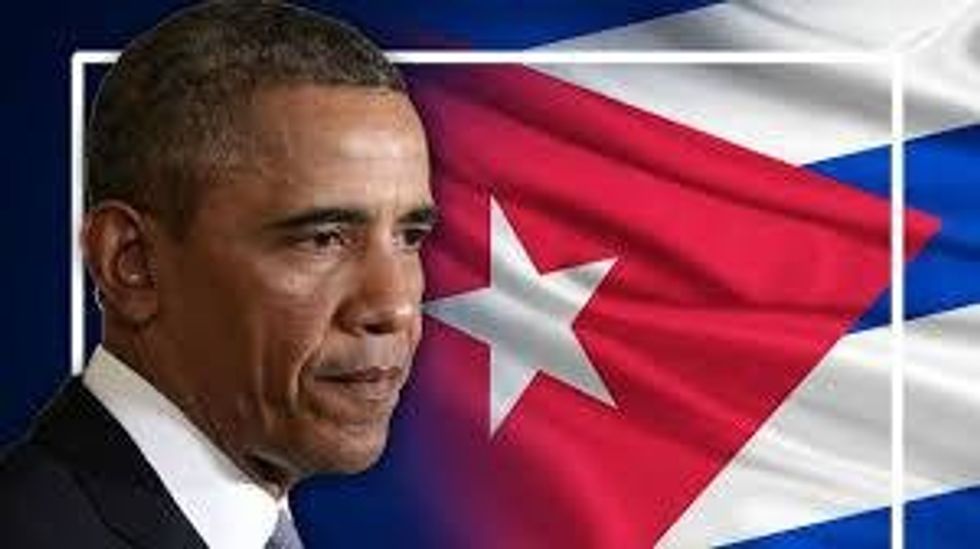
President Obama made the first presidential trip to Cuba in decades, the first in my generation’s lifetime. He has made it a priority to begin to roll back trade restrictions and mend the relationship with this nation that is only 90 miles from U.S. shoreline. As a communist nation, there is a lot of debate on whether or not President Obama is making the right decision by being neighborly with Cuba. Most Republicans say no.
Why? There are, I am sure, numerous reasons. A resounding one, however, is that the U.S. should not reward Cuba with good relations when they have a bad human rights record and aren’t working to reform it. These naysayers are absolutely correct, Cuba has a long history of abusing fundamental human rights. Freedom of press and speech are constantly denied, as well as economic freedom facing constant persecution by the strong arm government led by Raul Castro. Cuba has a lot of work to do if it wants to ever be viewed as mature. Yet, why is this a hindrance to having relations with Cuba?
Several weeks ago, I wrote an article on the mass gendercide of infant girls that is happening with China and India. While it is a stretch to say that China is a close ally, normalized relations exist, perhaps even thrive when it comes to economics. India is a close regional partner, an ally.
Just last week AJ+ news released a chilling video on the state of the mentally disabled in Indonesia, thousands are chained every year. Yet the U.S. has not stopped our continued diplomatic meetings. Saudi Arabia, a nation which we count on as a stabilizer in the Middle East, has continuously denied women the most basic of human rights, but our President visited the country just last year.
So, why pick a fight with Cuba? Partially, it stems from history. The initial U.S. embargo on relations stemmed from Cuba’s involvement with the USSR. News flash, the Cold War is over and the USSR is now the Russian Federation. Yes, President Putin is the very definition of 'democratically' elected dictator, but in dealing with Russia, U.S. concern should be over Ukraine, not the island of Cuba. While U.S. retaliation for Cuba’s communism and relation with USSR was once justified, it no longer serves the same purpose. Which brings us back to the initial argument — their human rights track.
But as shown by the plethora of nations the U.S. has diplomatic and economic relations with, the U.S. ‘standard,’ for relations isn’t golden. In fact, it is anything but. This isn’t an attack on past decisions made by the executive branch and U.S. State Department, but merely a reflection of reality. The U.S. cannot operate in isolation. The U.S. also cannot give the silent treatment to every nation that falters on human rights issues. If the U.S. did, it would be a very lonely road. Instead, the U.S. has an unwritten and undefined line. Certain regimes have crossed it. In the past, it was Hitler’s Third Reich and more recently ISIS. There are some crimes against humanity that are simply too heinous. Nations and regimes which commit these acts should not be partners or even have normal relations with the U.S.
Cuba isn’t one of those countries. Cuba’s rights violations do not result in mass genocide or even a singling out of an entire minority group. Cuba is flawed, but it is not without hope. Other reasons for not pursuing relations might exist. But the argument against normalizing relations with Cuba because of its human rights record is hypocritical. If the U.S. were to continue to deny Cuba, then it ought to call up China, Saudi Arabia, and several other nations to let them know that the U.S. embassy would be withdrawn.

















