

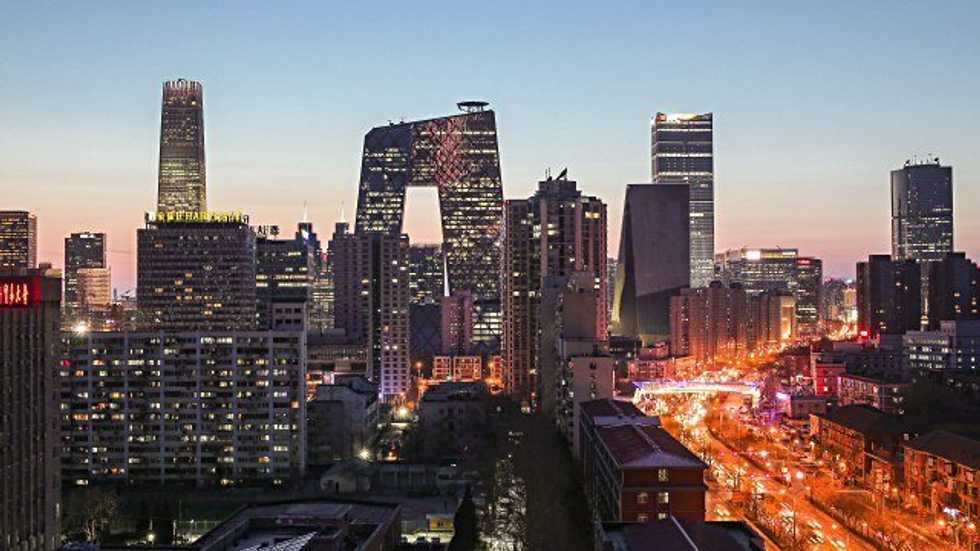
In preparation for the 2008 Olympic games in Beijing, China, the government enacted multiple restrictive measures in order to cut down the pollution in time for the games to start. A group of factories were required to cut emission by 30%, more than 300 factories were halted in neighboring cities, car traffic regulation were put in place to cut back emissions by 70%. The positive effect that these regulations had were so great that the trademark smog over the city disappeared and the sky was visible for the first time since 2002, when the government enacted similar conditions because of an international summit taking place. But just as quickly as the emissions were cut and the air became clear, the Olympics ended and the smog returned as did the trademark face masks used to filter air.
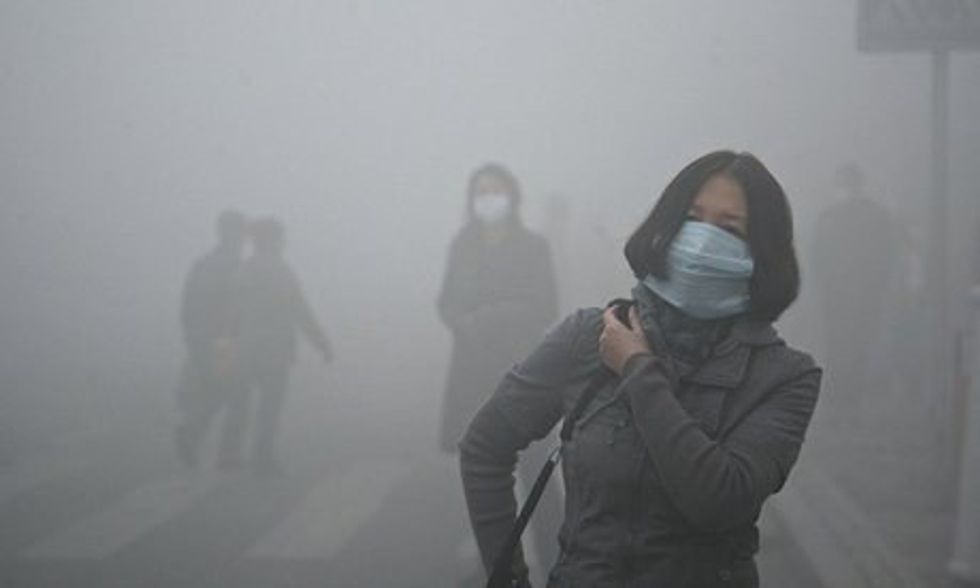
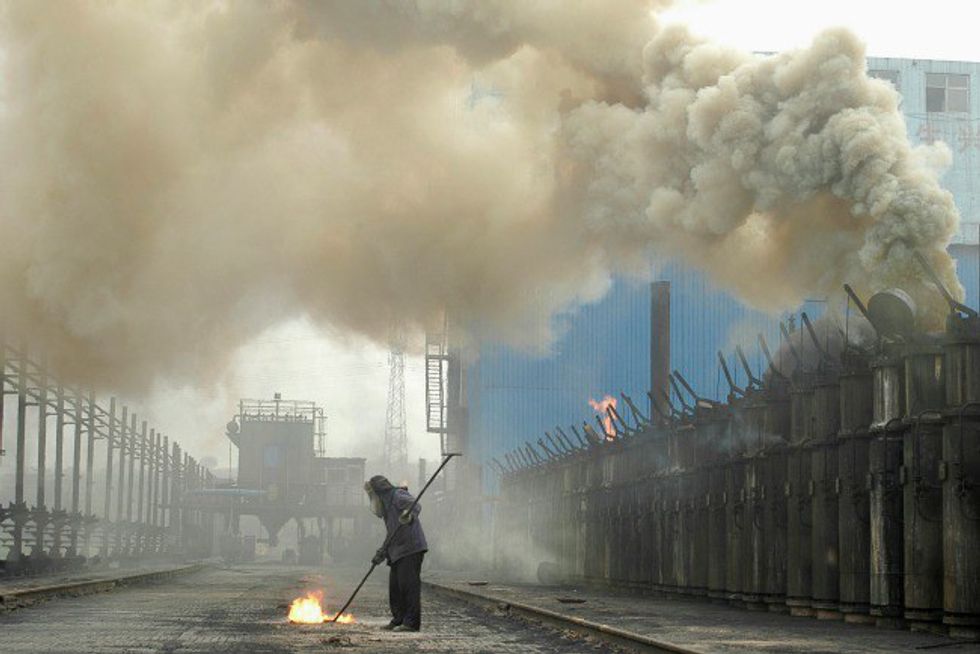
So how did China get to this point? At a the basic level, the three main sources of emission pollution in China are coal, traffic, and the neighboring area; coal is a primary source of fuel and pollution in China; it is used in factories as a source of power and is used in homes as a source of heat. Companies at the top and bottom of the economy us coal and the cheaper the coal, the worst the emissions. Beijing is the most dense city in the highest populated country, it is natural to believe that the traffic reflects the characteristics of the population. The final factor is the one that the local government has the least control over; in 2002 and 2008 during efforts to reduce pollution during special events taking place within the city, factories that didn’t have their activity ceased were moved outside of the city limits. The surrounding area where these factories are placed is the province of Debei. Debei practically engulfs Beijing as it surrounds it on three sides; because of this geographical set up, a large amount of the pollution that is produced in Debei ends up in and over Beijing.
Along with the factors above, the negligence of China to address these issues with an iron fist is the true root of the problem. During the spurts in 2002 and 2008, through hard regulation and investment, the blue sky was consistently present for weeks, showing that when it best suits them, healthy environmental practice is something that they are capable of. However, trade offs do exist and it is one that does not fall in line with the priorities of the government. Prior to 2014, 1989 was the last time the Chinese government made permanent laws and standards regarding the environment. Since that year, China’s GDP has risen by at least 7% every single year; experiencing increases as high as 14% at times. In an effort to become a world player, economic growth is prioritized above everything else which has raised a myriad of issues, a big one being pollution and the health of both the environment and citizens. During those periods of heavy regulation to reduce emissions and dissipate the smog, factories were moved and others shut down. The economic hit of those conditions in 2008 were minimized thanks to the presence of the Olympics, but to permanently sustain those types of regulations would see a huge dip in the economic production of two of the most important areas of China in Debei and Beijing.
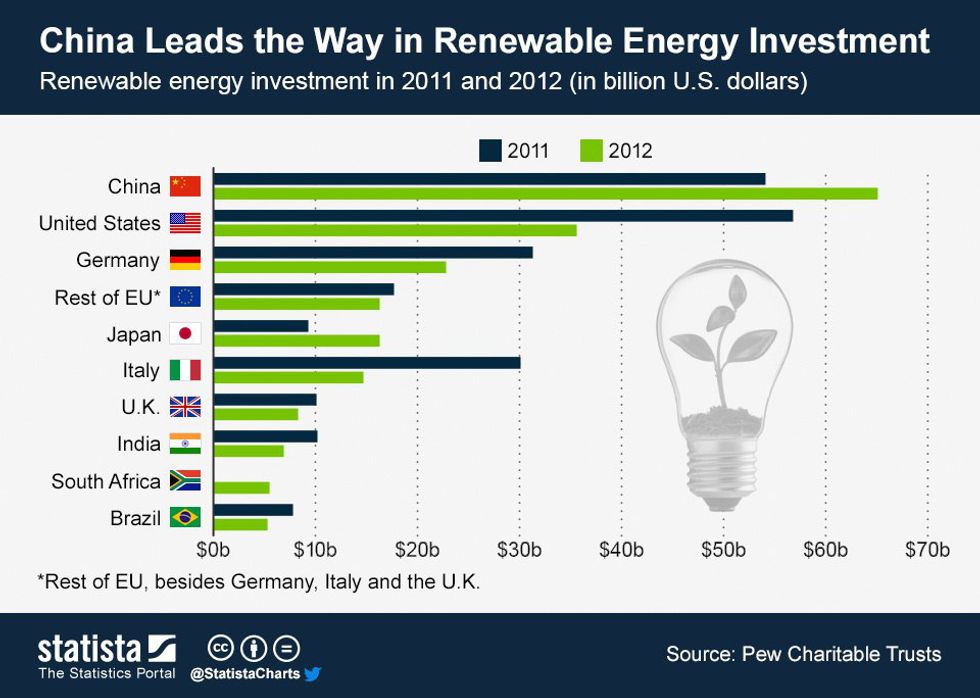
After announcing general ideas for reformation in 2013, the Chinese government altered its Environmental Protection Law (EPL) for the first time in over twenty years. The revisions allow for higher fines assessed to polluters and higher standards of micro-monitoring the health of the environment and the general population. This improved monitoring system merits an investment of funds in local government and risk management as well as an improvement of surveying processes to track health and environmental condition. Highlighting the modifications is the elimination of the monetary cap on fines assessed to those who violate pollution laws. This action will halt companies from dumping waste or causing direct environmental harm because without a limit, fines will no longer be slaps on the wrist --at times companies found it fiscally plausible to pay an environmental fine to the government instead of properly disposing of waste or buying new technology-- that a company can make up for over a relatively short amount of time. It gives the government the ability to bring a heavy hammer down, for example, in 2014 a court in China assessed a record fine equivalent to 26 million dollars to a string of companies that caught dumping waste into rivers and bodies of water around the country. The irony behind China’s pollution and heavy reliance on coal is that over the past half decade, they are responsible for generating 40% of the world’s renewable energy sources. By “hitting companies where it hurts the most”, the government creates motivation for companies to further develop and utilize new and renewable sources of energy.
Despite the outside pressure and the strong shift by government to take on this issue, the dramatic overhaul of regulations is going to face many problems. With a plan this strict put into place that calls for more vigilance than ever, there is a heavy reliance on local government to do it’s job in not only monitoring the activity of industries and pollutants in their area, but enforcing the law and assessing fines. As with every government, an initiative such as this one can easily be undermined by corruption in the form of bribery or the prioritization of economically beneficial output over environmental health. It’s also likely that the governing body at the local level is going to naturally struggle from the start. A study done in 2014 interviewed multiple executives, corporate powers, and analysts and found a consensus that China’s huge issue is that it does not have a “fully established legal system” in that a large amount of the decision making done by executives is not based upon the law but those who regulate it; Though the new regulations are comprehensive, the “vagueness” of them leaves so much of the law up to the discretion of the local officials that by human nature, there will be discrepancy between areas.
With how long China has operated its production without any major economic reforms for almost three decades, institutional barriers are going to be met. One corporation, China National Petroleum Corporation (CNPC), controls a large percentage of China’s untapped oil and gas but refuses to find new innovative ways to extract them. Though structural change could be a key factor in the attack on energy consumption, many believe that such a thing is not practical. One of the main reasons is because the most powerful companies, like CNPC, has enough power and influence that they feel very little to no pressure from outside parties to enact any dramatic changes in operation. Not only that, but these industries can also negate the development and distribution of environmentally friendly and innovative new forms of energy consumption by playing the market.
It is unfortunate but the lack of action over the past thirty years is what will likely cause these most recent reformations in China ineffective. Trying to enact a new set of policies without any type of progression is not an ideal strategy because of the conflict that develops between the institutionalized traditions and established powerhouses that have taken form over time. Had the Chinese government developed a much longer term plan before the environmental conditions got to the point where they shorten life spans by over five years, the specifications of the regulations would be stronger, major corporations would not have so much leverage, and there’d be less outside pressure to attack this issue because conditions would not be nearly as bad. But China really does not have a choice, with the environment at such a critical state, taking slow and steady action will have little to no effect.
The success of reformation is going to come the further development of the regulations themselves and the commitment from the major corporations of the country that admittedly, have the most amount of money to lose. China has made leaps and bounds in its economic development since ‘89 but its negligence of the environment is not something that could be buried for long.