


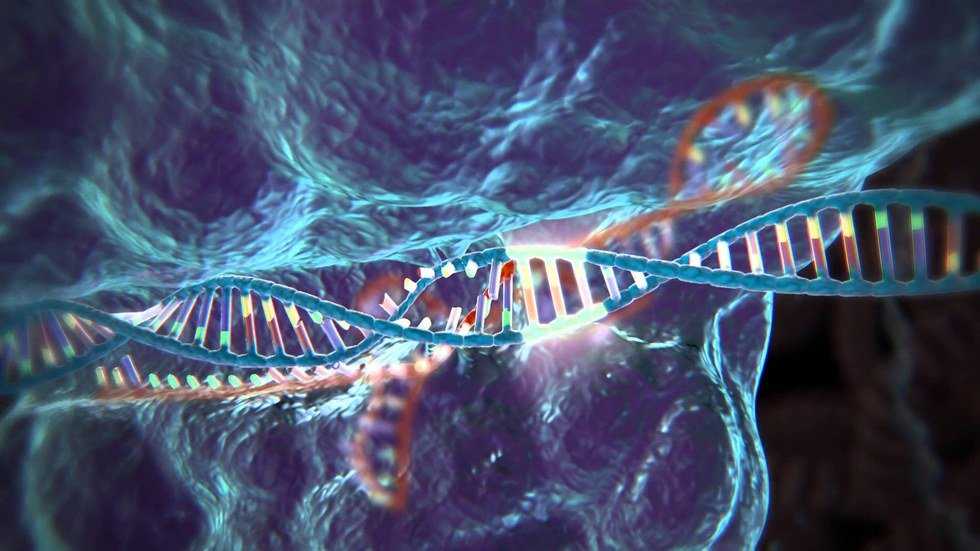
I’ve never been a huge aficionado of biology, mainly because BIS2A kicked my ass in college, but the gene editing tool known as CRISPR has me incredibly excited about biology like never before.
CRISPR stands for “clustered regularly interspaced short palindromic repeats." I know, it’s a mouthful. CRISPR is actually not a human invention, but a naturally occurring defense mechanism found in all kinds of bacteria. Whenever a virus decides to attack a bacteria cell, a little bit of that virus’s DNA is injected into the bacteria cell it’s attacking. If the bacteria cell survives the onslaught, it will keep a little bit of that virus’s DNA stored, kind of like a snapshot or a wanted poster. That way, next time a similar virus decides to attack, the bacteria cell would respond by deploying CRISPR, and will snip the virus DNA and slice it. Scientists have taken this blueprint and created the gene editing tool specifically known as the CRISPR/Cas 9 System, though it’s often just shortened to CRISPR.
What does this all mean for the benefit of humanity? Everything! Never before has there been gene editing tool that’s been so cheap, precise, and universal.
Take cancer, which is the second leading cause of death in the U.S. and kills 1,500 per day. This is rather depressing to think about, but with CRISPR, doctors would be able to extract a cancer patient’s immune cells, use the CRISPR system to give those immune cells a “snapshot” of the cancer specific to the patient, and upon re-injecting the newly fortified immune cells into the patient new proteins will be produced from the modified immune cells that will specifically attack the cancer cells within the patient. Already, a young girl named Layla was treated for leukemia with a similar gene-editing treatment that resulted in a tremendous success.
Besides cancer, CRISPR may also prove itself a new treatment for HIV. This past March, a team of American scientists reportedly used CRISPR to edit out the HIV genome from the T-cells of an HIV patient, which suppressed the viral gene expression and replication, and immunized the rest of the patient’s uninfected cells against the HIV infection. In short, the patient was cured of HIV! Although scientists caution that more research needs to be conducted, they’re optimistic that these “molecular scissors” allow them to snip and fix errors in a person’s DNA.
Beyond medicine, CRISPR has other applications because the technique is universal, meaning it’s theoretically possible to modify the genomes of any animal or plant on this Earth. Regarding agriculture, Chinese scientists used CRISPR to produce a wheat strain resistant to powdery mildew, which is a fungal infection, with the hopes of creating a high-yield wheat that could make it to market in five years. Similarly, the US Department of Agriculture recently sanctioned the practice of using CRISPR to gene edit common white mushrooms by removing the enzyme that causes them to brown. Perhaps controversially, they will be cultivated and sold without GMO regulation because no genes were introduced into the organism, just edited out.
Regarding CRISPR’s use in ecology and conservation, the technique holds the potential to alter ecosystems for the better. CRISPR could theoretically be used to introduce genes that methodically eradicate mosquitoes spreading malaria. Female mosquitoes are the ones we all hate because they bite people for their blood that’s necessary to produce eggs. Male mosquitoes only feed on nectar, so they’re cool. With CRISPR, conservationists could edit out the female gene in mosquitoes causing them to slowly die out, which is what we want because mosquitoes are the primary vectors of malaria, Zika, dengue, and yellow fever, thus making them one of the most deadly and costly disease-carriers in human history.
CRISPR still has many hurdles to overcome. For instance, the public generally believe that modifying genes will create a slippery slope to designing future offspring. I believe this is a potential outcome, because money is the deciding factor there. If a doctor has the capability to modify an embryo so the baby’s genes produce a tall, strong, and healthy offspring, then I’m sure rich parents will flock toward that option. Thus, it’s up to an informed society to create ethical boundaries that become the standard for gene editing, and I’m optimistic that mostly positive outcomes will arise from CRISPR and make this floating rock we all live on better.












